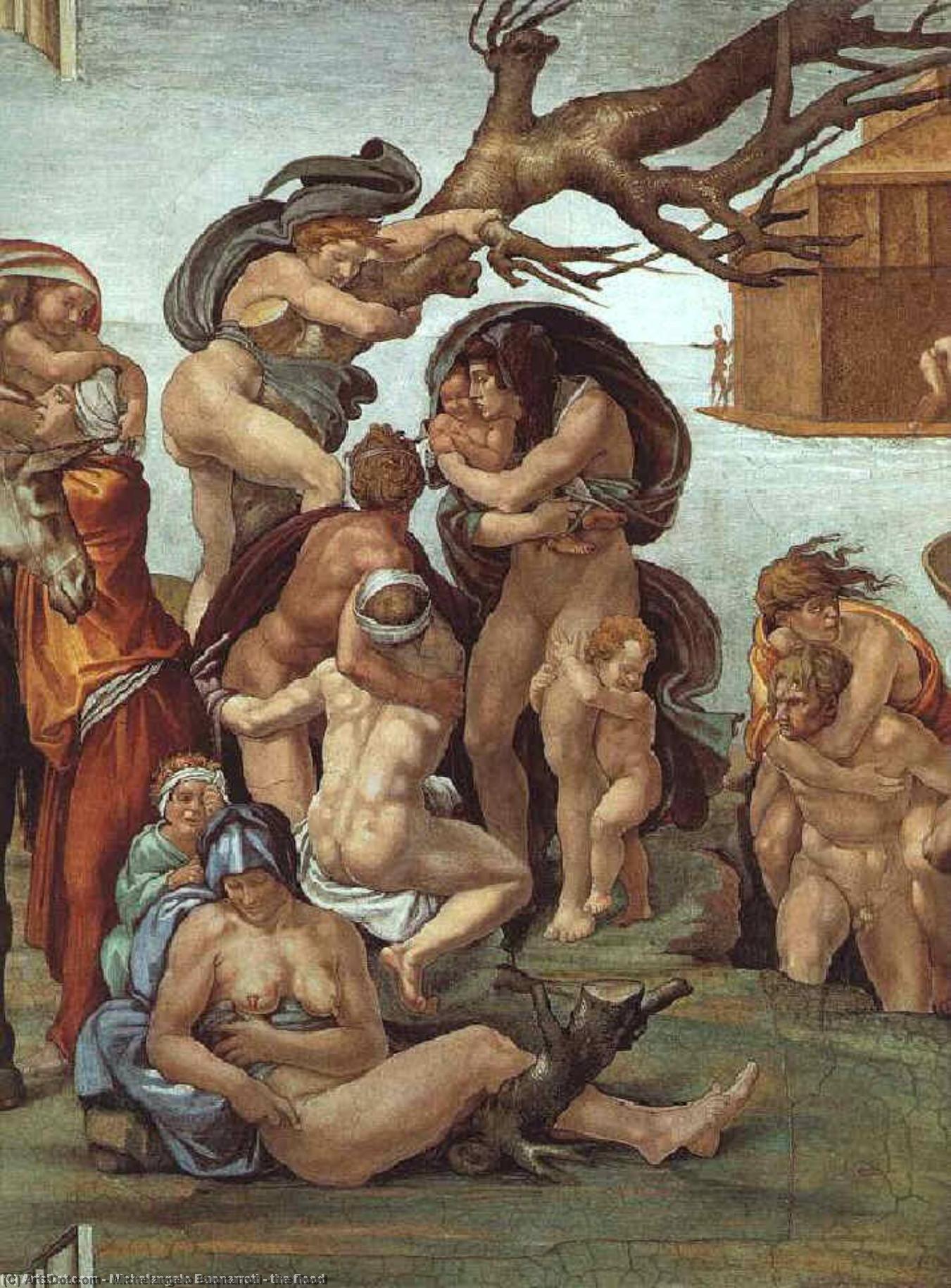
The Flood by Michelangelo Buonarroti
Michelangelo Buonarroti’s “The Flood,” executed between 1508 and 1512 as part of the Sistine Chapel ceiling frescoes, stands as a monumental testament to Renaissance artistic vision and theological contemplation. Commissioned by Pope Julius II during a period marked by papal ambition and artistic fervor—a time when Rome sought to reaffirm its cultural dominance—the fresco delves into the biblical narrative of Noah’s Ark, transforming it into an allegory for humanity's relationship with God and confronting themes of judgment, redemption, and divine providence.
- Subject Matter: The scene depicts a group of naked men gathered around a rocky islet, symbolizing humanity facing the impending deluge. Alongside them are animals—a dog, birds, and a horse—representing creation and God’s dominion over nature.
- Style & Technique: Executed in fresco—a technique involving applying pigment to wet plaster—the artwork showcases Michelangelo's mastery of anatomical detail and expressive gesture. The composition is carefully balanced, reflecting the Renaissance ideal of harmonious proportion and conveying a palpable sense of drama and urgency.
- Historical Context: Created during the High Renaissance, “The Flood” embodies the humanist spirit of the era, prioritizing human observation and understanding alongside religious dogma. It reflects Michelangelo’s engagement with classical sculpture—particularly figures from antiquity—drawing inspiration from Greek ideals of beauty and conveying a profound reverence for divine order.
- Symbolism: The fresco is laden with symbolic significance. The nakedness of the men represents humanity stripped bare before God's judgment, while their actions—carrying burdens, wrestling with despair—underscore the struggle between faith and fear. The animals serve as reminders of God’s creation and his power to sustain life amidst chaos.
- Emotional Impact: Michelangelo skillfully captures the emotional intensity of the biblical story, conveying a sense of vulnerability, resilience, and ultimately, hope. The dynamic poses and expressive faces communicate the profound psychological drama inherent in confronting divine wrath and seeking refuge from destruction—a timeless exploration of human experience that continues to resonate with viewers today.
A reproduction of “The Flood” offers an opportunity to immerse oneself in Michelangelo’s artistic genius and contemplate the enduring themes of faith, morality, and humanity's place within the cosmos. Its powerful imagery and masterful execution serve as a reminder of the transformative potential of art—to inspire contemplation, provoke emotion, and illuminate the complexities of human existence.