The
Natalia Sergeevna Goncharova painting,
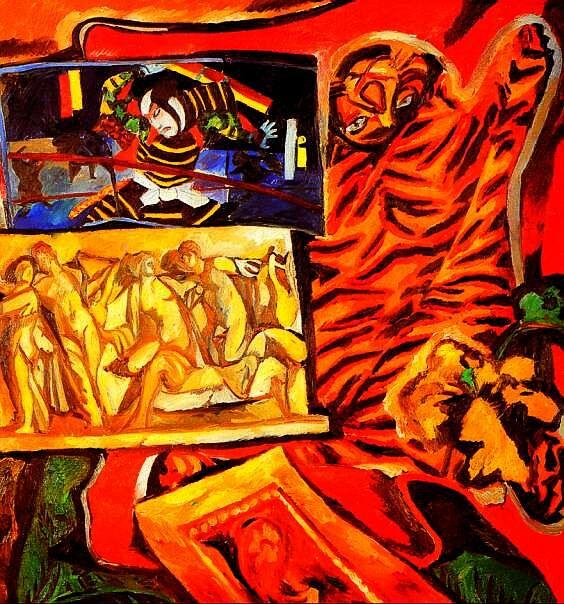
Still Life with a Tige, is a captivating example of Cubo-Futurism. Created in 1915, this oil on canvas piece showcases the artist's unique style and ability to blend different elements into a cohesive work of art.
Composition and Style
The painting features a tiger sitting next to a television set, with several people engaged in various activities around it. The inclusion of a book and a chair in the background adds depth to the composition. The overall style is characterized by bold colors and geometric shapes, which were hallmarks of the Cubo-Futurist movement.
Key Elements:
- The tiger, symbolizing power and strength, is juxtaposed with modern technology, represented by the television set.
- The people in the scene are engaged with each other or the TV, highlighting the intersection of human interaction and technology.
- The book and chair serve as a nod to traditional culture and comfort, respectively.
Artist and Movement
Natalia Sergeevna Goncharova was a Russian artist who played a significant role in the development of Cubo-Futurism. This movement, which emerged in the early 20th century, sought to break away from traditional representations of reality and instead emphasized fragmentation and multiple perspectives. The
Mariano Procópio Museum in Brazil is another notable institution that showcases a wide range of art and historical artifacts. For more information on the museum and its collections, visit /art/list/?Filter=A@D3CGCD-The-Mariano-Procopio-Museum-Brazil. Other notable artists and paintings can be found on https://ArtsDot.com, including works by
Pavel Filonov and
Ernst Ludwig Kirchner. The painting
Cocotte on the Road by
Ernst Ludwig Kirchner is a prime example of Expressionist art.
For those interested in learning more about
Natalia Sergeevna Goncharova and her work, visit /art/list/?Filter=8XYKYJ-Natalia-Sergeevna-Goncharova-Still-Life-with-a-Tige. The world of art is full of fascinating stories and masterpieces waiting to be discovered.