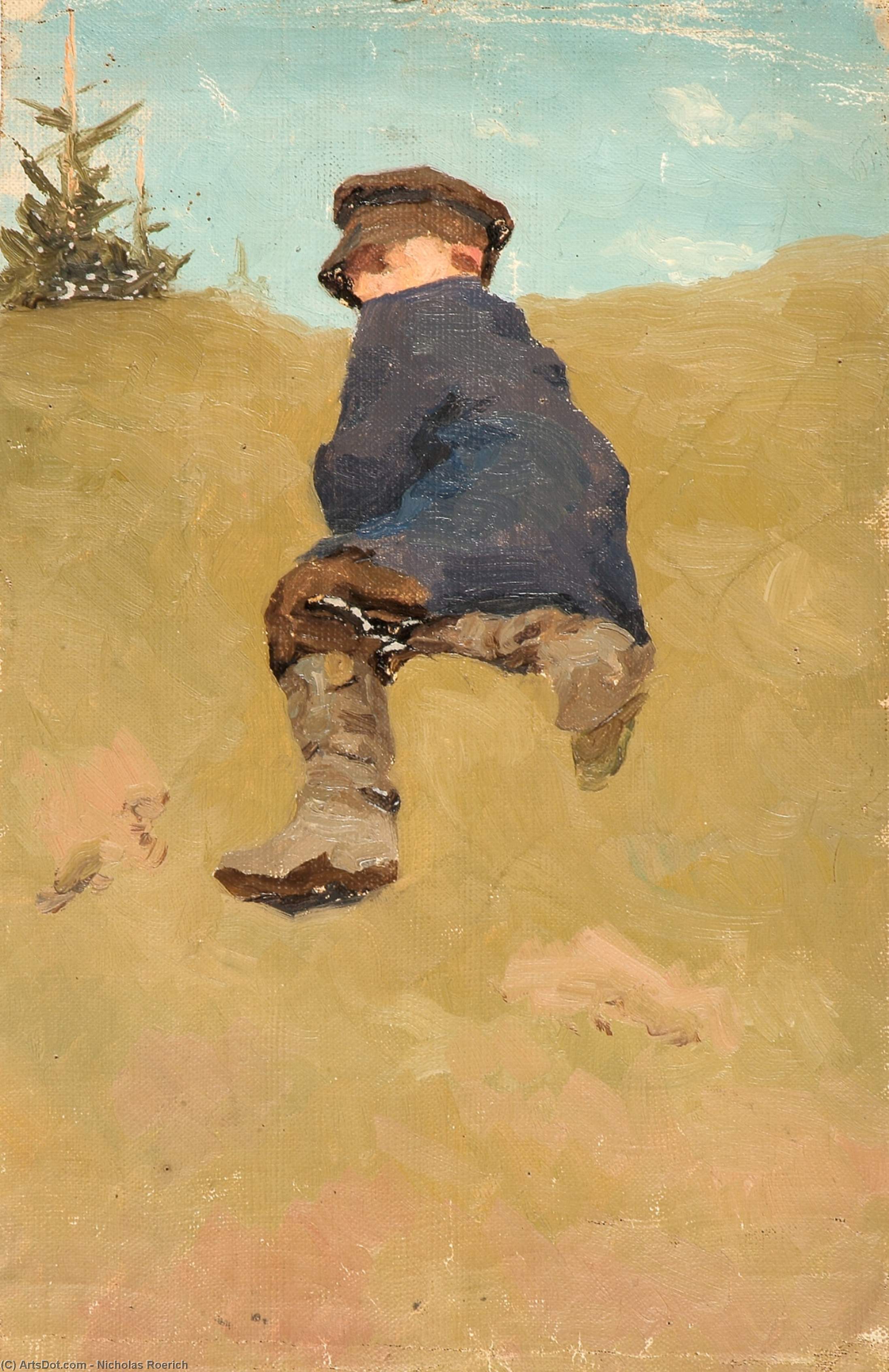
Nicholas Roerich’s Study of a Reclining Boy captures a serene portrait of a young boy amidst nature's tranquility, showcasing the artist’s signature style and evocative spirit, perfect for art lovers to discover or own.
Nicholas Roerich’s ‘Study of a Reclining Boy’: A Portrait of Innocence and Spiritual Longing
Nicholas Roemerich's "Study of a Reclining Boy" is more than just a depiction of a young child; it’s a profound meditation on childhood, innocence, and the yearning for connection with nature and the spiritual realm. Painted during a period of intense personal and artistic exploration for the Russian artist, this work exemplifies Roerich's signature style – a harmonious blend of realism and Symbolist influences, deeply rooted in his belief that art should serve as a bridge between the material world and higher consciousness.
- Subject Matter: The central figure is a young boy seated peacefully on a grassy expanse, a scene remarkably simple yet imbued with quiet dignity. His posture suggests both vulnerability and strength, inviting contemplation about the fleeting nature of youth and the enduring qualities within.
- Setting & Composition: The backdrop features a stylized tree, a recurring motif in Roerich’s work often associated with ancient wisdom and spiritual connection. Two birds are delicately placed within the composition – one to the left, another to the right – adding layers of symbolism related to freedom, communication, and perhaps even messengers from a higher plane.
Technique and Style: Roerich’s Harmonious Realism
Roerich's technique is characterized by meticulous detail combined with an expressive use of color and light. He employed a layering method – *glazing* – building up thin, translucent washes of paint to achieve luminous effects and create a sense of depth and atmosphere. The brushwork is generally smooth, yet subtly textured, contributing to the painting’s tactile quality. His approach was heavily influenced by his interest in archaeology and ancient cultures, leading him to incorporate elements of Byzantine iconography into his work, particularly in the rendering of the boy's face – a serene expression that transcends mere representation.
- Color Palette: The dominant colors are muted earth tones—greens, browns, blues—creating a sense of tranquility and harmony.
- Glazing Technique: Roerich’s masterful use of glazing creates an ethereal quality, enhancing the light and shadow play within the scene.
Symbolism and Historical Context
"Study of a Reclining Boy" was created during a pivotal period in Roerich's life, marked by his increasing interest in esoteric philosophies and his belief in the interconnectedness of all things. Roerich’s work frequently explored themes of spiritual quest, mythology, and the search for universal harmony – concepts deeply influenced by his travels through Central Asia and his engagement with ancient cultures. The painting can be interpreted as a visual representation of this spiritual journey, reflecting the boy's potential for growth and enlightenment.
Historical Context:
- Roerich’s work reflects the broader artistic trends of the late 19th and early 20th centuries, bridging Symbolism with nascent Expressionist ideas.
- His exploration of spiritual themes aligns with a growing interest in mysticism and Eastern philosophies during this time.
Emotional Impact and Artistic Legacy
"Study of a Reclining Boy" possesses a remarkable ability to evoke feelings of peace, serenity, and nostalgia. The painting’s quiet beauty invites viewers to contemplate the simple joys of childhood and the profound mysteries of existence. Roerich's work continues to resonate with audiences today, demonstrating his enduring artistic vision and his belief in art as a powerful force for good in the world. A hand-painted reproduction offers an exceptional opportunity to experience the full impact of this evocative masterpiece within your own space.