オットー・ミュラー(1874-1930)は、情緒豊かな裸婦像、ロマの人々、そして調和のとれた風景画で知られるドイツ表現主義の画家・版画家です。「ブリュッケ」の主要メンバーの一人でしたが、その作品はナチスによって「退廃芸術」として非難されました。
ウィーンのアルベルティーナ美術館で、美術史の宝を探索! ドゥーラーの「ハレ」からクリムトの研究まで、何世紀にもわたる傑作プリントや素描を発見。建築も必見です!
オーストリア
ウィーン
アルベルティーナ美術館
ドゥーラーの作品
36万 (2020年)
65,000点の素描、100万点以上の版画
版画美術館
1805年
古代エジプトの遺物
2
アルベルティーナ美術館のコレクションの中心は何ですか?
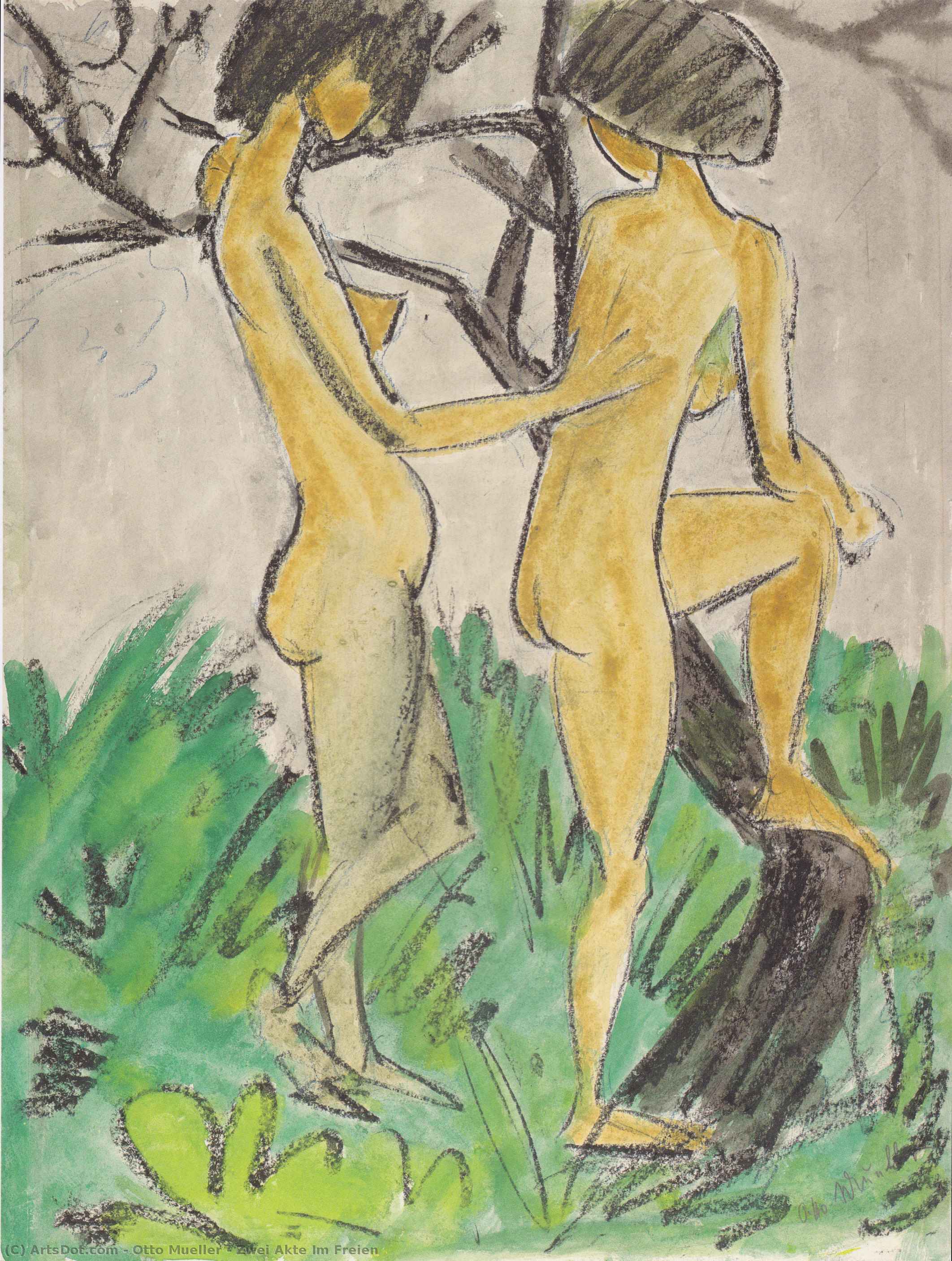
Otto Mueller’s “Zwei Akte Im Freien”: A Study in Distortion and Natural Harmony
Otto Mueller's "Zwei Akte Im Freien" ("Two Naked Figures Outdoors"), completed in 1923, stands as a cornerstone of German Expressionism—a movement that sought to convey raw emotion and psychological intensity through distorted forms and bold colors. More than just a depiction of two nude women lounging in the grass, it’s an exploration of duality: vulnerability juxtaposed with strength, stillness punctuated by subtle dynamism, and ultimately, a profound meditation on the relationship between humanity and nature.
The Expressionist Aesthetic: Embracing Distortion
Mueller's stylistic choices firmly situate "Zwei Akte Im Freien" within the Expressionist canon. Rejecting Impressionistic realism—which aimed to capture fleeting moments of beauty—Expressionists prioritized conveying inner feelings rather than objective observation. Mueller achieves this through deliberate distortion, particularly evident in the figures’ poses and musculature. The women aren't idealized representations; they are rendered with palpable physicality, their bodies subtly warped to express a sense of unease or perhaps even defiance against societal constraints. This technique wasn’t merely stylistic; it was fundamentally driven by an impulse to confront anxieties about the human condition—a preoccupation that resonated deeply within the intellectual climate of Weimar Germany.
Charcoal Technique: Capturing Texture and Emotion
Executed in charcoal, Mueller skillfully utilizes tonal variation to create a captivating interplay between light and shadow. The artist’s meticulous attention to detail is palpable – every ridge of muscle, every curve of limb contributes to the overall impression of immediacy and authenticity. Charcoal allows for nuanced shading that captures the subtle textures of the grass beneath the women's feet and the soft contours of their skin. This technique isn’t simply about reproducing visual information; it’s about channeling emotion onto the canvas—a characteristic hallmark of Expressionist art. Mueller’s masterful control over charcoal demonstrates a profound understanding of how artistic medium can amplify psychological impact.
Historical Context: Weimar Germany's Artistic Turbulence
“Zwei Akte Im Freien” emerged during a period of significant social and political upheaval in Germany – the Weimar Republic. Following the devastation of World War I, artists grappled with disillusionment and uncertainty about the future. Expressionism offered an outlet for these anxieties, providing a visual language to articulate feelings of alienation, trauma, and spiritual crisis. Mueller’s work reflects this broader cultural preoccupation with confronting uncomfortable truths—a desire to break free from conventional artistic conventions and express subjective experience with uncompromising honesty.
Symbolic Resonance: Nature as Reflection
The setting – a simple grassy meadow – is deliberately chosen to serve as more than just a backdrop; it functions symbolically. The open expanse of nature represents freedom, tranquility, yet simultaneously underscores the vulnerability of human existence against the forces of the natural world. The two women’s postures suggest an unspoken dialogue—a connection between individuals that transcends mere physical presence. Mueller subtly invites contemplation on themes of intimacy, resilience, and the enduring power of beauty amidst adversity.
Emotional Impact: A Moment Frozen in Time
Ultimately, “Zwei Akte Im Freien” succeeds in capturing a fleeting moment of serene vulnerability. The charcoal drawing’s subdued palette—dominated by earthy tones—contributes to an atmosphere of quiet contemplation. Mueller's masterful rendering evokes feelings of peace and melancholy, prompting viewers to consider the complexities of human emotion and the profound beauty found within seemingly ordinary scenes. It remains a testament to Expressionism’s ability to transform visual representation into a conduit for psychological exploration – a timeless artwork that continues to resonate with audiences today.