Introduction
Pablo Picasso, one of the most influential artists of the 20th century, is known for his pioneering role in Cubism. However, he also experimented with other styles, such as
Naive Art and
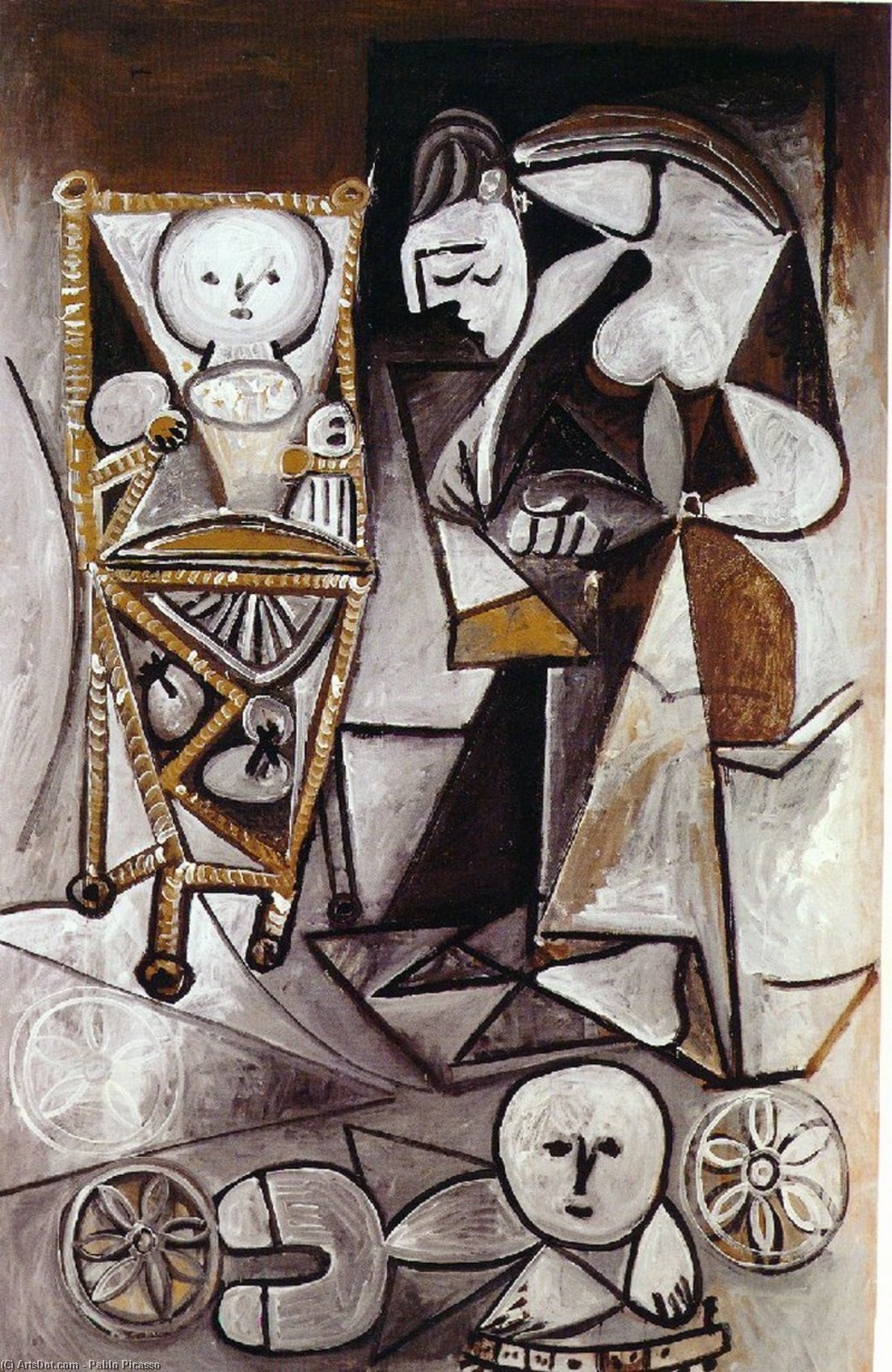
Primitivism. In this article, we will analyze the painting '
Drawing Woman Surrounded by Her Children' by
Pablo Picasso, created in 1950, in the context of these two movements.
Naive Art and Primitivism
Naive Art, also known as Primitive Art or Folk Art, is characterized by its simplicity and spontaneity. It is often associated with self-taught artists who lack formal training, but this is not always the case.
Primitivism is a movement that emerged in the late 19th century, characterized by its fascination with non-Western cultures and their artistic expressions. For more information on
Naive Art (Primitivism), visit
The Naïve Art (Primitivism) Art Movement.
Analysis of the Painting
The painting '
Drawing Woman Surrounded by Her Children' depicts a woman with her children in a simple and spontaneous way. The figures are represented in a frontal view, with no perspective or depth. The colors are bright and vivid, evoking a sense of joy and vitality. For more information on
Pablo Picasso's works, visit
Pablo Picasso.
Conclusion
Pablo Picasso's '
Drawing Woman Surrounded by Her Children' is an example of
Naive Art and
Primitivism. It reflects the artist's fascination with non-Western cultures and their artistic expressions, as well as his interest in simplicity and spontaneity. For more information on the history of art, visit
History of the nude in art.