Pablo Picasso: A Revolutionary Spirit
Pablo Ruiz Picasso, a name synonymous with artistic innovation, was born in Málaga, Spain, in 1881, into a world poised on the brink of dramatic change. His life, spanning nearly a century, became an extraordinary reflection of that transformation—a relentless exploration of form, perspective, and the very essence of human experience. From his earliest academic training under his father, José Ruiz y Blasco, a painter and art teacher, Picasso displayed a precocious talent that quickly surpassed even his mentor’s abilities. This early mastery wasn't merely technical; it hinted at an insatiable curiosity and a willingness to challenge convention—qualities that would define his entire career. The family’s move to A Coruña and then Barcelona proved pivotal, immersing the young artist in vibrant cultural environments where he honed his skills and began to forge his own artistic id
The Artistic Style: Cubism
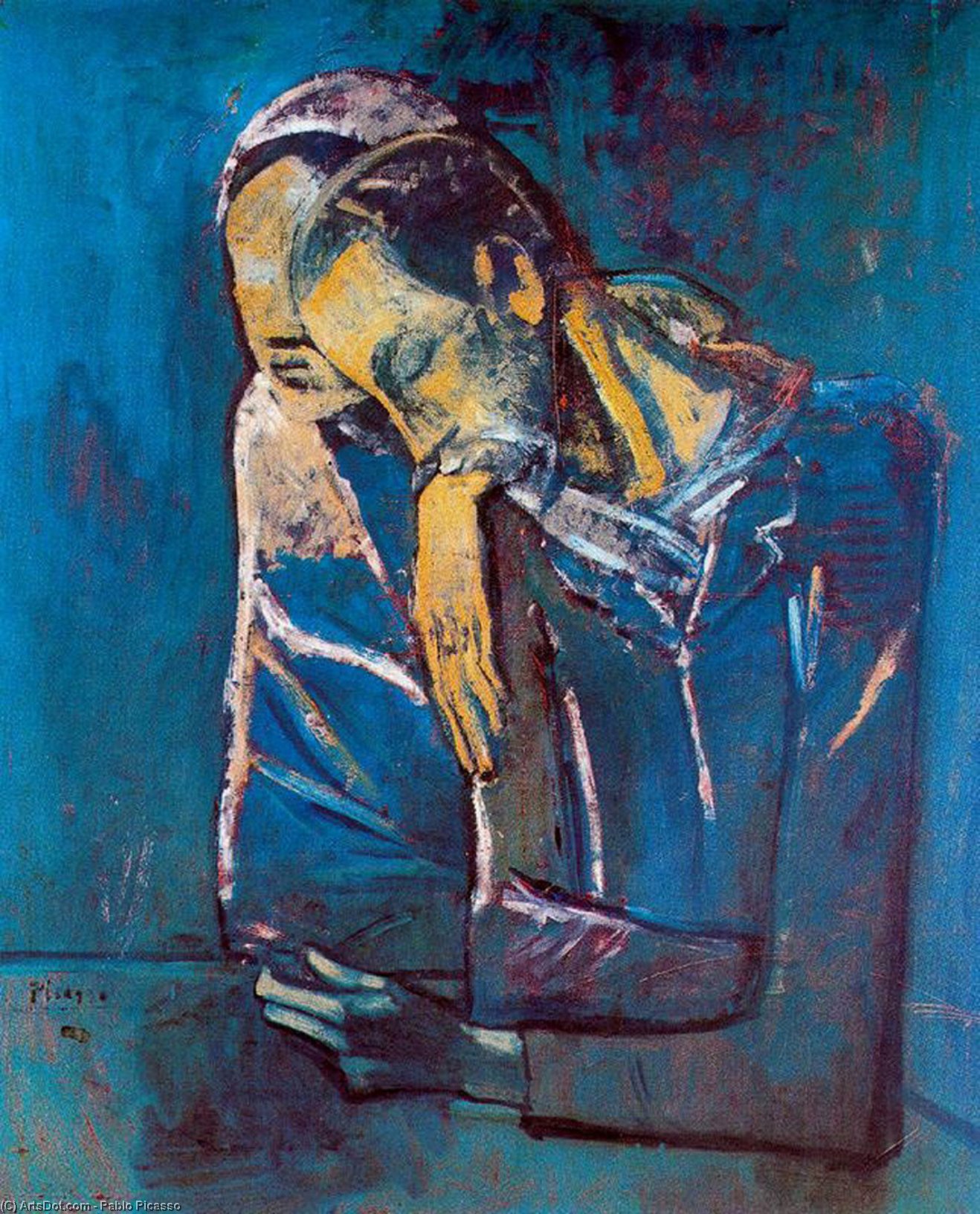
La Pareja is characterized by its bold lines, contrasting colors, and geometric shapes, which are characteristic of Cubism. This style, pioneered by Picasso and Georges Braque, rejected traditional techniques of perspective and representation, instead emphasizing the importance of form and structure. It sought to depict objects from multiple viewpoints simultaneously, fracturing them into fragmented planes that overlap and interpenetrate one another. This radical departure from realism aimed to capture not just what an object *looked* like but also how it *felt*, conveying a sense of dynamism and complexity.
The Media: Oil on Canvas
La Pareja is an oil on canvas, a medium that has been a popular choice for artists throughout history due to its versatility and richness of color. The use of oil paint allows for subtle gradations of tone and texture, adding depth and complexity to the composition. Picasso skillfully employed impasto—thickly applied paint—to create textural surfaces that heighten the visual impact of the artwork. This technique contributes to the painting's palpable energy and reinforces its expressive qualities.
Significance in Modern Art
La Pareja is significant not only as a work of Cubism but also as a representation of modern art's emphasis on experimentation and innovation. The painting’s abstracted forms and multiple perspectives challenge the viewer to engage with the artwork on an intellectual level, rather than simply admiring its aesthetic qualities. It embodies Picasso’s desire to break free from academic conventions and explore new ways of conveying emotion and thought. This piece stands as a testament to Picasso's unwavering commitment to artistic progress—a beacon illuminating the path toward groundbreaking discoveries in visual art.
Cubism and
modern art continue to influence artists today, and
La Pareja remains a powerful example of the innovative spirit that defined this period. As a masterpiece of Cubism, it challenges our perceptions and invites us to engage with the artwork on a deeper level.
The legacy of
Pablo Picasso can be seen in the many artists who have followed in his footsteps, pushing the boundaries of what is possible in modern art. Visit
Wahoo Art to explore more works by Picasso and other masters of modern art.