Introduction
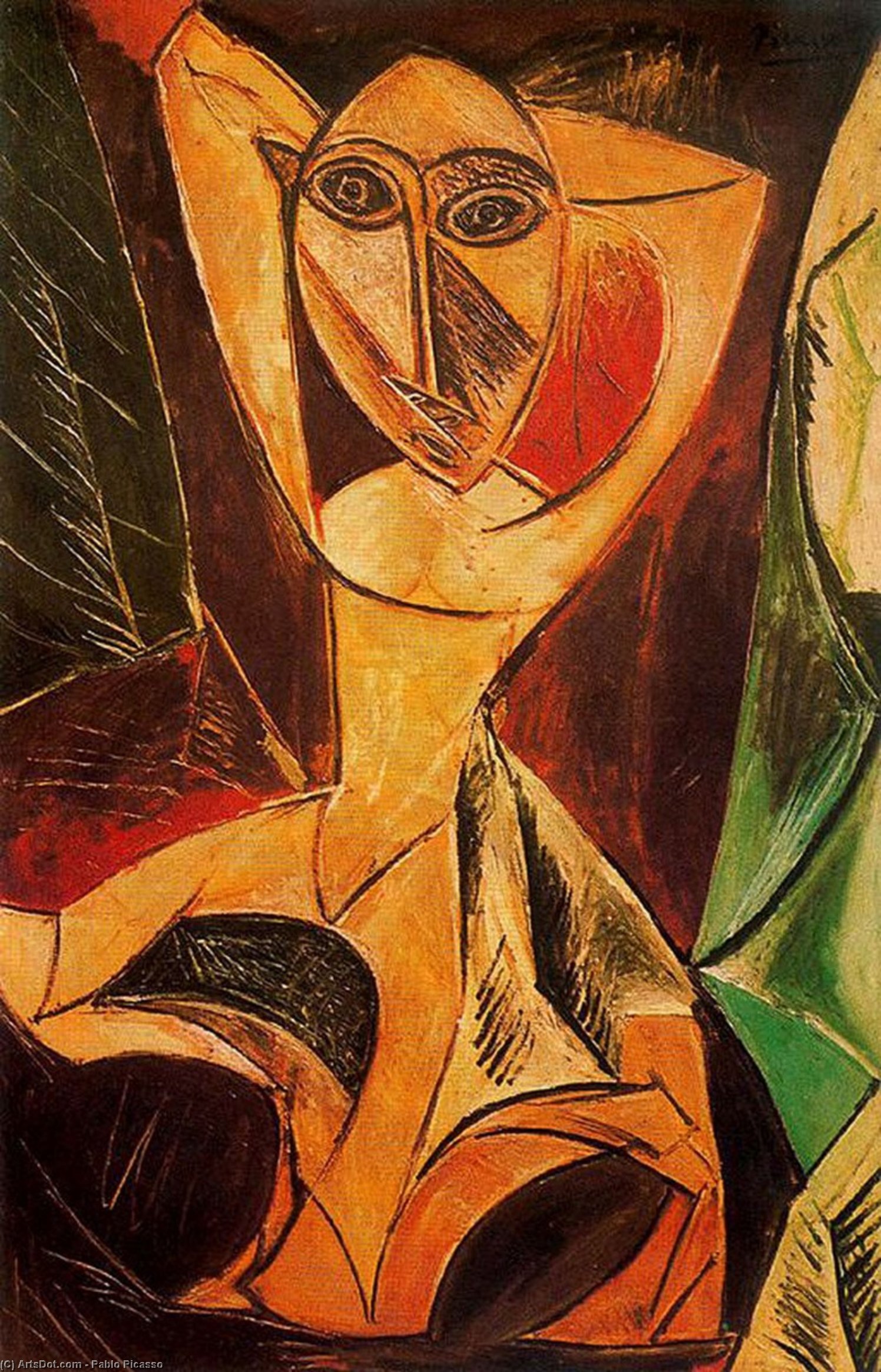
Pablo Picasso's Nude with Raised Arms (The Avignon Dancer), created in 1907, is a seminal work that marks the beginning of Cubism. This painting is part of a series known as the "African Period," which was influenced by African masks and sculptures.
Artistic Style
This piece is characterized by its fragmented forms and multiple viewpoints, typical of Cubist art. The subject's body is broken down into geometric shapes, creating a sense of dynamism and tension. The use of earthy tones and bold lines adds to the overall primitivism of the work.
Historical Context
The early 20th century saw a significant shift in artistic movements, with Cubism being one of the most revolutionary. Picasso and
Georges Braque pioneered this movement, which rejected traditional techniques of perspective and representation.
Significance
Nude with Raised Arms (The Avignon Dancer) is not only a masterpiece of Cubism but also a reflection of the cultural and artistic upheaval of its time. It challenges the viewer to reevaluate their perception of art and reality.
Relevance in Modern Art
This painting has influenced generations of artists, from
Juan Gris to
Fernand Leger. Its impact can be seen in various forms of modern art, including Surrealism and Abstract Expressionism.
Conclusion
Nude with Raised Arms (The Avignon Dancer) is a landmark piece that continues to fascinate art lovers today. Its innovative style and historical significance make it an essential part of any discussion on modern art.
ArtsDot.com offers high-quality, handmade oil painting reproductions of this and other famous works. Visit our website to explore more about Cubism and its influential artists.
For a deeper understanding of Cubism and its pioneers, refer to
Top 5 Famous Cubism Artists of All Time.