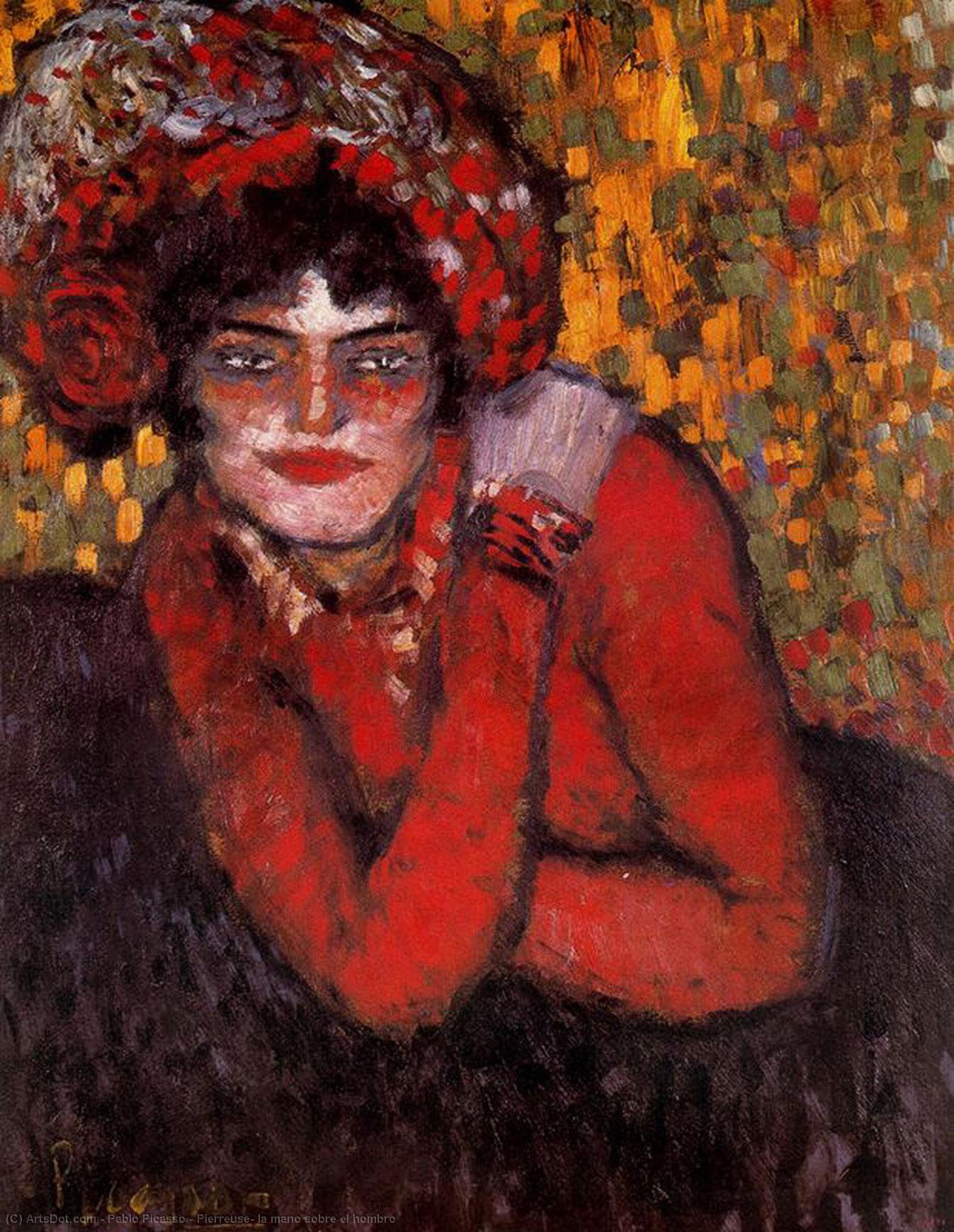
Pablo Picasso’s Pierreuse, la mano sobre el hombro (1901) is a seminal work of the Cubist movement, revolutionizing visual language. Analyzing its geometric abstraction reveals Picasso's pioneering spirit and lasting influence on 20th-century art. Discover more about Cubism and Picasso’s artistic legacy at ArtsDot.com.
Introduction to Cubism
Pablo Picasso's
Pierreuse, la mano sobre el hombro is a seminal work of the Cubist movement, which revolutionized modern art. This painting, created in 1908, showcases Picasso's innovative and influential style, characterized by fragmented forms and multiple perspectives. As a pioneer of Cubism, Picasso sought to break away from traditional representation and create a new visual language.
Analysis of the Painting
The painting depicts a woman with her hand on the shoulder of another woman, rendered in a fragmented and abstract manner. The figures are reduced to geometric shapes, overlapping and intersecting to create a sense of depth and complexity. This style, known as
Cubism, paved the way for other avant-garde movements, such as Futurism, Dadaism, and Surrealism.
Artistic Significance
Picasso's work had a profound impact on modern art, inspiring generations of artists to experiment with new forms and techniques. His innovative approach to representation and abstraction continues to influence contemporary art. For more information on
Pablo Picasso and his artistic movement, visit the
Pablo Picasso artist page at ArtsDot.
Cubism remains a vital and influential art movement, with its innovative techniques and ideas continuing to shape contemporary art. As a masterpiece of Cubist art,
Pierreuse, la mano sobre el hombro by
Pablo Picasso is a testament to the enduring power of this revolutionary style.
For a deeper understanding of Picasso's artistic development and the Cubist movement, visit the
Pablo Picasso artist page at ArtsDot.