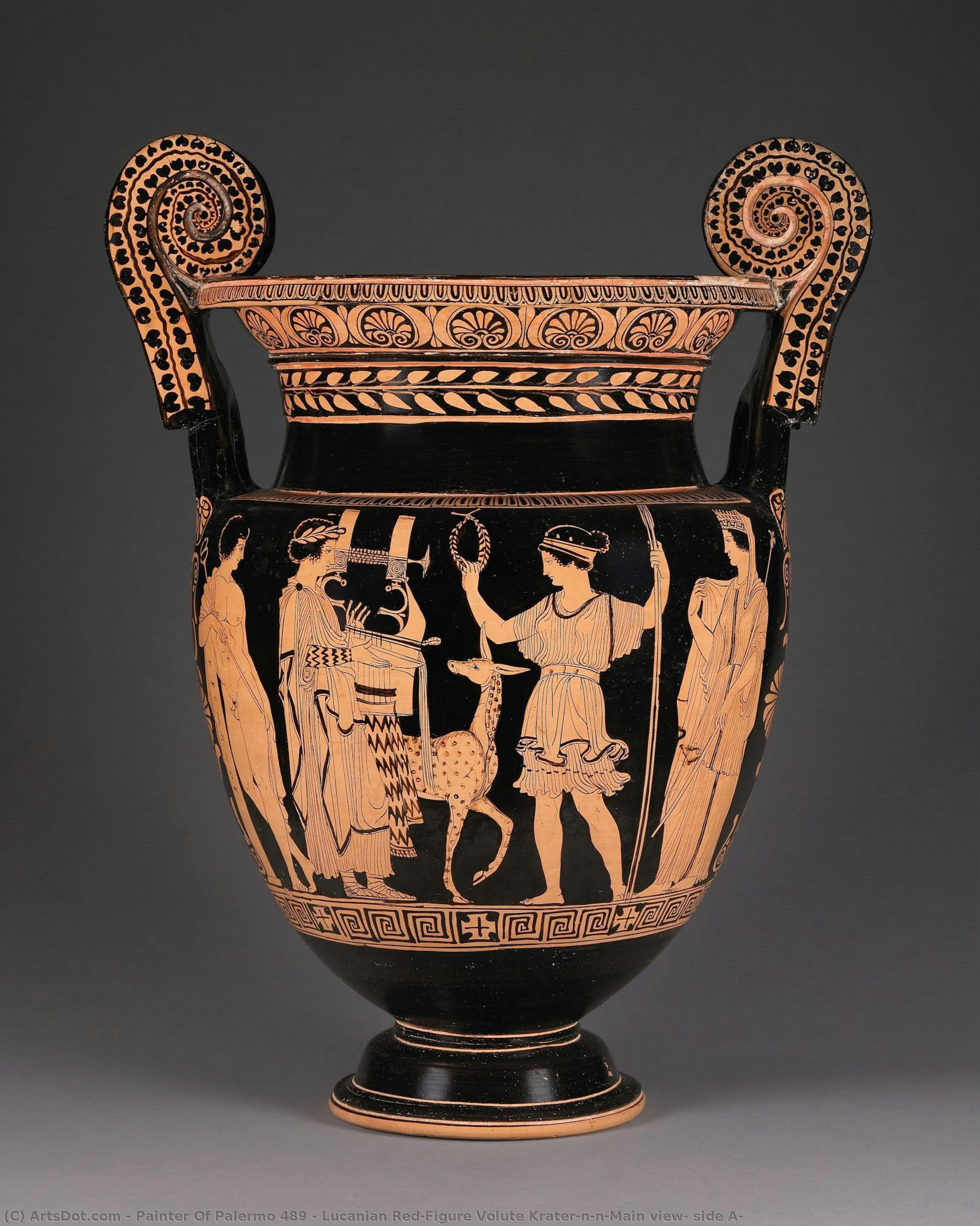
Lucanian Red-Figure Volute Krater\n\n(Main view, side A)

Admire Lucanian Red-Figure Volute Krater by Palermo Painter, a masterpiece of Corinthian vase painting from around 415–400 BC. Explore its mythological themes and intricate decoration at the Getty Museum.


painter of palermo 489

Discover the painter of Palermo 489, an influential ancient Corinthian vase painter of the black-figure style (ca. 640–625 BC). Renowned as a teacher of the Columbus painter, he shaped early Greek ceramic art.

J・ポール・ゲティ美術館 (Los Angeles, United States of America)

ロサンゼルス丘陵にそびえるJ・ポール・ゲティ美術館。ルネサンスから印象派までのヨーロッパ絵画、古代ギリシャ彫刻など、多様な芸術を無料で鑑賞!ゲティセンターとヴィラで歴史と美を発見。 アメリカ合衆国 ティモシー・ポットツ ロサンゼルス J・ポール・ゲティ美術館 ルネサンスから印象派までのヨーロッパ絵画 美術館 1974 ニューヨーク市 2 J・ポール・ゲティ美術館は主にどこに位置していますか?

A gathering of deities decorates the front of this red-figure volute-krater (mixing bowl), made in a Greek colony in the region of Lucania in southern Italy. The twin gods Apollo and Artemis occupy the center of the scene. Apollo holds a kithara, denoting his role as god of music, and Artemis, the goddess of the hunt, is accompanied by her sacred deer. Their mother Leto stands at the right. On the left, the god Hermes leans on a pillar inscribed with his name. Two pairs of youths stand conversing on the back of the vase.The volute-krater was a large serving vessel used to mix wine and water at a symposium or drinking party. Large figure-decorated symposium vessels like this one began to be produced in Southern Italy from the late fifth century B.C.