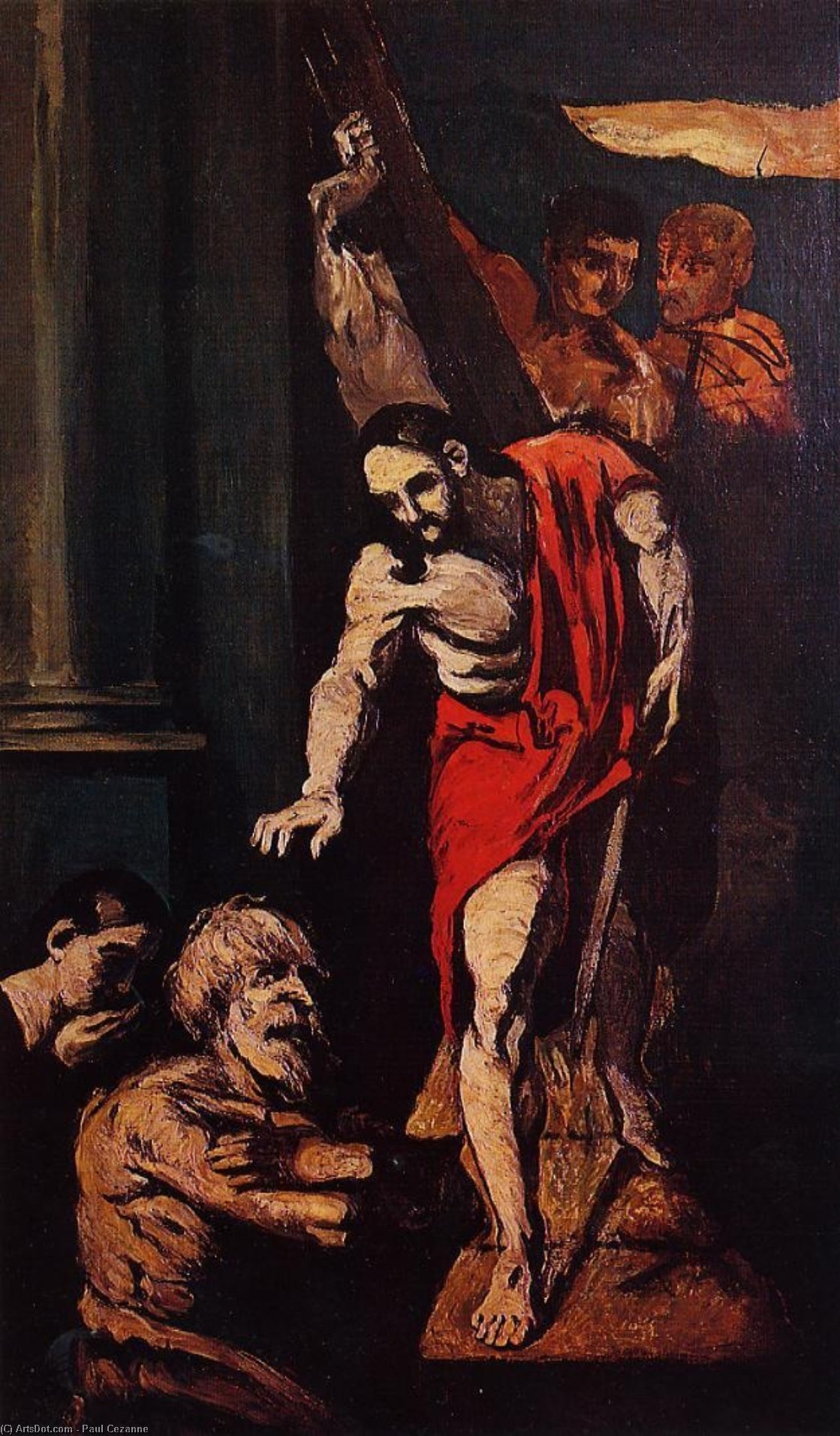
Christ in Limbo
Paul Cézanne’s
Christ in Limbo is a captivating work of art that embodies the essence of Romanticism. Created in 1867, this oil-on-canvas piece is a testament to Cézanne’s early experimentation with dramatic and emotive themes. The painting depicts Jesus being crucified, surrounded by several figures, each conveying a sense of intensity and drama.
Composition and Symbolism
The central figure of the painting is Jesus, positioned towards the center of the image with his arms outstretched. The other figures in the picture are likely to be portraying the people who were present during this event, such as soldiers or bystanders. The use of black and white tones adds to the emotional intensity of the scene, highlighting the suffering and sacrifice that Jesus underwent for humanity's salvation. Cézanne’s masterful composition utilizes geometric forms—particularly triangles—to create a sense of stability amidst the turbulent emotions conveyed by the figures. This deliberate structuring reflects Cézanne’s broader philosophical preoccupation with uncovering the underlying structure of reality, anticipating developments in Cubism decades later. The painting is characterized by its dramatic and tense atmosphere, which is reminiscent of other works by
Paul Cézanne, such as
Satyres and Nymphs and
The Abduction. These paintings showcase Cézanne’s unique style, which blends elements of Impressionism with a focus on the underlying structure of the composition.
- The painting is a significant example of Paul Cézanne’s early work, showcasing his experimentation with Romanticism.
- The use of oil on canvas adds to the emotional intensity of the scene, highlighting the suffering and sacrifice of Jesus.
- The painting is characterized by its dramatic and tense atmosphere, which is reminiscent of other works by Paul Cézanne.
Handmade oil paintings reproductions of
Christ in Limbo are available on
ArtsDot.com, allowing art enthusiasts to own a piece of history. The
Ruskin Museum in the United Kingdom is also worth visiting, as it features an impressive collection of artworks, including those by
Fujishima Takeji, a Japanese painter noted for his work in developing Romanticism and Impressionism.
For more information on
Paul Cézanne and his works, visit
ArtsDot.com or Wikipedia.org.