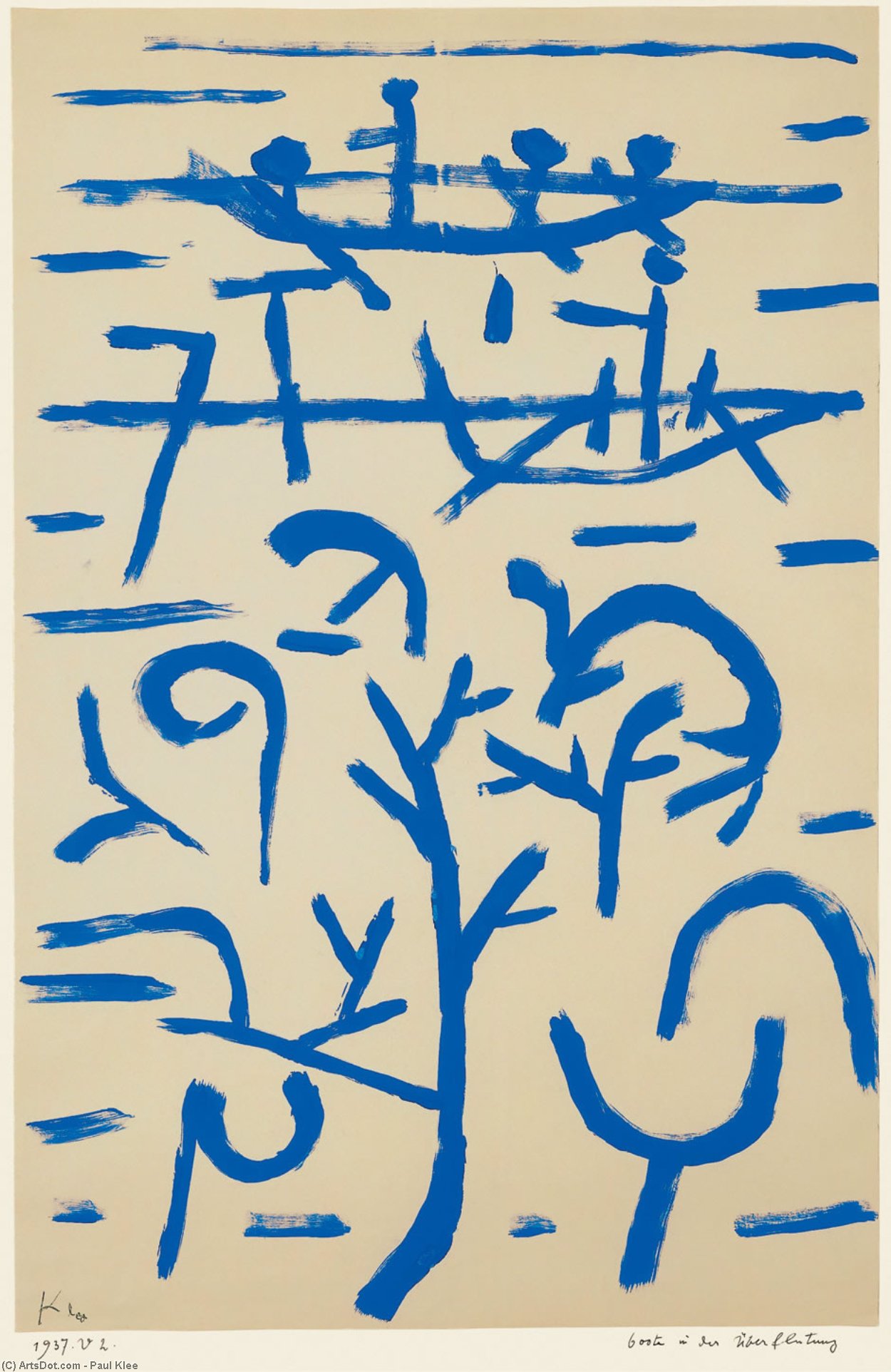
Paul Klee’s “Flood” – A Symphony of Color and Uncertainty
“Flood,” painted in 1937 by Paul Klee, stands as one of the artist's most iconic works—a mesmerizing tableau that encapsulates his distinctive approach to abstraction and invites contemplation on themes of vulnerability, resilience, and the elusive nature of perception. Created during a period marked by escalating anxieties surrounding the looming shadow of World War II, “Flood” isn’t merely a depiction of a natural disaster; it's a profound meditation on human experience itself.
Style and Composition: Embracing Organic Forms
Klee’s style is instantly recognizable for its embrace of organic forms—irregular shapes reminiscent of pebbles, leaves, and flowing water dominate the canvas. Unlike traditional landscapes striving for accurate representation, “Flood” abandons realism altogether, prioritizing expressive gesture and tonal variation over precise detail. The composition itself is deliberately asymmetrical, creating a dynamic tension that mirrors the turbulent forces unleashed by the floodwaters.
Technique: Watercolor and Gouache – Layers of Texture and Illusion
The painting utilizes watercolor and gouache—a combination known for its luminous quality and ability to achieve remarkable textural effects. Klee meticulously applied thin washes of watercolor, building up layers of color that gradually coalesce into richer hues. Gouache, a pigment suspended in binder, provides additional opacity and allows for bold accents of white paint—creating striking contrasts that heighten the visual drama. The artist’s masterful manipulation of these mediums generates an illusionistic depth, drawing viewers into the depicted scene.
Historical Context: Weimar Republic Anxiety
“Flood” emerged from the turbulent backdrop of the Weimar Republic—Germany's fragile democratic experiment grappling with economic instability and political polarization. Klee himself was deeply affected by the pervasive sense of unease that gripped European society in the lead-up to war, reflecting this anxiety through his artistic explorations. The painting’s unsettling atmosphere—characterized by muted tones and ambiguous spatial relationships—mirrors the psychological state of a nation facing imminent peril.
Symbolism: Resilience Amidst Chaos
Beyond its aesthetic qualities, “Flood” is laden with symbolic significance. The boats themselves represent humanity's precarious position amidst overwhelming forces—a fragile vessel attempting to navigate turbulent waters. Yet, despite the apparent chaos depicted on canvas, Klee imbues the scene with a sense of quiet dignity and perseverance. The upward thrust of the boats suggests aspiration toward transcendence—a yearning for stability and harmony in a world consumed by uncertainty.
Emotional Impact: A Reflection of Inner Turmoil
"Flood" resonates deeply with viewers on an emotional level, prompting introspection about themes of vulnerability, fear, and hope. Klee’s masterful use of color and form conveys not only the visual spectacle of a flood but also the profound psychological experience of confronting adversity—a reminder that beauty can emerge even from darkness.
- Artist: Paul Klee
- Year Painted: 1937
- Medium: Watercolor and Gouache on Paper
- Dimensions: 49 x 32 cm
A reproduction of “Flood” offers an exceptional opportunity to experience Klee’s visionary artistry firsthand—bringing a touch of contemplative beauty into any interior space.