A Visceral Encounter with Expressionism
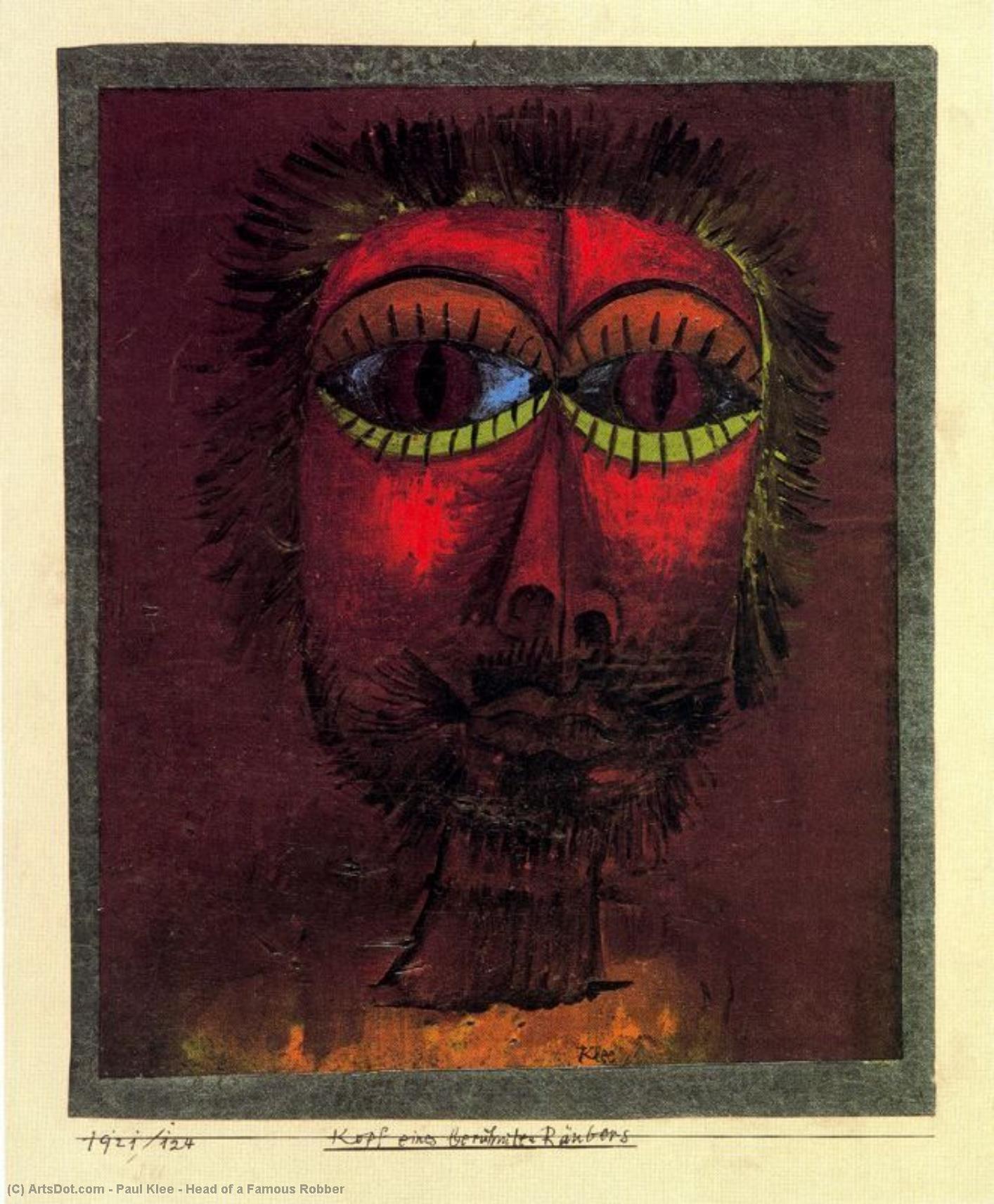
In the hauntingly vibrant masterpiece "Head of a Famous Robber," Paul Klee invites the viewer into a psychological landscape where color and form collide to evoke profound human emotion. Painted in 1934, this work serves as a striking testament to the power of Expressionism, a movement that sought to strip away the veneer of objective reality to reveal the raw, subjective truths of the soul. The painting presents a stylized, crimson-hued face that commands immediate attention, its features simplified yet intensely communicative. Through a masterful use of bold, primary tones and a deliberate lack of meticulous detail, Klee captures a sense of primal energy, making the piece not merely a portrait, but an emotional experience that resonates with anyone drawn to the transformative power of abstract art.
The technique employed by Klee in this work is nothing short of hypnotic. The artist utilizes thick, textured applications of paint that lend a physical weight to the composition, allowing the surface to mirror the turbulent psychological state of the subject. A rhythmic use of hatching lines creates an underlying sense of movement and instability, as if the very fabric of the face is vibrating with internal tension. This interplay between the fiery red of the central figure and the warm, glowing backdrop of oranges and yellows creates a luminous contrast that draws the eye inward. For collectors and interior designers, this dynamic use of color offers a sophisticated focal point, capable of injecting warmth, drama, and a sense of intellectual depth into any curated space.
Shadows of History and Symbolic Resonance
To look upon "Head of a Famous Robber" is to witness the shadows of a darkening Europe. Created during the rise of Nazism in Germany, the painting is steeped in the pervasive atmosphere of fear and uncertainty that defined the era. Klee’s choice of subject—a stylized, almost archetypal figure of a robber—carries a heavy symbolic weight. In the context of 1930s authoritarianism, the ambiguity of the figure allows for multiple interpretations: it can be seen as a symbol of criminality and chaos, or more poignantly, as an emblem of defiance and the untamable human spirit resisting suppression. The crimson red that dominates the face acts as an emotional vessel, representing both the heat of passion and the visceral reality of struggle.
Beyond its historical gravity, the painting offers a timeless exploration of identity and vulnerability. The way the eyes are positioned—separated and watchful—suggests a state of hyper-awareness, a characteristic of those living under the gaze of oppression. This profound engagement with themes of resistance and inner turmoil ensures that the artwork remains as relevant today as it was nearly a century ago. For those seeking to adorn their homes with art that provokes thought and conversation, this reproduction offers more than mere decoration; it provides a window into the courageous artistic stance Klee took against the encroaching darkness of his time, making it a truly soulful addition to any fine art collection.