A Quiet Revelation: The Soul of Expressionism
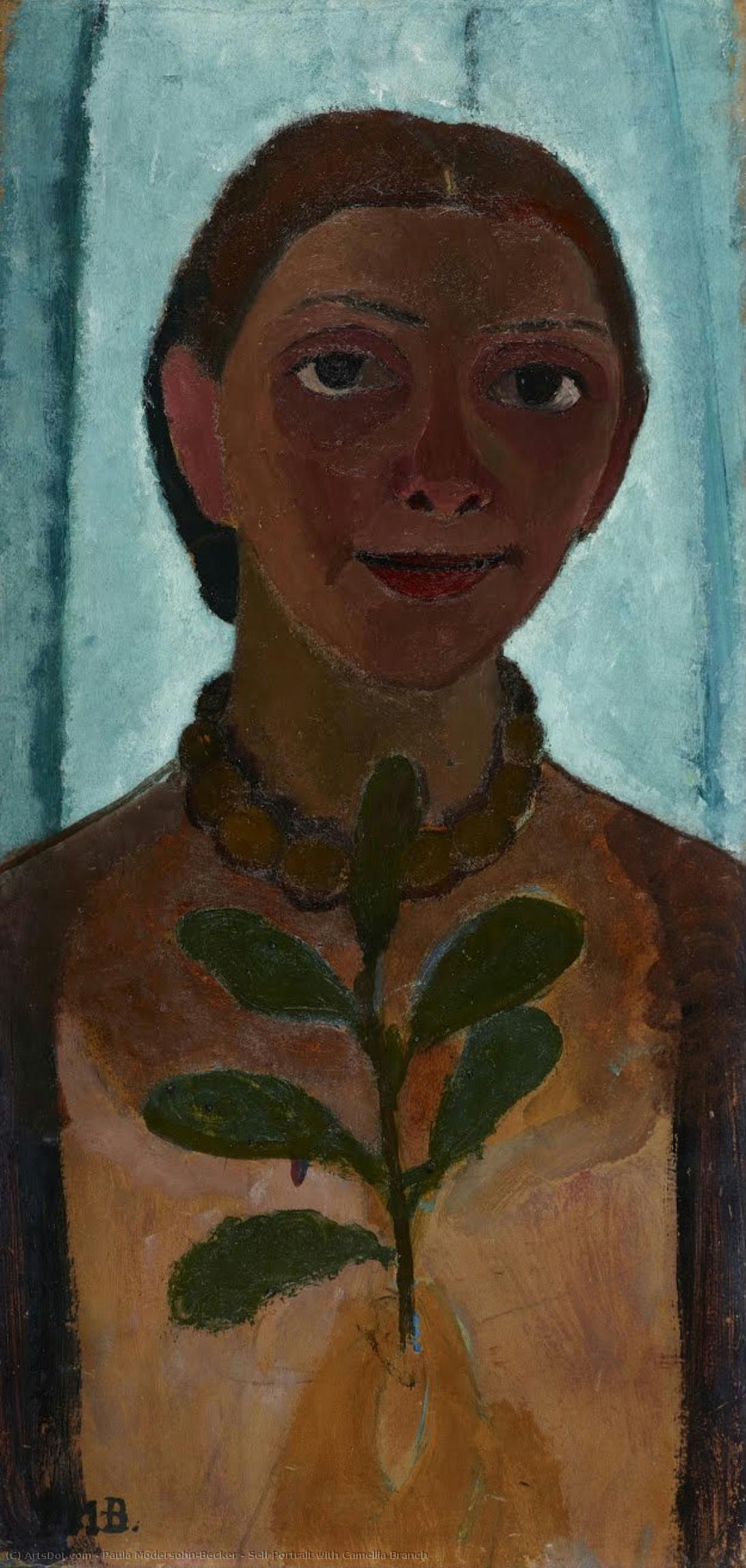
In the intimate realm of early twentieth-century modernism, few works possess the haunting, quiet power of Paula Modersohn-Becker’s Self Portrait with Camellia Branch. Painted between 1906 and 1907, this masterpiece serves as a profound meditation on the intersection of femininity, mortality, and the natural world. As one gazes upon the artist's likeness, there is an immediate sense of encountering a private moment of introspection. The painting does not merely capture a physical resemblance; it captures a state of being. Through her unflinching gaze, Becker invites the viewer into a space where the boundaries between the internal psyche and the external world begin to blur, making it an irresistible centerpiece for any collection dedicated to the emotional depth of the Expressionist movement.
The technique employed by Becker marks a radical departure from the polished academic traditions of her era. Eschewing the delicate, light-drenched idealism of Impressionism, she embraced the burgeoning tenets of Expressionism, prioritizing subjective feeling over objective accuracy. The canvas is characterized by a deliberate flattening of perspective and simplified, almost primal forms that direct the eye toward the raw emotion of the subject. Her palette—rich with deep blues and earthy greens—imbues the scene with a palpable, heavy atmosphere, creating a sense of weight and permanence. For the discerning collector or interior designer, this stylistic boldness offers a sophisticated textural element, providing a focal point that commands attention through its structural simplicity and tonal depth.
Symbolism and the Cycle of Life
Every element within this self-portrait is laden with a poetic, symbolic weight that rewards deep contemplation. The most striking feature, the camellia branch held by the artist, acts as a silent protagonist in this visual narrative. In the language of flowers, the camellia is often associated with mourning and remembrance, frequently appearing in funeral wreaths to signify purity and devotion. Yet, within Becker’s vision, the flower also embodies the concept of rebirth and regeneration. This duality—the tension between the inevitability of loss and the persistence of life—mirrors the artist's own awareness of her fleeting existence. The branch is not merely a decorative accessory but a memento mori that breathes life into the composition.
The emotional impact of the piece lies in this very vulnerability. Becker’s gaze, directed outward toward the viewer, possesses an unsettling honesty; it is a look that acknowledges mortality while simultaneously asserting her presence in the moment. This creates a profound psychological resonance, making the artwork much more than a mere portrait. It becomes a window into the human condition, exploring themes of resilience and the enduring beauty found within fragility. For those seeking to decorate a space with art that inspires thought and evokes empathy, this reproduction offers an unparalleled opportunity to bring a sense of historical gravity and soulful elegance into a modern living environment.