A Visionary Glimpse into the Avant-Garde
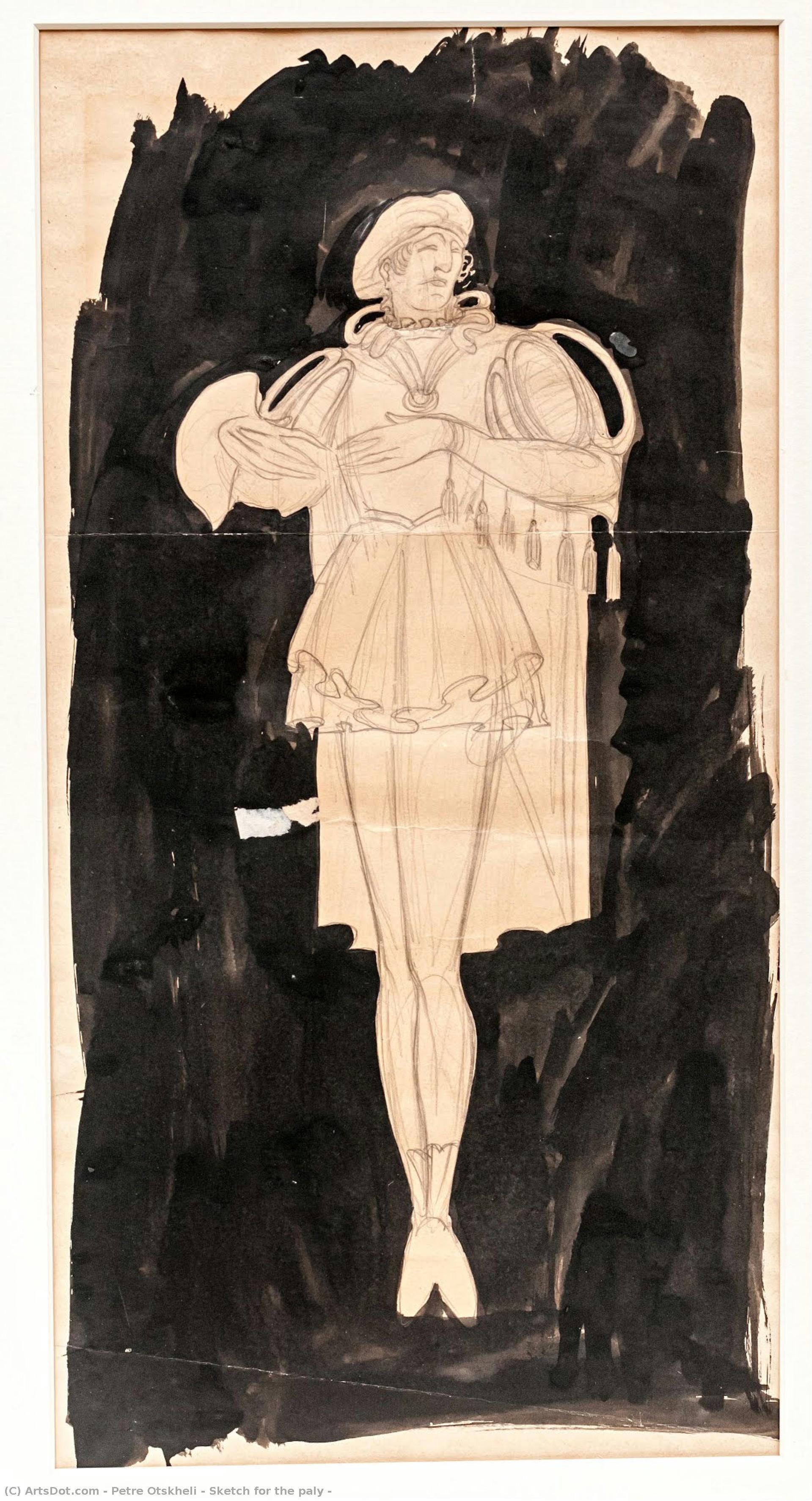
In the delicate, monochromatic strokes of "Sketch for the play," we encounter a profound moment of theatrical preparation captured by the Georgian modernist master, Petre Otskheli. Created in 1933, this work serves as a hauntingly beautiful window into the world of stage design, where the boundaries between reality and performance begin to blur. The central figure—a woman poised with an unmistakable air of confidence—stands on a single leg, her hands tucked behind her back in a gesture that suggests both vulnerability and immense strength. Her attire, rendered with meticulous attention to texture and form, speaks to the sophisticated aesthetic of the early 20th-century avant-garde, inviting the viewer to step into a rehearsal space where every movement is heavy with dramatic intent.
The composition utilizes a striking interplay of light and shadow, characteristic of the era's fascination with scenographic constructivism. While the central protagonist commands the eye through her sharp silhouette and commanding posture, the background figures emerge like ghosts from the periphery, adding layers of depth and narrative complexity to the scene. This technique does more than just create a sense of space; it evokes the bustling, unseen energy of a theater in motion. For the discerning collector or interior designer, this piece offers a sophisticated focal point that brings a sense of intellectual rigor and historical gravity to any curated space.
The Tragic Elegance of a Lost Era
To look upon this sketch is to engage with the turbulent history of Georgian modernism. Petre Otskheli was a visionary whose career was defined by his transformative collaborations with legendary directors like Kote Marjanishvili. His ability to translate dramatic tension into visual form made him a pioneer of stage design, yet his brilliance was shadowed by the political storms of his time. The year 1933, when this piece was conceived, sat on the precipice of an era that would soon silence many of the most innovative voices in the Caucasus. There is a palpable tension in the woman's pose—a balance between grace and a sudden, arrested motion—that mirrors the precariousness of the artist's own life during the rise of Stalinist pressure.
The emotional impact of the work lies in this very duality: the triumph of artistic expression captured amidst an atmosphere of impending uncertainty. The monochromatic palette strips away the distraction of color, forcing the viewer to confront the raw essence of line, shape, and emotion. It is a piece that resonates deeply with those who appreciate art as a testament to human resilience. Whether displayed in a contemporary gallery setting or as a centerpiece in a classic study, this reproduction serves as a poignant reminder of the enduring power of the creative spirit to transcend its historical constraints.