A Vision of Divine Light: The Mastery of Petrus Christus
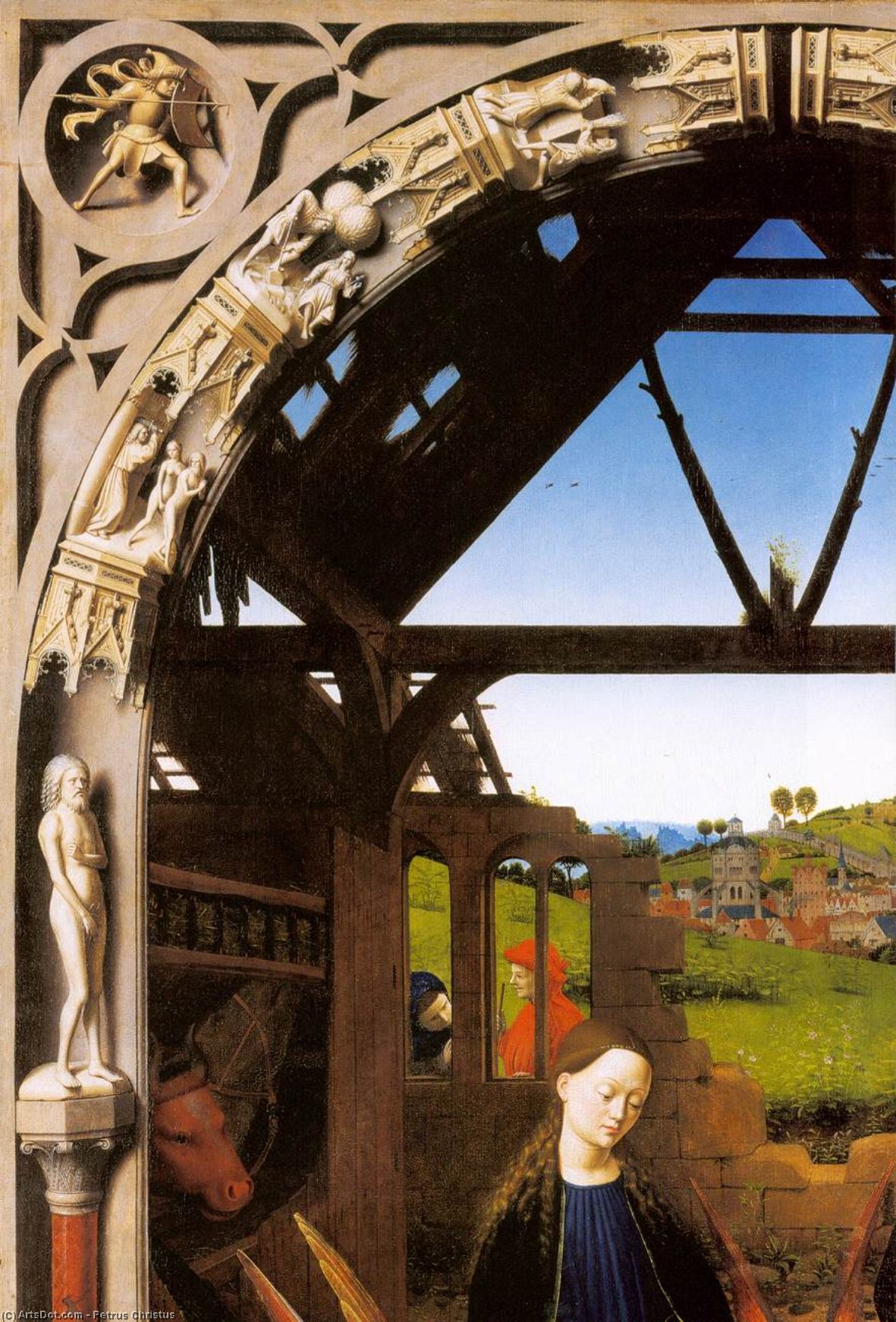
In the quiet, hallowed corridors of art history, few works capture the profound intersection of human tenderness and divine mystery as exquisitely as The Nativity by Petrus Christus. This intimate oil-on-panel masterpiece, emerging from the vibrant artistic crucible of Bruges around 1450, serves as a luminous window into the Early Netherlandish tradition. To gaze upon this detail is to enter a world where every brushstroke is an act of devotion, and every shadow holds a secret. The artwork presents a meticulously crafted interior, dominated by a grand, arched architectural space that seems to breathe with a life of its own. Through the masterful application of layered glazes, Christus achieves a level of luminosity that makes the very air within the frame feel heavy with sanctity, inviting the viewer into a moment of eternal stillness.
The composition is a triumph of spatial intelligence and symbolic depth. Influenced by the monumental legacies of Jan van Eyck and Rogier van der Weyden, Christus utilizes an emerging understanding of linear perspective to guide the eye through a complex arrangement of figures and receding planes. The architectural elements are not merely decorative; they are narrative vessels. The sculpted reliefs adorning the arches depict scenes from Genesis, creating a deliberate, sophisticated dialogue between the Fall of Man and the Redemption found in the Nativity. This layering of meaning ensures that the painting is not just a depiction of a historical event, but a profound theological meditation on the continuity of salvation history.
Texture, Technique, and the Art of Realism
For the discerning collector or interior designer, the true allure of this work lies in its unparalleled tactile realism. Christus was a virtuoso of texture, possessing an uncanny ability to translate the physical world onto a wooden panel. One can almost feel the cool, rugged surface of the stone reliefs, the heavy weight of the draped fabrics, and the soft, organic warmth of human skin. This meticulous rendering is achieved through the painstaking technique of oil painting, where translucent layers are built up to catch and refract light, creating a sense of depth that feels almost three-dimensional.
The color palette is a masterclass in understated elegance. Eschewing garish hues for a sophisticated range of earthy tones, muted ochres, and deep shadows, the artist creates an atmosphere of solemn dignity. This restrained chromatic approach allows the directional lighting to perform its magic, casting soft shadows that define form and volume while highlighting the subtle nuances of expression on the figures' faces. It is this balance of technical precision and atmospheric softness that makes a high-quality reproduction of such a piece a transformative addition to any curated space, offering a sense of timelessness and quiet grandeur.
An Emotional Resonance for the Modern Space
Beyond its historical significance and technical brilliance, The Nativity possesses an enduring emotional gravity. It evokes a sense of reverence, contemplation, and peace—qualities that are increasingly sought after in contemporary interior design. In an era of constant motion, the stillness of Christus’ vision offers a sanctuary for the soul. The painting does not merely demand attention; it invites a slow, meditative engagement, encouraging the viewer to linger on the intricate details and find solace in its harmonious composition.
Whether placed in a private study, a grand gallery, or a thoughtfully designed living area, a reproduction of this masterpiece serves as more than mere decoration. It acts as an anchor of cultural sophistication and spiritual depth. By bringing the light of the Bruges school into a modern environment, one honors the legacy of Petrus Christus and invites the profound beauty of the Northern Renaissance to participate in the daily narrative of contemporary life.