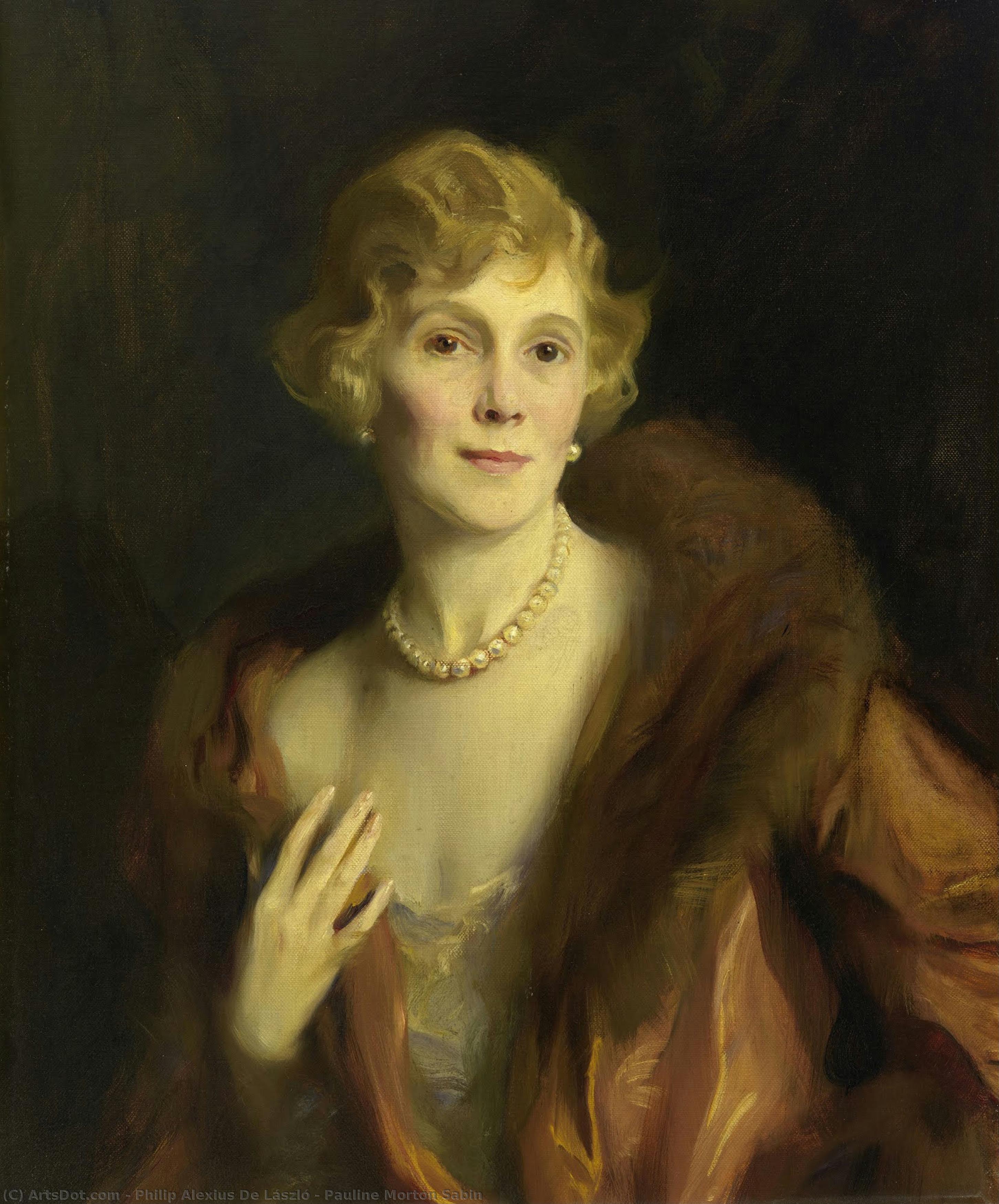
Pauline Morton Sabin – A Portrait of Elegance in the Jazz Age
Philip Alexius de László’s 1926 painting, “Pauline Morton Sabin,” is more than just a portrait; it's a meticulously crafted snapshot of a moment within the opulent social landscape of the early 20th century. The canvas, measuring 59 x 73 cm, immediately draws the eye to its subject – Pauline Morton Sabin – a woman radiating quiet confidence and understated glamour. De László’s masterful technique, honed through years of studying academic traditions alongside contemporary portraiture trends, results in an image brimming with realism and a palpable sense of atmosphere.
- Subject & Composition: The painting centers on Pauline Sabin, depicted in a pose that suggests both formality and relaxed engagement. Her blonde hair is elegantly styled, complemented by a delicate pearl necklace – a symbol of wealth and status prevalent during this era. The inclusion of the fur coat, a hallmark of fashionable attire at the time, further emphasizes her privileged position.
- The Supporting Figures: Intriguingly, Sabin isn't alone. Two other individuals are present in the scene, positioned on either side of her. Their interaction, whether observation or conversation, adds layers of narrative and invites speculation about the context of this portrait session. This compositional choice elevates the work beyond a simple likeness, hinting at social dynamics and relationships within the elite circles De László frequented.
De László’s Technique: Realism and Atmospheric Depth
De László was renowned for his ability to capture not just physical appearance but also the very essence of his subjects. His technique involved meticulous layering of thin glazes, building up color gradually to achieve a luminous effect – a signature characteristic of his work. This approach is particularly evident in the rendering of Pauline’s skin tones, which possess a remarkable softness and depth. The subtle gradations of light and shadow create an almost three-dimensional quality, drawing the viewer into the scene.
- Brushwork: His brushstrokes are generally smooth and controlled, contributing to the overall sense of realism. However, he skillfully employs variations in pressure and direction to suggest texture – the plushness of the fur coat, the sheen of the pearl necklace, and the delicate flow of her hair.
- Color Palette: The color palette is restrained yet sophisticated, dominated by warm tones—ochres, browns, and creams—that evoke a sense of luxury and refinement. These colors are expertly balanced to create harmony and visual interest.
Historical Context & Symbolism
Painted in 1926, “Pauline Morton Sabin” reflects the vibrant social scene of the Jazz Age. The period was marked by economic prosperity, technological advancements, and a burgeoning fascination with modernity. Portraits like this one were commissioned not just to commemorate individuals but also to solidify their place within the established order. The inclusion of the fur coat, a symbol of wealth and status, underscores the subject's belonging to an elite social class.
- Social Portraiture: De László’s portraits were often commissioned by wealthy families and prominent figures, serving as visual records of their lives and achievements.
- The Role of the Artist: The artist himself played a crucial role in shaping the subject's image, carefully considering pose, expression, and attire to create a portrait that was both flattering and representative of the individual’s character.
Emotional Impact & Artistic Legacy
"Pauline Morton Sabin" transcends a simple depiction of a woman; it is an evocative portrayal of elegance, confidence, and social grace. De László's ability to capture not just physical likeness but also the subtle nuances of personality ensures that this painting continues to resonate with viewers today. This piece exemplifies De László’s enduring legacy as one of the most celebrated portrait painters of his time, a testament to his technical skill, artistic vision, and profound understanding of human character.