A Divine Geometry: The Majesty of Piero della Francesca
In the quiet, hallowed halls of Perugia's Galleria Nazionale dell'Umbria, there exists a window into the soul of the Early Renaissance. The Polyptych of St Anthony: St Anthony and St John the Baptist is not merely a painting; it is a profound meditation on order, light, and the divine. Created by the visionary Tuscan master Piero della Francesca around 1460, this monumental work serves as a cornerstone of humanistic achievement. To gaze upon it is to witness the moment where the spiritual fervor of the Middle Ages met the rigorous, mathematical clarity of the Renaissance. The composition breathes with a serene stillness, inviting the viewer into a world where every line and shadow is governed by a celestial logic.
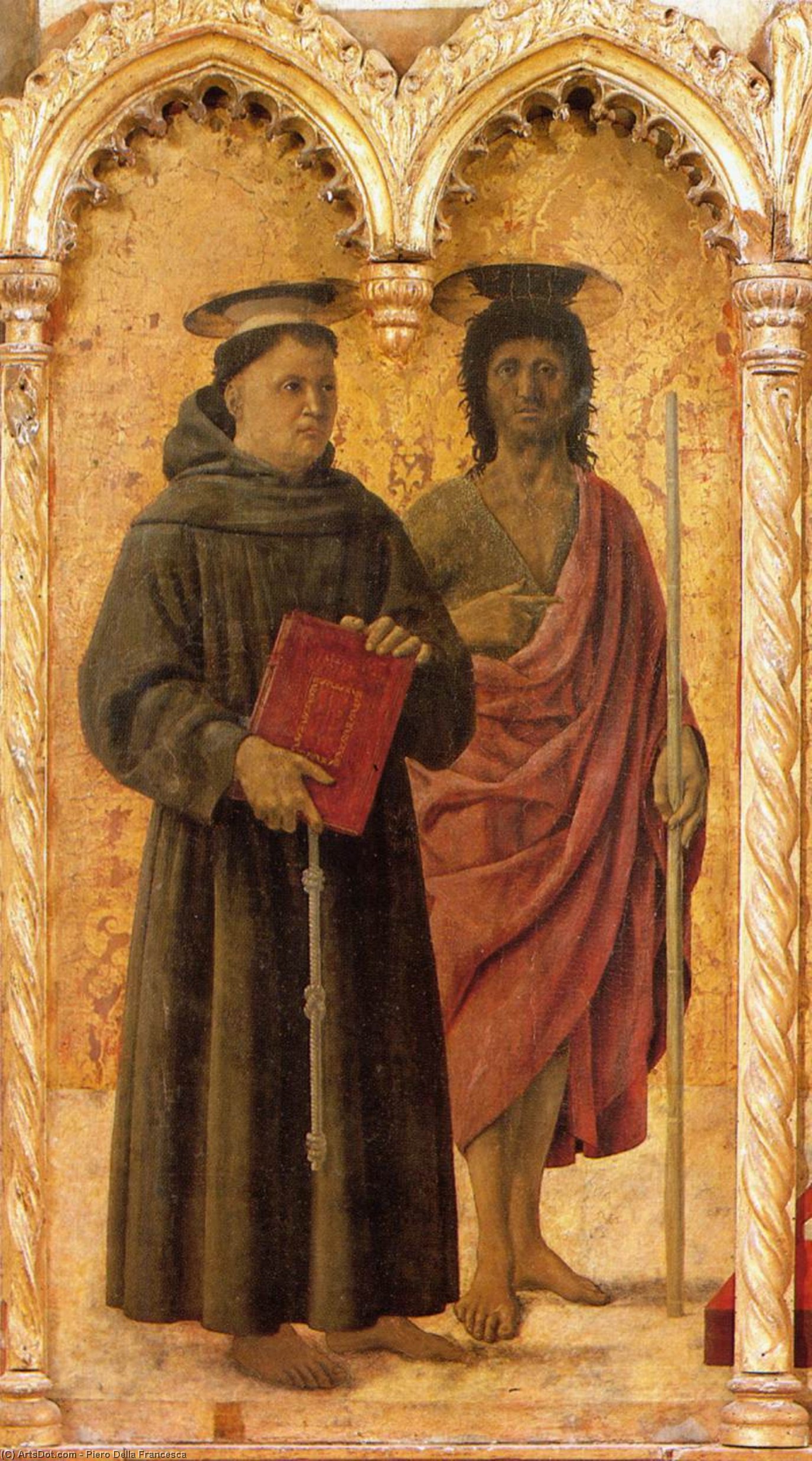
The central focus of this masterpiece brings us face-to-face with the profound presence of St Anthony holding his sacred book, alongside St John the Baptist clutching his symbolic cross. These figures are not isolated icons but are integrated into a breathtakingly complex architectural setting. Piero, a master of spatial illusionism, utilized two vanishing points to construct an environment that feels tangibly real, yet transcendently perfect. The arches and columns surrounding the saints mirror the grandeur of Roman antiquity, suggesting that the strength of faith is built upon the enduring foundations of reason and classical wisdom. For the discerning collector or interior designer, this piece offers a sense of structural harmony and intellectual depth that can anchor any sophisticated space.
The Alchemy of Light and Technique
Beyond its theological significance, the Polyptych is a triumph of technical virtuosity. Executed with the meticulous precision of tempera on panel, Piero della Francesca’s hand is evident in the luminous quality of the skin tones and the heavy, sculptural folds of the drapery. There is an almost tactile reality to the way light falls across the figures, highlighting the anatomical accuracy that was so revolutionary for his time. This mastery of chiaroscuro and perspective does more than just create depth; it imbues the saints with a monumental weight, making them appear as if they are breathing within their gilded frame.
The artist’s unique ability to blend mathematical precision with emotional resonance is what makes this work truly timeless. While his use of geometry provides a sense of stability and peace, the subtle luminosity of the paint creates an ethereal atmosphere that stirs the spirit. The interplay between the solid, architectural elements and the soft, human features of the saints creates a rhythmic balance that is both captivating and calming. For those seeking to bring a piece of history into their homes, a high-quality reproduction of this polyptych offers more than just decoration; it provides an enduring source of contemplation and a sophisticated touch of Renaissance elegance.