A Portrait of Youthful Reverie: Delving into Renoir’s “Child with Blond Hair”
This captivating oil painting by
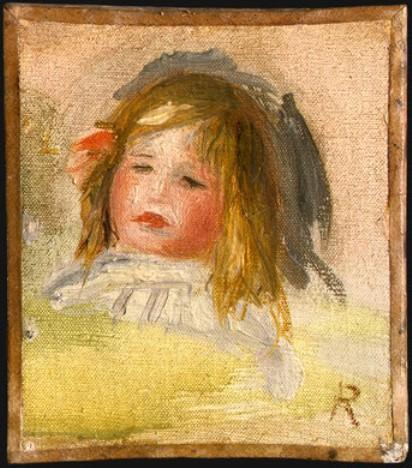
Pierre-Auguste Renoir offers a tender and intimate glimpse into the world of childhood. The work centers on a young girl, her face and upper torso filling the frame, bathed in soft light that exemplifies the vibrancy characteristic of his Impressionistic style. Though details regarding its precise date and dimensions remain elusive, this portrait beautifully embodies the core principles driving Renoir’s artistic vision: an unwavering celebration of beauty, light, and the ephemeral nature of fleeting moments.
Impressionistic Technique & Artistic Mastery
The painting is a compelling demonstration of Impressionistic technique. Rather than striving for photographic accuracy, Renoir prioritizes capturing the *impression* of light and form. This is brilliantly achieved through loose, visible brushstrokes that seem to dance across the canvas – particularly evident in the rendering of the girl’s flowing blond hair and delicately blushed cheeks. The generous application of paint—
impasto—adds a tactile quality, inviting the viewer's eye to trace the contours and almost feel the texture beneath their fingertips. The background isn’t defined by rigid lines but dissolves into a hazy blend of yellows and greens, creating a dreamlike atmosphere that softens reality’s edges. This deliberate blurring contributes significantly to the painting’s overall sense of ethereality and quiet contemplation.
Renoir & The Impressionist Revolution
Pierre-Auguste Renoir (1841–1919) was a foundational figure in the Impressionist movement, alongside luminaries like Monet, Degas, and Pissarro. These artists collectively rejected the strict conventions of academic painting, choosing instead to depict the world as they *perceived* it—emphasizing the subjective experience of light and color. Renoir, specifically, drew inspiration from Old Masters such as Rubens and Watteau, inheriting a fondness for lush forms and sensual beauty. While he frequently depicted scenes of Parisian life – figures enjoying leisure and social interaction – this portrait shares that same appreciation for the human form and radiant illumination. Although his later work leaned towards a more classical style, this piece firmly resides within his earlier, groundbreaking Impressionistic period.
Subtle Symbolism & Emotional Resonance
While lacking overt symbolic elements, the painting’s power lies in its subtle emotional impact. The girl's expression is one of quiet contemplation—perhaps even a hint of melancholy. Her gaze isn’t directed *at* the viewer but rather turned inward, suggesting a private world of thoughts and feelings. This introspective quality evokes a sense of innocence and vulnerability, inviting empathy from anyone who beholds it. The dominant golden tones further enhance this feeling of warmth and nostalgia, creating an atmosphere that is both comforting and poignant.
Interior Design & Collecting Considerations
This painting would be a stunning addition to a variety of interior spaces. Its soft color palette and delicate subject matter lend themselves beautifully to bedrooms, living rooms, or studies seeking a touch of classic elegance. The Impressionistic style complements both traditional and contemporary décor, adding visual interest and sophistication. A high-quality reproduction will faithfully capture the essence of Renoir’s brushwork and light, bringing a piece of art history into your home. Its relatively small size (as suggested by its description) makes it versatile for placement – equally at home as a focal point in a smaller room or integrated into a larger gallery wall arrangement.
Key Characteristics
- Style: Impressionism, with hints of realism.
- Technique: Visible brushstrokes, layering of paint (impasto), emphasis on light and color.
- Materials: Oil paints on canvas.
- Subject Matter: Portrait of a young girl evoking innocence and youthfulness.
- Emotional Impact: Quiet contemplation, vulnerability, nostalgia.