A Moment of Rural Bliss: Exploring Renoir’s *Dance in the Country*
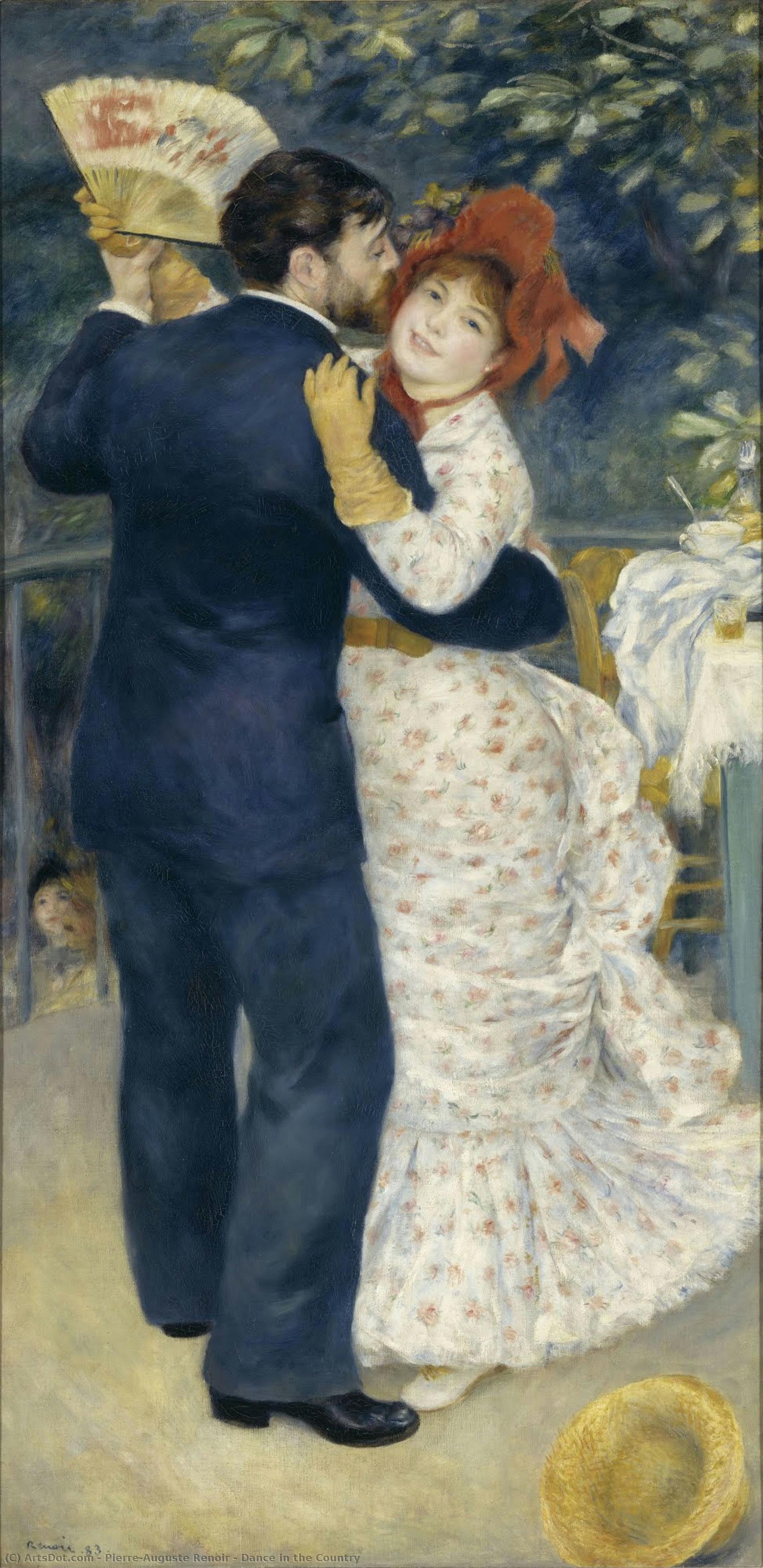
Dance in the Country*, painted around 1883 by Pierre-Auguste Renoir, is a captivating embodiment of Impressionist ideals – a celebration of beauty, fleeting moments, and the joy of human connection. Measuring 180 x 90 cm, this oil on canvas transports viewers to a sun-drenched countryside where romance blossoms amidst nature’s embrace.
Subject & Composition
The painting depicts a couple engaged in an intimate dance beneath the dappled shade of a chestnut tree. The figures – Paul Lhôte and Aline Charigot (who would later become Renoir's wife) – are rendered life-size, dominating the canvas and drawing the viewer directly into their world. A subtle background hints at other revelers, suggesting a lively gathering, yet the focus remains firmly on the central pair. The composition is deliberately informal, capturing a spontaneous moment rather than a staged pose.
Impressionist Technique & Style
Renoir’s masterful application of Impressionistic techniques is immediately apparent. He employs loose, visible brushstrokes and a vibrant palette to capture the effects of light and atmosphere. Colors are not blended seamlessly but applied in broken touches, allowing the viewer's eye to mix them optically. This technique creates a sense of movement and vibrancy, imbuing the scene with life. The diffused lighting softens forms and adds to the painting’s dreamlike quality.
This work exemplifies Renoir’s shift away from strict Impressionism towards a more structured style influenced by his study of Renaissance masters like Raphael.
Historical Context & Commission
Commissioned in 1882 by the influential art dealer Paul Durand-Ruel, *Dance in the Country* is one of three paintings created on the theme of dancing – alongside *Dance in the City* and *Dance at Bougival*. Durand-Ruel sought works that would appeal to a broader audience, and Renoir’s depiction of joyful social scenes proved immensely popular. The painting reflects the growing leisure culture of late 19th-century France and the increasing emphasis on outdoor recreation and entertainment.
Symbolism & Emotional Impact
Beyond its aesthetic beauty, *Dance in the Country* carries symbolic weight. The dance itself represents harmony, connection, and the celebration of life. The lush natural setting evokes feelings of tranquility and abundance.
Aline Charigot’s direct gaze engages the viewer, inviting us to share in their happiness. The overall effect is one of warmth, nostalgia, and serene romance. The painting isn't merely a depiction of an event; it's an evocation of feeling – a longing for simpler times and genuine human connection.
Renoir’s Legacy
Pierre-Auguste Renoir (1841–1919) was a pivotal figure in the Impressionist movement, renowned for his ability to capture beauty and sensuality with unparalleled skill. His work continues to inspire artists and captivate audiences worldwide.
Dance in the Country* stands as a testament to his enduring legacy – a timeless masterpiece that embodies the spirit of joy, love, and the fleeting magic of life.
- Style: Impressionism
- Medium: Oil on Canvas
- Dimensions: 180 x 90 cm
- Current Location: Musée d'Orsay, Paris