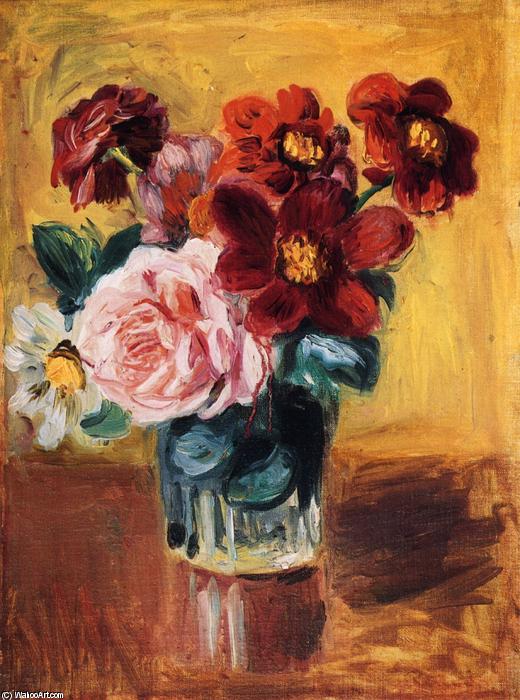
Flowers in a Vase
Pierre-Auguste Renoir’s
Flowers in a Vase is a captivating still life painting that showcases the artist's mastery of color and composition. Created in the late 19th century, this oil on canvas piece is a quintessential example of Impressionist art. The painting features a beautiful arrangement of flowers in a vase, set against a warm and inviting background—a subtle palette of yellows and greens designed to illuminate the vibrant blooms within. It’s more than just a depiction of flora; it's an embodiment of Renoir’s signature style: capturing fleeting moments of beauty and emotion with loose brushstrokes and luminous hues.
Artistic Style and Technique
Renoir’s
Flowers in a Vase exemplifies the Impressionist style, characterized by its emphasis on capturing light and color. Unlike academic painting’s meticulous detail, Renoir prioritizes atmosphere—the way sunlight dances across petals and casts shadows on leaves. The brushwork is deliberately visible, almost vibrating with energy, as if attempting to freeze time itself. Thick impasto creates textural richness, particularly around the vase's surface, reflecting light in an illusionistic manner that contributes significantly to the painting’s overall effect. Renoir skillfully blends shades of pink and yellow to create a harmonious blend of color, mirroring the natural beauty of the flowers themselves.
Key Features of the painting include:
- The use of bold and vibrant colors to capture the beauty of the flowers
- The loose and spontaneous brushwork that gives the painting a sense of energy and movement
- The reflective qualities of the vase, which adds depth and dimension to the composition
Historical Context
Renoir’s
Flowers in a Vase is part of a long tradition of still life painting that dates back to the 17th century. However, it firmly establishes itself within the Impressionist movement—a reaction against the rigid conventions of academic art and a fervent desire to depict the world as perceived by ordinary people. Artists like Monet and Sisley were similarly exploring how light transforms landscapes and interiors, rejecting idealized representations in favor of immediacy and sensory experience. The painting reflects the broader cultural preoccupation with capturing ephemeral beauty during this period—a celebration of nature’s transient splendor.
For more information on Renoir and his works, visit the
ArtsDot.com website.
The Musée d’Ixelles in Brussels, Belgium, is another notable museum that features an impressive collection of Impressionist and Post-Impressionist works. According to
Wikipedia, the history of painting is a rich and complex one, spanning thousands of years and numerous styles and movements.
For art lovers and collectors,
Flowers in a Vase is a must-see painting that showcases Renoir’s mastery of color and composition. With its beautiful arrangement of flowers and inviting background, this painting is sure to captivate audiences for generations to come. Visit the
ArtsDot.com website to learn more about Renoir and other notable artists.