A Moment of Intimate Reflection: Exploring Renoir’s “Gabrielle at the Mirror”
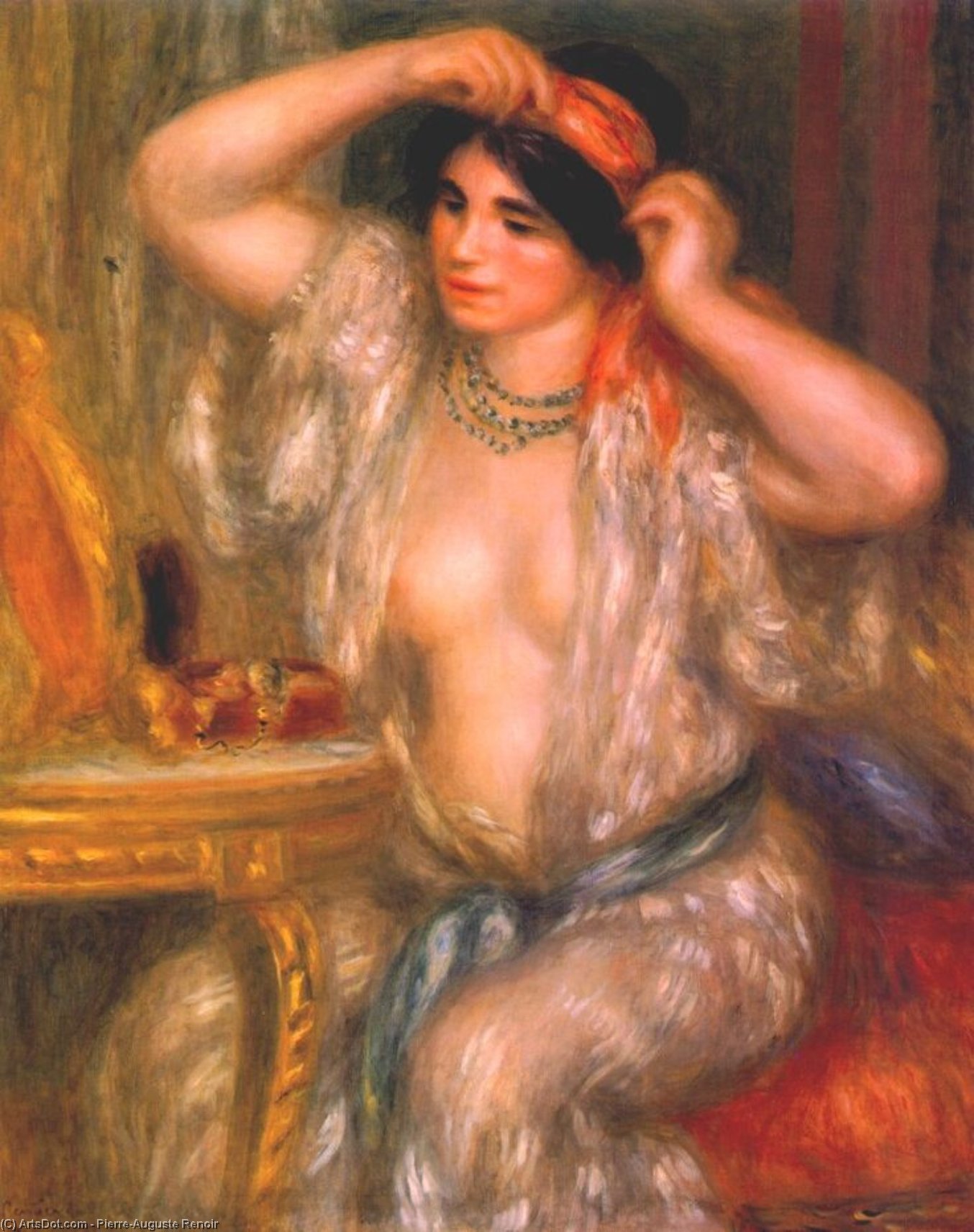
Pierre-Auguste Renoir's 1910 painting, “Gabrielle at the Mirror,” is a captivating example of Impressionist mastery. It offers not merely a depiction of a woman before her reflection, but an intimate glimpse into a private moment – one filled with quiet contemplation and subtle sensuality. Gabrielle, a frequent model for Renoir, is presented in a relaxed pose, seemingly lost in thought as she attends to her appearance within the soft ambiance of a dressing room.
Impressionistic Technique & Artistic Style
Renoir’s signature Impressionistic style is beautifully showcased here. The painting is characterized by its loose, feathery brushstrokes and an emphasis on capturing the fleeting effects of light. Colors are muted yet rich, creating a warm and inviting atmosphere that envelops the scene. This technique wasn't simply about replicating reality; it was about conveying *perception* – how light and color affect our experience of the world. Notice how forms seem to dissolve at the edges, contributing to the painting’s dreamlike quality. The artist masterfully uses broken color and subtle gradations to model form and create a sense of depth without harsh lines or rigid definition.
Historical Context: A Bridge Between Eras
Created in 1910, “Gabrielle at the Mirror” exists within a fascinating transitional period in art history. While the avant-garde movements were beginning to challenge traditional artistic norms, Renoir remained steadfastly committed to his Impressionistic vision. He continued to explore themes of beauty, sensuality, and everyday life, finding profound artistry in seemingly mundane subjects. This dedication positions him as a bridge between the late 19th-century Impressionist movement and the evolving landscape of early 20th-century art.
Symbolism & The Allure of the Female Form
The painting subtly engages with long-standing artistic traditions surrounding the representation of the female nude, as explored in the
history of the nude in art. While not a fully exposed nude, Gabrielle’s partially undressed state and focus on her reflection evoke themes of vanity, self-awareness, and feminine beauty. The mirror itself acts as a powerful symbol – representing both self-perception and the gaze of the viewer. The presence of other figures in the background, though indistinct, hints at a social context, suggesting that Gabrielle’s moment of introspection is not entirely isolated.
Emotional Resonance & Lasting Appeal
“Gabrielle at the Mirror” evokes a sense of peaceful intimacy and quiet contemplation. It invites viewers to share in Gabrielle's private moment, prompting reflection on themes of beauty, self-perception, and the passage of time. The painting’s enduring appeal lies in its ability to connect with audiences on an emotional level, offering a timeless portrayal of human experience.
Artwork Details
- Artist: Pierre-Auguste Renoir
- Title: Gabrielle at the Mirror
- Style: Impressionism
- Date: 1910
This masterpiece is a testament to Renoir’s enduring legacy, continuing to captivate art lovers and inspire interior design schemes with its delicate beauty and timeless elegance. A reproduction of this work would bring a touch of refined sophistication and artistic depth to any space.