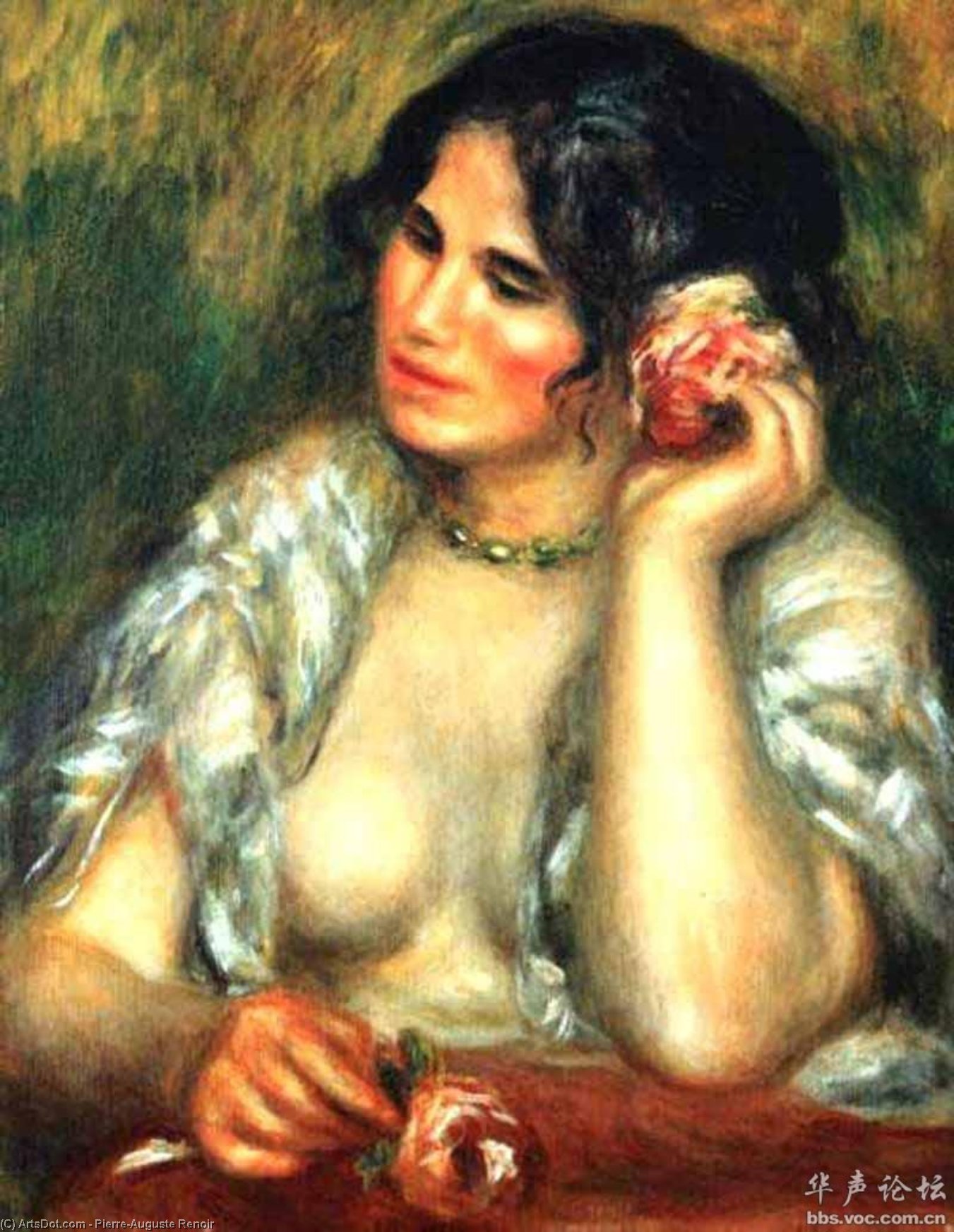
Gabrielle with a Rose: An Impressionist Portrait of Elegance
Pierre-Auguste Renoir’s “Gabrielle with a Rose,” painted in 1911, stands as a quintessential embodiment of Impressionism – an artistic movement that irrevocably altered the landscape of European painting. More than just a depiction of a woman holding a flower, this artwork is a masterful exploration of light, color, and emotion, reflecting Renoir’s profound connection to Parisian life and his unwavering belief in capturing fleeting moments of beauty.
The Painting's Subject Matter and Composition
The portrait portrays Gabrielle Renard, a young woman known for her captivating gaze and serene demeanor. Renoir skillfully captures her stillness against the backdrop of a softly lit interior—likely a Parisian salon—creating an atmosphere of quiet contemplation. Two apples rest beside Gabrielle’s hand, adding to the visual richness and subtly hinting at themes of ripeness and innocence. The pearl necklace adorning Gabrielle's neck symbolizes refinement and sophistication, mirroring the artistic sensibilities of the era.
Renoir’s Impressionistic Technique: Light and Color as Narrative
Renoir’s technique is characterized by loose brushstrokes—a hallmark of Impressionism—that prioritize capturing the effects of light on color rather than precise representation. He employs a vibrant palette, dominated by warm hues – ochres, reds, and yellows – to illuminate Gabrielle's face and dress. The artist skillfully blends colors optically, creating an illusion of shimmering luminescence that imbues the painting with palpable warmth and vitality. This approach distinguishes “Gabrielle with a Rose” from earlier academic styles, prioritizing sensory experience over meticulous detail.
Historical Context: Impressionism’s Revolution
"Gabrielle with a Rose" emerged during a period of significant artistic upheaval—the rise of Impressionism challenged the conventions of traditional art academies. Artists like Claude Monet and Edgar Degas championed a new aesthetic that celebrated outdoor landscapes and everyday life, rejecting idealized depictions in favor of capturing transient impressions. Renoir’s work aligns perfectly with this movement's ethos, reflecting the spirit of Belle Époque Paris—a time of optimism, innovation, and cultural flourishing.
Symbolism and Emotional Resonance
Beyond its visual beauty, “Gabrielle with a Rose” resonates with deeper symbolic meanings. The rose itself represents love, beauty, and purity – qualities that Renoir wished to convey through his portrayal of Gabrielle. Her contemplative expression invites viewers to ponder on themes of introspection and inner peace. Ultimately, the painting succeeds in evoking a feeling of serene elegance—a testament to Renoir’s ability to transform ordinary subjects into enduring symbols of artistic excellence.