Introduction to the Painting
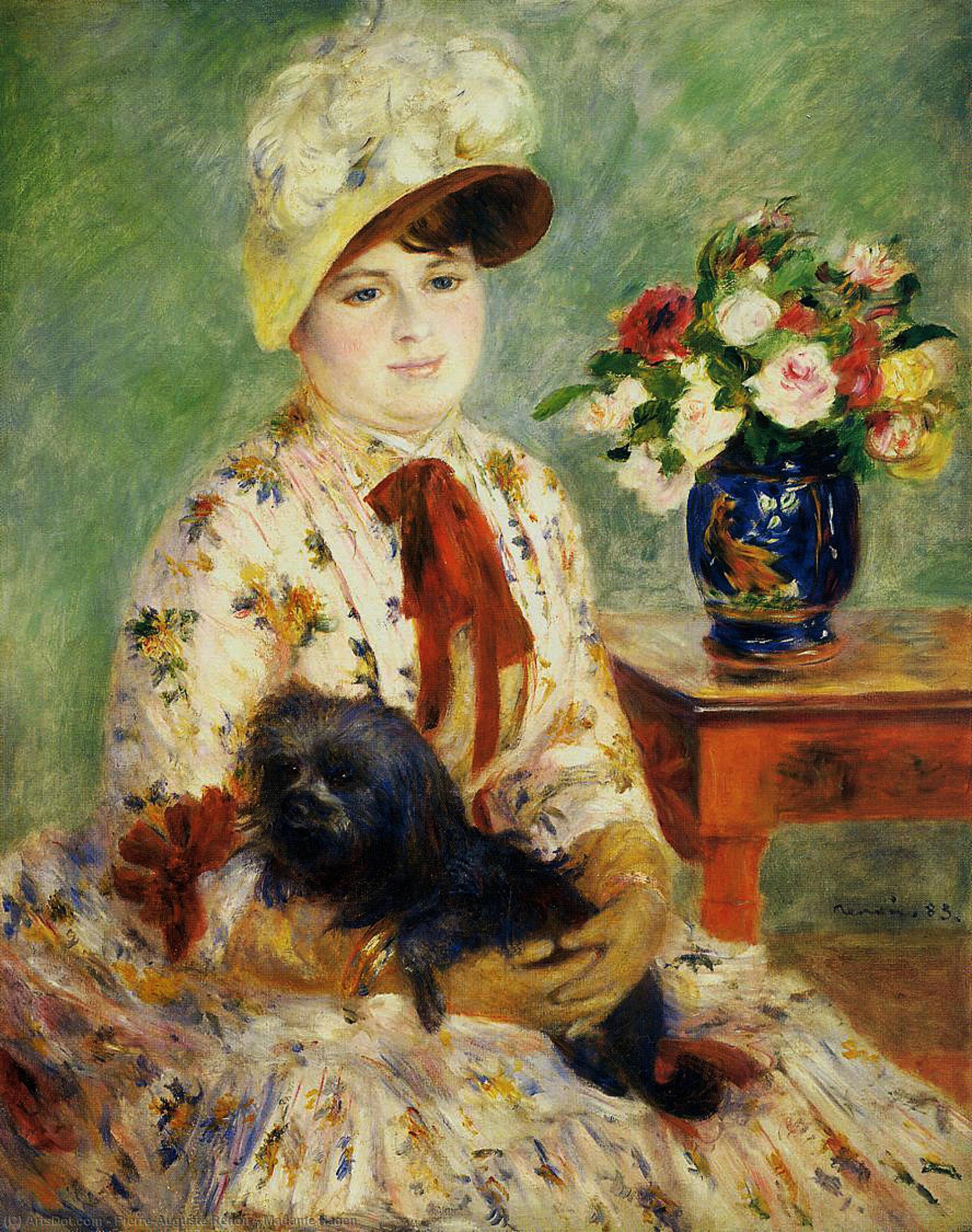
Pierre-Auguste Renoir's
Madame Hagen, painted in 1883, is a beautiful example of Impressionist art. This oil on canvas painting is currently housed at the
National Gallery of Art in Washington, D.C., United States.
Composition and Elements
The painting depicts Madame Hagen sitting comfortably in a chair with her dog on her lap. She wears a hat and has a scarf around her neck, while holding the dog close to her. The scene is set against a cozy background, complete with a vase placed near the right side of the composition and a potted plant on the left. Two books are visible in the background, adding to the warm and inviting atmosphere.
Artistic Style
Renoir's use of Impressionist techniques creates a soft, dreamy quality in the painting. The brushstrokes are loose and expressive, capturing the play of light on the subjects. This style was characteristic of Renoir's work during this period, as he sought to capture everyday life with a sense of warmth and intimacy.
Historical Context
The late 19th century saw a significant shift in artistic styles, with Impressionism emerging as a major movement. Artists like Renoir were influenced by the changing social and cultural landscape of Europe. The art of this period often reflected the everyday lives of people, moving away from traditional historical and religious themes.
Relevance to European Art
The development of European art is marked by various stylistic periods, including Classical, Byzantine, Medieval, Gothic, Renaissance, Baroque, Rococo, Neoclassical, Modern, Postmodern, and New European Painting. Impressionism, as seen in
Madame Hagen, was a significant departure from the traditional approaches of the past.
Conclusion
Madame Hagen by
Pierre-Auguste Renoir is a captivating portrait that showcases the artist's skill in capturing the essence of everyday life. The painting's warm and inviting atmosphere, combined with its historical significance, make it a valuable addition to the collection at the
National Gallery of Art. For more information on Impressionist art and other styles, visit
The National Gallery of Art, Washington D.C. or explore the works of other artists like
Paul Cezanne,
Pablo Picasso, and
Edgar Degas on
ArtsDot.com. To learn more about the broader context of European art, refer to
The Art of Europe.