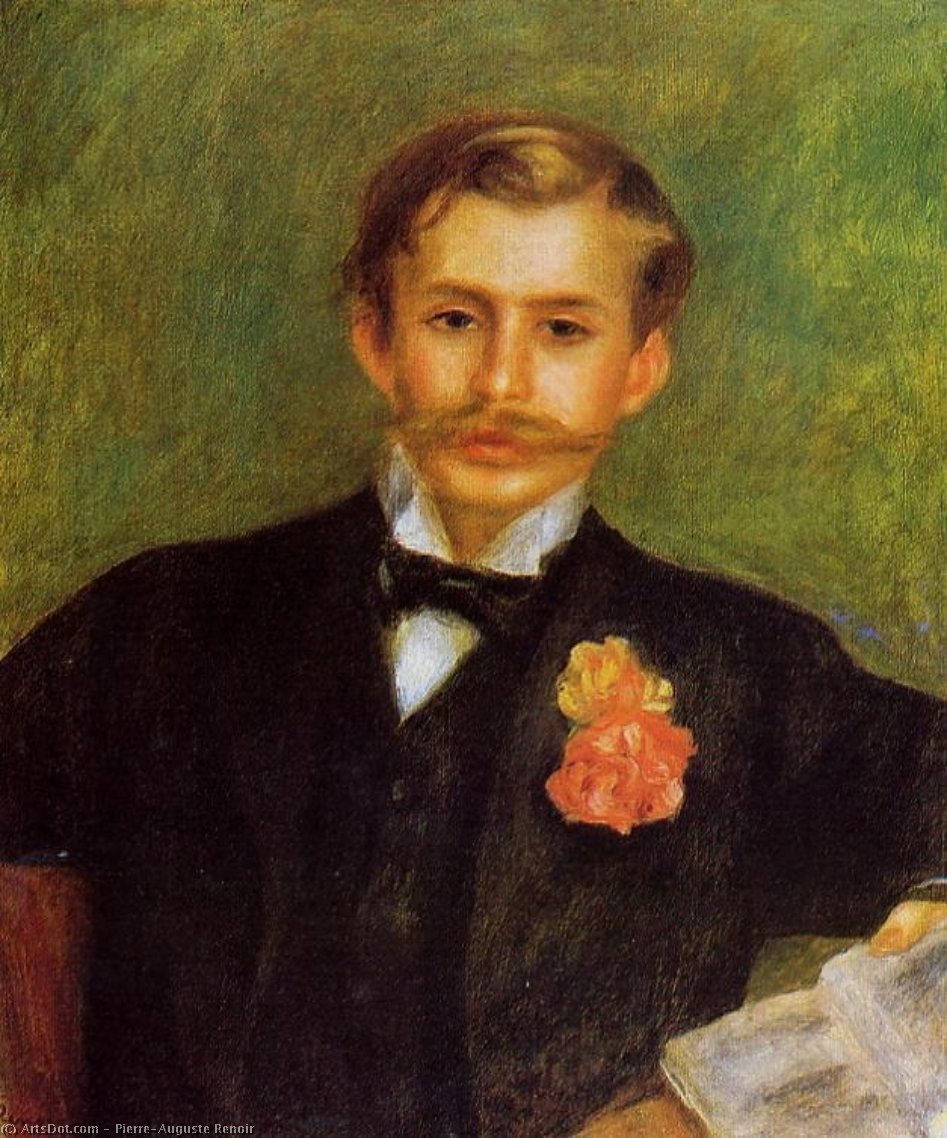
A Portrait of Refined Presence: Pierre-Auguste Renoir’s *Monsieur Germain*
Pierre-Auguste Renoir, a master of Impressionism, possessed an unparalleled ability to capture the fleeting beauty of life and the subtle nuances of human character. Painted around 1900, *Monsieur Germain* exemplifies this talent, offering viewers a glimpse into the world of early 20th-century Parisian society through a compelling portrait housed at the Norton Museum of Art in West Palm Beach, Florida. This is not merely a likeness; it’s an evocation of personality and social standing.
Decoding the Subject & Composition
The painting centers on Monsieur Germain, a gentleman distinguished by his meticulously groomed mustache and beard – hallmarks of the era's sophisticated style. He is formally attired in a dark suit, crisp white shirt, and neatly tied bow tie, projecting an air of respectability and composure. A single flower, pinned to his lapel, introduces a delicate touch of color and individuality, hinting at a personality beyond mere formality.
Renoir’s compositional choices are deliberate. The subject dominates the canvas, drawing immediate attention to his face and expression. His direct gaze engages the viewer, creating an intimate connection that transcends time. The background is intentionally understated – textured brushstrokes suggest a wall or neutral space – ensuring the focus remains firmly on Monsieur Germain himself. This technique highlights Renoir’s skill in using color and light to define form and create depth without overwhelming detail.
Impressionistic Technique & Artistic Innovation
*Monsieur Germain* is a testament to Renoir's mastery of Impressionistic techniques. The visible brushwork, characterized by short, broken strokes, creates a sense of movement and vibrancy. Colors are blended subtly, particularly in the rendering of the face, achieving a lifelike quality that avoids harsh lines or rigid definition. This approach aligns with the core principles of Impressionism – to capture the *impression* of light and form rather than precise representation.
Beyond his technical prowess, Renoir was an innovator. He famously explored “series paintings,” revisiting single subjects under varying conditions to study the effects of light and atmosphere. While *Monsieur Germain* isn’t part of a series in the same vein as his *Rouen Cathedrals* or *Water Lilies*, it demonstrates this dedication to capturing fleeting moments and nuanced perceptions – a hallmark of his artistic philosophy.
Symbolism & Emotional Resonance
The symbolism within *Monsieur Germain* is subtle yet significant. The flower on his lapel, likely a rose or similar bloom, traditionally represents romance, refinement, or social status. Its presence adds another layer to the subject’s characterization, suggesting he is a man of taste and perhaps sentimentality.
More broadly, the portrait evokes a sense of quiet dignity and introspection. Monsieur Germain's composed expression invites contemplation, prompting viewers to wonder about his life, thoughts, and place within society. The painting isn’t overtly dramatic; its power lies in its ability to convey a profound emotional resonance through subtle details and masterful technique.
A Legacy of Elegance & Enduring Appeal
*Monsieur Germain* stands as a compelling example of Renoir's enduring legacy. It showcases his exceptional skill in portraiture, his innovative use of color and light, and his ability to capture the essence of human character with grace and psychological depth. This painting is not just a historical artifact; it’s a timeless work of art that continues to inspire and captivate audiences today.
For those seeking to bring the beauty of Impressionism into their homes or collections, high-quality reproductions offer an accessible way to experience the magic of Renoir's artistry.
- Style: Impressionism
- Medium: Oil on Canvas
- Location: Norton Museum of Art, West Palm Beach, Florida
- Date: c. 1900