Paul Cézanne: Bridging Impressionism and Post-Impressionism
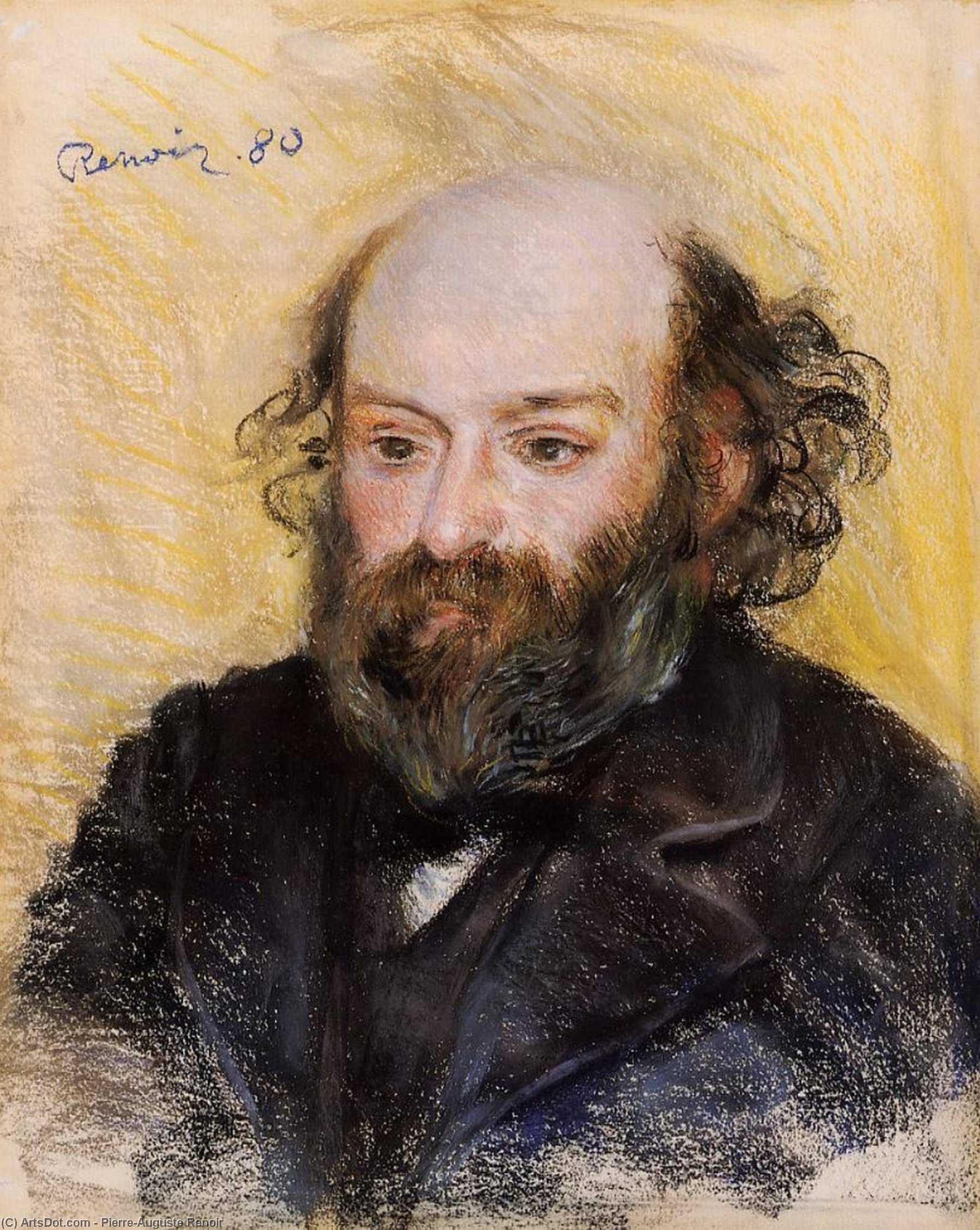
Pierre-Auguste Renoir’s portrait of Paul Cézanne stands as a pivotal moment in art history, capturing not merely the likeness of a celebrated artist but also embodying the dynamic interplay between two dominant movements—Impressionism and its burgeoning successor, Post-Impressionism. Created in 1880, this oil on canvas masterpiece exemplifies Renoir’s masterful ability to distill beauty and emotion while simultaneously acknowledging Cézanne's revolutionary approach to artistic representation. It’s a testament to the enduring legacy of Impressionism and its profound influence on shaping the future of modern art.
Artistic Context: The Dialogue Between Sensibility and Structure
Renoir, a cornerstone figure in Impressionism, championed capturing fleeting moments of sensory experience—light, color, and atmosphere—with loose brushstrokes and vibrant hues. His canvases often depicted scenes from everyday life, infused with warmth and intimacy, prioritizing subjective perception over objective observation. Cézanne, however, challenged this aesthetic paradigm by introducing geometric forms and structural principles into his paintings. He sought to depict the underlying essence of objects, reducing them to their fundamental shapes—cubes, cylinders, and spheres—a technique that would become foundational for Cubism and subsequent avant-garde movements. Renoir’s Impressionist style contrasts sharply with Cézanne's deliberate simplification, highlighting the evolving artistic landscape of the late 1870s and early 1880s.
The Portrait: A Study in Observation and Emotion
The portrait depicts Cézanne with a contemplative gaze, framed by spectacles perched on his nose and adorned with a neatly trimmed beard and mustache. These details convey an air of maturity and intellectual curiosity—a reflection of Cézanne’s profound engagement with scientific observation and geometric abstraction. Two figures occupy the background, positioned subtly to provide context without dominating the composition. Renoir skillfully renders Cézanne's facial features with delicate brushstrokes, capturing not only his physical appearance but also conveying a sense of inner seriousness. The muted palette—dominated by earthy tones—underscores the solemn mood of the scene and reinforces Cézanne’s artistic vision.
Artistic Significance: A Synthesis of Tradition and Innovation
This portrait is significant because it represents a crucial step in Cézanne's artistic evolution, demonstrating his growing interest in exploring structural concepts while retaining Renoir’s expressive style. It embodies the broader artistic conversation occurring during this period—a movement away from purely subjective impressions toward a more conceptual understanding of visual reality. The juxtaposition of Impressionist softness and Cézanne’s geometric precision serves as a powerful reminder that art is constantly transforming, responding to new ideas and techniques.
Legacy: Influencing Generations of Artists
Both Renoir and Cézanne profoundly impacted the trajectory of modern art. Renoir solidified Impressionism's position as a dominant aesthetic force, establishing it as a cornerstone of artistic expression. Cézanne’s pioneering approach paved the way for Cubism and other revolutionary movements, fundamentally altering how artists perceived and depicted the world around them. His influence can be seen in the works of Henri Matisse and Pablo Picasso—artists who embraced Cézanne's geometric principles while retaining Renoir’s sensual vibrancy.
For more information on Impressionism and Post-Impressionism, visit Pierre-Auguste Renoir and Paul Cézanne on Wikipedia.