A Moment of Quietude: Pierre-Auguste Renoir’s “Reading”
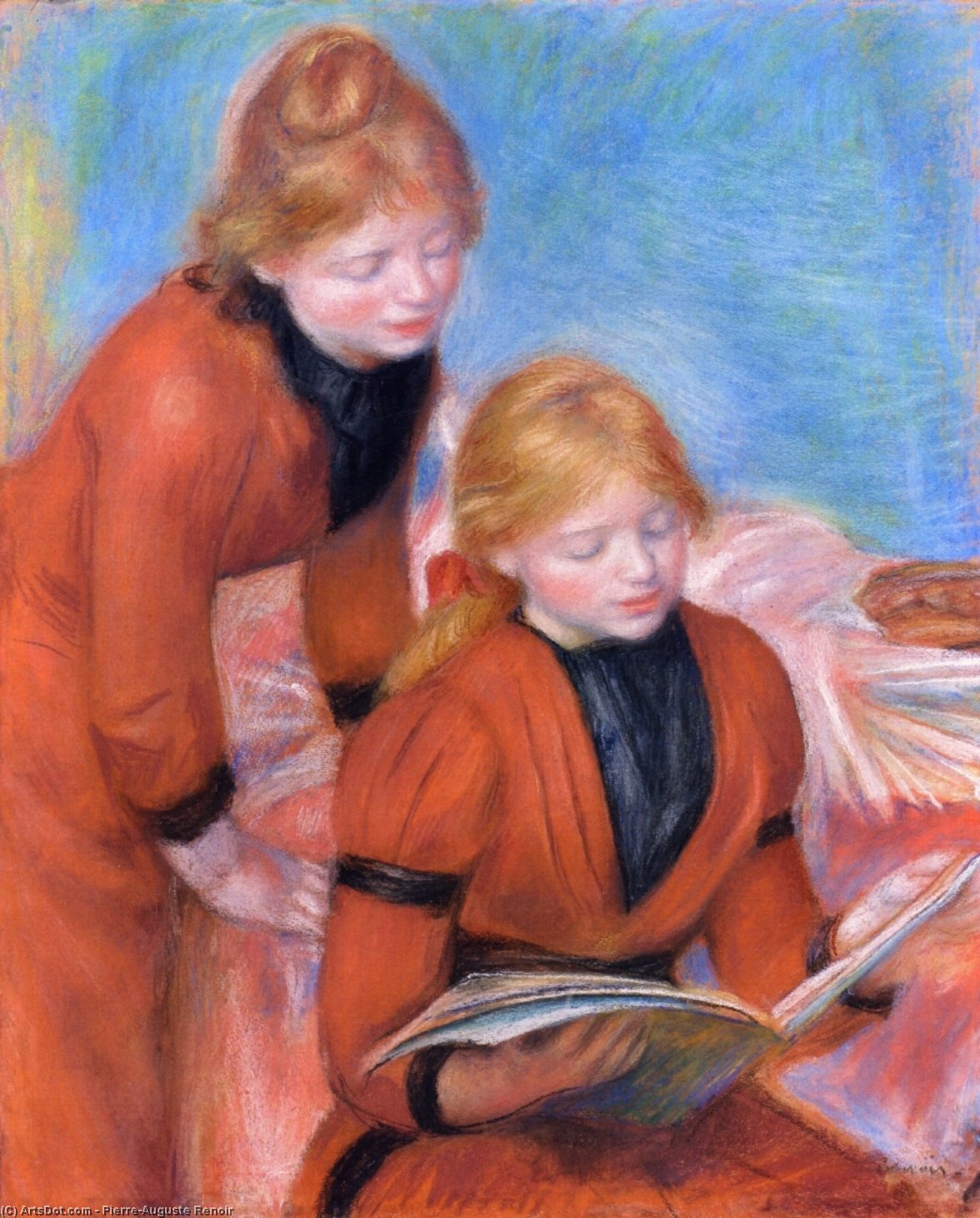
Pierre-Auguste Renoir's "Reading," painted in 1889, isn’t merely a depiction of two women; it’s an invitation into a sanctuary of tranquility. This Impressionist masterpiece captures a fleeting moment of shared intimacy within a softly lit room, radiating a warmth and serenity that speaks to the enduring appeal of quiet contemplation. More than just a portrait, “Reading” is a testament to Renoir's profound understanding of light, color, and the subtle nuances of human connection – elements he masterfully employed to elevate the commonplace into something truly beautiful.
The scene unfolds with remarkable simplicity: two women are seated together, lost in the act of reading. One, positioned slightly forward, is deeply absorbed in her book, a gentle curve to her spine suggesting both comfort and engagement. Her dark hair cascades down her shoulders, framing a face that holds an expression of serene concentration. The other woman, seated beside her, observes with quiet interest, her gaze directed towards the reader – a subtle gesture hinting at shared experience and unspoken connection. The room itself is rendered in soft, diffused light, characteristic of Renoir’s Impressionistic style, where he prioritized capturing the ephemeral effects of light rather than precise detail. The background, a hazy blend of greens and ochres, recedes into an indistinct space, further emphasizing the intimacy of the immediate scene.
The Language of Light and Color
Renoir’s genius lies in his ability to translate visual sensations onto canvas using light and color with breathtaking subtlety. He employs a delicate palette – muted greens, warm browns, and creamy whites – creating an atmosphere that is both luminous and comforting. Notice how the light seems to emanate from within the scene itself, bathing the figures in a gentle glow. The brushstrokes are loose and fluid, almost dissolving into one another, contributing to the painting’s sense of movement and immediacy. This technique, central to Impressionism, allows the eye to wander across the canvas, absorbing the play of light and shadow with each glance.
The use of color is particularly noteworthy. Renoir doesn't rely on stark contrasts; instead, he employs subtle gradations and harmonies, creating a sense of depth and atmosphere. The warm tones of the room – the browns and ochres – are balanced by the cool greens of the background, resulting in a harmonious composition that feels both inviting and restful.
A Window into the Late 19th Century
"Reading" was created during a pivotal period in Renoir’s artistic development. Following his early work with porcelain, he began to explore themes of domestic life and female subjects, reflecting the changing social landscape of late 19th-century France. This shift is evident in works like “Reading,” which captures a sense of quiet intimacy and feminine grace that was becoming increasingly valued during this era. The painting can be viewed as a subtle commentary on the evolving role of women in society – a moment of respite from the demands of public life, found within the sanctuary of home and literature.
Furthermore, Renoir’s style aligns with broader artistic trends of the time. He was deeply influenced by artists like Claude Monet and Edgar Degas, both pioneers of Impressionism. However, unlike Monet's focus on capturing fleeting moments of light and atmosphere, Renoir often incorporated a sense of human emotion and narrative into his paintings. “Reading” exemplifies this balance – it’s a beautiful depiction of light and color, but also a poignant portrayal of two women sharing a quiet moment of connection.
Symbolism and Emotional Resonance
The act of reading itself carries significant symbolic weight within the painting. It represents not just intellectual pursuit, but also escape, contemplation, and connection – a shared experience that transcends individual differences. The book becomes a bridge between the two women, fostering a sense of intimacy and understanding. The relaxed posture of the figures suggests a comfortable familiarity, hinting at a long-standing friendship or perhaps even a deeper bond.
“Reading” is more than just a pretty picture; it’s an evocative portrayal of human connection and the beauty of quiet moments. It invites us to pause, reflect, and appreciate the simple pleasures in life – a book, a companion, and a shared sanctuary of light and color. It remains a powerful reminder that even in the midst of a bustling world, there is always room for tranquility and contemplation.