Riding in the Bois de Boulogne: A Parisian Moment Captured by Renoir
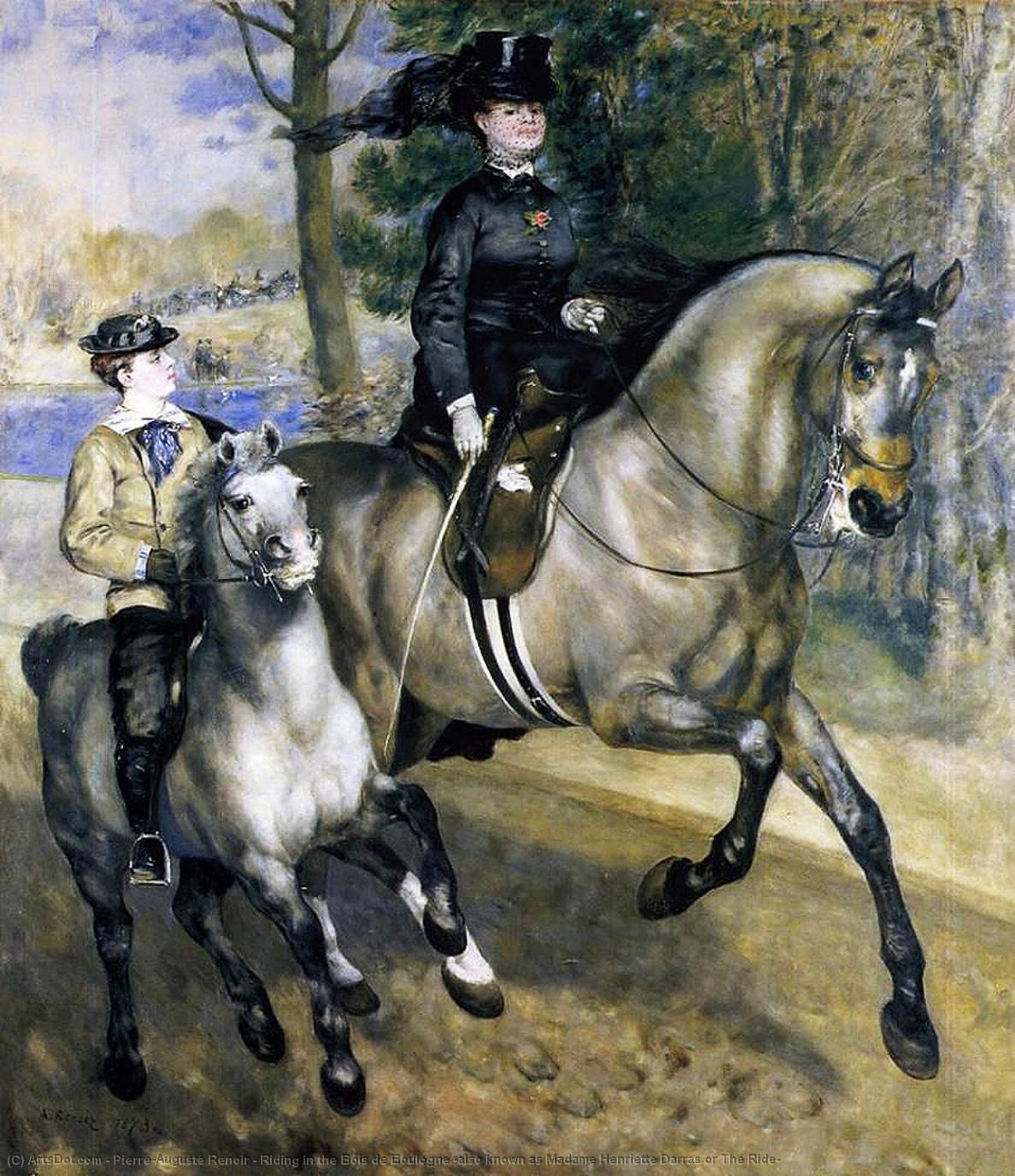
Pierre-Auguste Renoir’s “Riding in the Bois de Boulogne,” often referred to as “Madame Henriette Darras or The Ride,” is more than just a picturesque scene of leisure; it's a vibrant snapshot of late 19th-century Parisian life, imbued with Impressionist charm and a subtle narrative depth. Completed in 1873 and currently residing within the esteemed Hamburger Kunsthalle in Hamburg, Germany, this oil on canvas painting transports us to a sun-drenched afternoon spent amidst the verdant beauty of the Bois de Boulogne – a sprawling park just outside Paris’s bustling city center.
The composition immediately draws the eye to the central figure: a woman elegantly mounted upon a chestnut horse, her posture radiating confidence and grace. She is dressed in a striking top hat and a flowing black dress, an unusual yet captivating detail that speaks to both her social standing and a hint of playful rebellion against conventional norms for women of the era. Beside her, perched comfortably on the horse’s back, sits another individual, adding to the sense of shared enjoyment and camaraderie. The presence of two horses further emphasizes the scene's celebratory atmosphere, suggesting a day of equestrian sport or simply a leisurely ride through the park.
Impressionist Technique and Light
Renoir’s masterful application of oil paint is central to the painting’s allure. He employs a technique characteristic of Impressionism – prioritizing the fleeting effects of light and color over precise detail. Bold, visible brushstrokes create a sense of movement and immediacy, capturing the dappled sunlight filtering through the trees and reflecting off the horses' coats. The artist skillfully blends hues, creating an almost shimmering quality to the foliage and the figures’ clothing. Notice how Renoir doesn’t meticulously render every contour; instead, he uses color and texture to evoke a feeling of warmth and vitality.
The background is deliberately less defined, populated with indistinct figures strolling or relaxing – a testament to Renoir's focus on capturing the *impression* of the scene rather than a photographic representation. These secondary figures contribute to the overall sense of a lively public space, teeming with activity and social interaction.
A Glimpse into Parisian Society
“Riding in the Bois de Boulogne” offers a fascinating window into the leisure activities enjoyed by the upper classes of late 19th-century Paris. The Bois de Boulogne was a popular destination for wealthy Parisians seeking respite from the city’s relentless pace, and horse riding was a particularly fashionable pastime. The woman's attire – the top hat being a notable element – suggests she is not merely a passive observer but an active participant in this social ritual.
Furthermore, the painting reflects the broader cultural shift occurring at the time, marked by a growing emphasis on pleasure and enjoyment of life. The Impressionists, as a movement, sought to capture these moments of everyday beauty and spontaneity, moving away from the rigid academic traditions of the Salon system. Renoir’s work exemplifies this spirit, celebrating the simple joys of a Parisian afternoon.
Symbolism and Emotional Resonance
Beyond its depiction of a leisurely ride, “Riding in the Bois de Boulogne” carries subtle symbolic weight. The horse itself represents freedom, power, and movement – qualities often associated with both social status and personal aspiration. The woman’s confident posture suggests an embrace of these ideals. The painting evokes a feeling of carefree joy, capturing a fleeting moment of connection between individuals within the context of a vibrant urban landscape.
For those seeking to bring this captivating scene into their homes, ArtsDot offers meticulously crafted hand-painted reproductions that faithfully capture Renoir’s luminous style and emotional depth. Explore our collection today and experience the timeless beauty of “Riding in the Bois de Boulogne.” You can also delve deeper into Pierre-Auguste Renoir's artistic journey and the Impressionist movement through our resources: Pierre-Auguste Renoir: Riding in the Bois de Boulogne and Wikipedia's page on Impressionism.