A Vision of Youthful Radiance
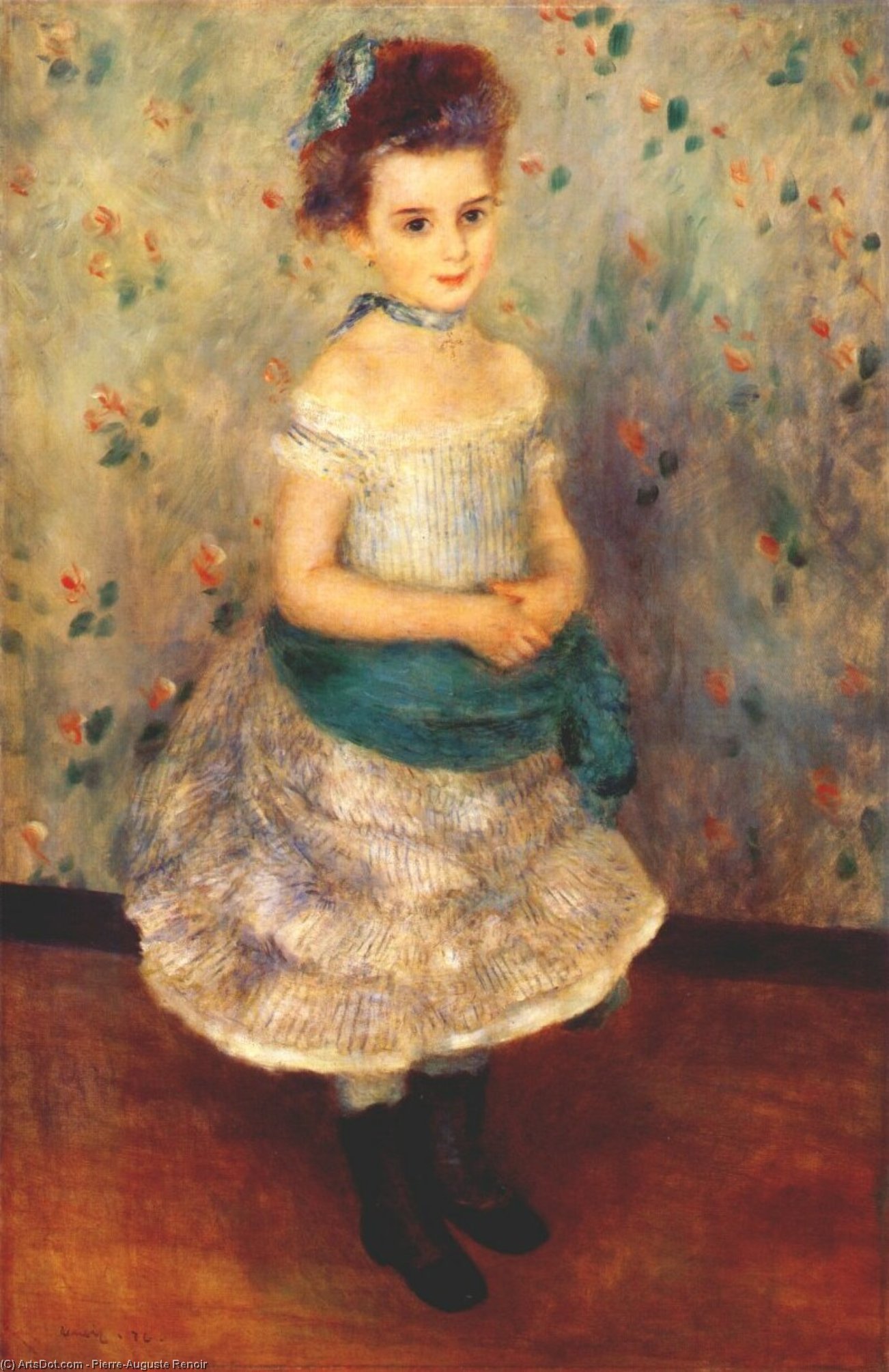
In the soft, luminous glow of Pierre-Auguste Renoir’s 1876 masterpiece, Jeanne Durand Ruel, we encounter more than just a portrait; we step into a moment of pure, unadulterated grace. The painting captures the essence of a young girl, the daughter of the legendary Impressionist dealer Paul Durand-Ruel, poised with a quiet elegance that belies her youth. As she stands before a delicate floral backdrop, her presence commands the canvas, not through grand gestures, but through a serene and captivating stillness. For the discerning collector or interior designer, this work offers an unparalleled sense of tranquility, making it a profound centerpiece for any space dedicated to beauty and light.
Renoir, a true luminary of the Impressionist movement, utilizes his signature technique to breathe life into the subject. Rather than relying on the rigid, sharp outlines characteristic of academic tradition, he employs loose, feathered brushstrokes that allow colors to dance across the surface. The girl’s complexion is rendered in a breathtaking palette of subtle peaches and tender roses, creating an almost pearlescent skin tone that seems to radiate from within. Notice how the light plays upon her white dress, where tiny floral motifs blend seamlessly into the fabric, mirroring the intricate wallpaper behind her. This rhythmic repetition of natural patterns creates a sense of harmony and depth, drawing the viewer into a world where nature and humanity are inextricably linked.
The Intersection of Tradition and Innovation
While the composition of Jeanne Durand Ruel pays homage to the formal structures of 17th-century court portraiture, Renoir’s experimental use of color pushes the boundaries of his era. The painting is a brilliant study in the Impressionist pursuit of capturing fleeting atmospheric effects. There is a palpable sense of movement in the way the light filters through the scene, caught in the subtle sweeps of violet and blue that Renoir masterfully integrated into the shadows and hair. This technique does not merely represent a person; it captures an atmosphere—the very feeling of a sun-drenched afternoon in Belle Époque Paris.
Beyond its technical brilliance, the painting carries significant historical weight. As a portrait of the daughter of the man who championed the Impressionist cause, the work serves as a silent tribute to the vital relationship between artist and patron. To possess a reproduction of this piece is to hold a fragment of art history itself. It evokes a sense of nostalgia for a lost era of sophistication and provides an emotional anchor in a modern interior. Whether placed in a sunlit gallery or a cozy, curated study, Renoir’s portrait continues to inspire awe, offering a timeless window into the soft, shimmering beauty of the human spirit.