A Symphony of Color: Exploring Pierre-Auguste Renoir’s Study of Flowers
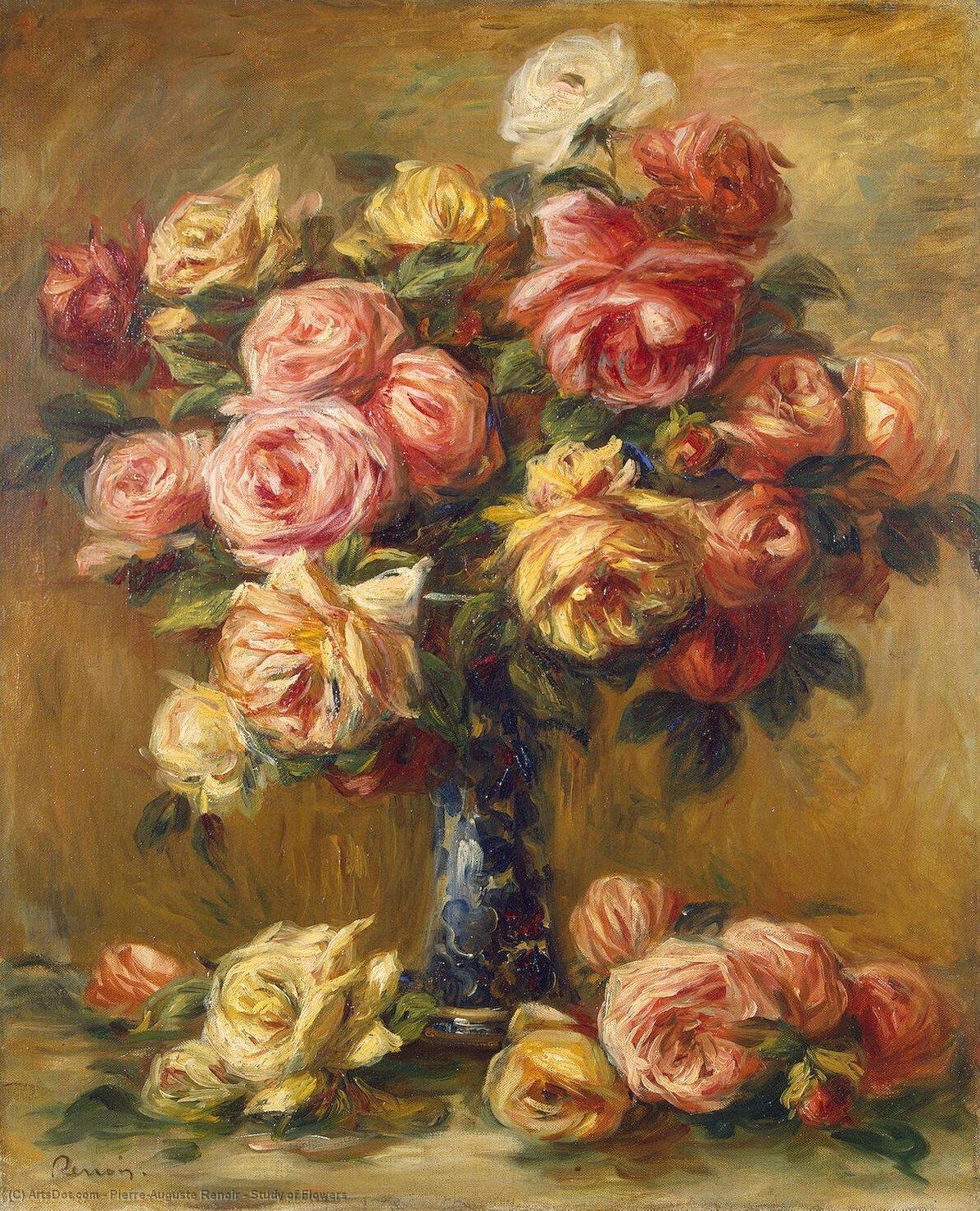
Pierre-Auguste Renoir, a luminary of Impressionism, gifted the world with countless canvases brimming with light and emotion. Among his enduring masterpieces is “Study of Flowers,” painted in 1914 – a deceptively simple composition that encapsulates the very essence of his artistic vision. This oil on canvas piece transcends mere botanical depiction; it’s an invitation to contemplate beauty itself, filtered through Renoir's masterful manipulation of color and texture.
- Subject Matter: The artwork focuses intently on a bouquet of flowers—a commonplace subject elevated by Renoir’s unparalleled ability to capture fleeting moments of natural splendor. Specifically, the painting showcases an assemblage of at least thirteen distinct blossoms, ranging from vibrant reds and yellows to warm oranges.
- Style & Technique: Renoir's signature Impressionist style is immediately apparent. He eschews meticulous detail in favor of capturing the ephemeral effects of light on pigment—a technique championed by artists like Monet and Sisley. The brushstrokes are loose, blended seamlessly together, creating an atmospheric haze that softens edges and imbues the flowers with a palpable sense of luminosity.
- Composition: Renoir’s compositional choices contribute significantly to the artwork's impact. Flowers are strategically positioned throughout the canvas—some clustered centrally, others nestled along the periphery—generating a dynamic visual rhythm that draws the eye across the surface. This deliberate arrangement underscores Renoir’s understanding of how visual elements interact to convey emotion and create depth.
Historical Context: Impressionism's Embrace of Nature
“Study of Flowers” emerged during a pivotal moment in art history—the height of the Impressionist movement. Artists like Renoir rejected academic conventions, prioritizing observation and subjective experience over idealized representation. The Impressionists sought to depict the world as they perceived it – capturing the immediacy of sensory impressions rather than striving for photographic accuracy. This artistic rebellion coincided with advancements in scientific understanding of light and color, influencing artists’ techniques and fostering a new appreciation for the beauty inherent in everyday life.
Symbolism & Emotional Resonance
Beyond its technical brilliance, “Study of Flowers” resonates deeply with viewers on an emotional level. Flowers have long held symbolic significance across cultures—representing love, joy, remembrance, and rebirth. Renoir’s careful selection of hues – particularly the fiery reds and oranges – evokes feelings of passion and vitality. The overall impression is one of tranquility and contemplation, inviting us to savor the beauty of the natural world and appreciate the fleeting nature of existence.
A Legacy Enduring Beauty
To experience Renoir’s “Study of Flowers” firsthand, visit Musee des Beaux-Arts in Le Havre, France – where you can immerse yourself in a stunning collection of Impressionist masterpieces. Alternatively, explore high-quality reproductions at ArtsDot.com and discover the timeless allure of this iconic artwork. Like many Impressionist treasures, "Study of Flowers" continues to inspire artists and collectors alike—a testament to Renoir’s enduring genius and his profound connection with the beauty of the natural world.