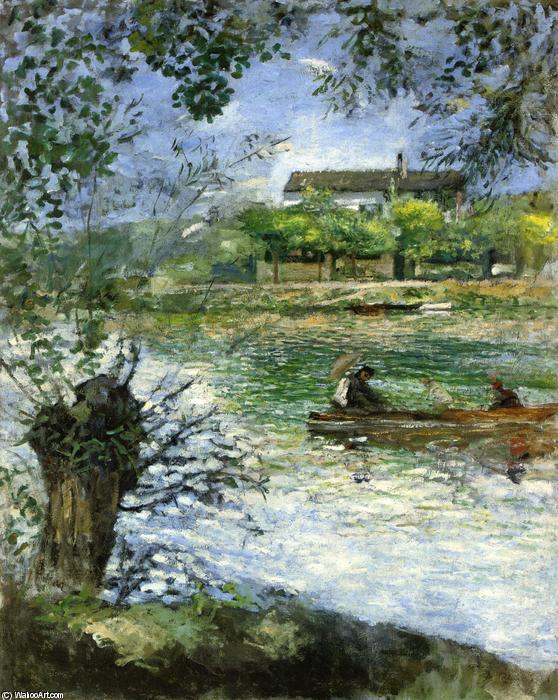
Willows and Figures in a Boat: A Serene Impressionist Vision
- Artist: Pierre-Auguste Renoir
- Painting Title: Willows and Figures in a Boat
- Year: 1880
- Style: Impressionism
- Medium: Oil on Canvas
- Size: 92 x 74 cm
A Captivating Scene of Leisure and Reflection
'Willows and Figures in a Boat,' painted by Pierre-Auguste Renoir in 1880, offers a glimpse into the leisurely pursuits enjoyed along the rivers surrounding Paris. This oil on canvas painting, measuring 92 x 74 cm, depicts three boats gently gliding across a serene river. The central boat, occupied by figures enjoying a relaxed outing, serves as a focal point, drawing the viewer's eye to the heart of the scene. A charming house nestled near the water’s edge adds to the picturesque quality, while a bird in flight enhances the natural ambiance. Lush trees lining the banks create an idyllic and peaceful setting, perfectly capturing the essence of a tranquil afternoon escape. The absence of oars in the boats introduces a subtle air of mystery, inviting contemplation about the figures' journey and destination.
Impressionistic Technique: Light, Color, and Atmosphere
Renoir’s mastery of Impressionist techniques is vividly displayed throughout the painting. His signature loose brushstrokes and vibrant color palette bring the scene to life, capturing the fleeting effects of light and atmosphere. The reflections shimmering on the water's surface are particularly noteworthy, demonstrating Renoir's skill in portraying the interplay of light and color. This technique, a hallmark of the Impressionist movement, prioritizes subjective perception and the transient qualities of a moment over precise detail. The visible brushwork – short, broken strokes applied to blend optically from a distance – creates a sense of dynamism and immediacy, inviting viewers to experience the scene as if they were present alongside the figures in the boats.
Historical Context and Artistic Influences
This painting is part of a series depicting rivers around Paris, reflecting Renoir’s focus on portraying people enjoying their leisure time during this period. While sharing similarities with Claude Monet's landscapes – particularly in its emphasis on capturing light and atmosphere – 'Willows and Figures in a Boat' possesses distinct characteristics that define Renoir’s early style. This era marked a significant exploration of color and nature for Renoir, laying the groundwork for his later, celebrated portraiture. The painting reflects a broader cultural shift towards depicting everyday life and leisure activities, moving away from traditional historical or mythological subjects.
Symbolism and Emotional Impact
Beyond its aesthetic beauty, 'Willows and Figures in a Boat' evokes a sense of tranquility and peacefulness. The willows themselves, with their drooping branches, carry symbolic weight, often associated with mourning and fragility, yet also resilience and adaptability. The boat represents a journey or escape, carrying individuals across the water – a motif found throughout art history, symbolizing transitions and new beginnings. The overall impression is one of gentle euphoria and contentment, inviting viewers to share in the serene beauty of the scene and reflect on the simple pleasures of life. Renoir’s ability to capture these subtle emotions through his masterful use of color and light makes this painting a timeless work of art.