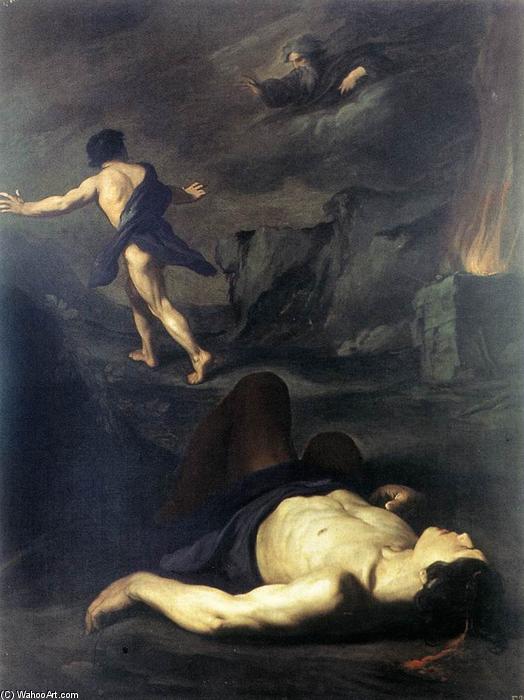
This Baroque painting portrays Cain violently murdering Abel, capturing a pivotal biblical narrative with masterful lighting and emotive expression. Attributed to Pietro Novelli, it exemplifies Sicilian artistic excellence during the 17th century.
Pietro Novelli (1603-1647), 'Raphael of Sicily,' was a Baroque master in Palermo. Explore his dynamic paintings influenced by Van Dyck & Caravaggisti, featuring religious scenes and Sicilian nobility portraits.
ローマの至宝を辿る旅!ラファエロ、カラヴァッジョなど、ルネサンスからバロック期の傑作が魅力。バルベリーニ宮殿とコルシーニ宮殿で、イタリア美術の粋を堪能。
イタリア
ローマ
ナツィオナーレ・ダルテ・アンティカ美術館
ルネサンスとバロック
大規模
美術館
1893
古代エジプトの遺物
2
ナツィオナーレ・ダルテ・アンティカ美術館の主な焦点は何ですか?
Cain Killing Abel by Pietro Novelli
This dramatic depiction of the biblical tale recounts the gruesome murder committed by Cain against his brother Abel, capturing the essence of guilt and divine retribution with masterful Baroque artistry. Executed in 1625-1647, this monumental canvas resides within the Scottish National Gallery’s collection, offering visitors a glimpse into Sicilian artistic fervor during its era.
### Artistic Style and Technique
Pietro Novelli's style embodies the hallmarks of Caravaggisti influence—a penchant for tenebrism, characterized by stark contrasts between light and dark—creating an emotionally charged atmosphere that dominates the composition. The artist skillfully employs chiaroscuro to sculpt figures from shadow, emphasizing their physicality and conveying a palpable sense of drama. Notice how Novelli’s brushstrokes are loose and expressive, contributing to the painting's textural richness and capturing the immediacy of the violent act. The meticulous attention to detail—particularly in rendering Abel’s lifeless body—demonstrates Novelli’s technical prowess and unwavering commitment to realism.
### Historical Context and Influences
Novelli’s work emerged during a period marked by religious fervor and artistic innovation across Europe, mirroring the broader Baroque movement's preoccupation with dramatic narratives and emotional intensity. The visit of Anthony van Dyck to Sicily in 1624 profoundly impacted local artists like Novelli, who absorbed Van Dyck’s refined style and compositional principles. Furthermore, Caravaggio’s groundbreaking use of tenebrism served as a crucial inspiration, shaping Novelli's approach to lighting and shading—a technique that elevates the painting beyond mere representation, imbuing it with spiritual significance.
### Symbolism and Narrative Depth
The scene transcends its biblical origins, delving into profound themes of moral transgression and divine judgment. Cain’s posture exudes remorse and fear as he gazes upon Abel's corpse, symbolizing humanity’s vulnerability before God’s wrath. The angel figure reaching out towards Cain represents divine compassion and offers a glimmer of redemption amidst the darkness of sin. The overarching symbolism underscores the painting’s exploration of human fallibility and the consequences of disobedience—a timeless message conveyed with breathtaking visual eloquence.
### Emotional Impact and Legacy
“Cain Killing Abel” continues to resonate powerfully with viewers today, eliciting contemplation on themes of guilt, suffering, and divine mercy. Novelli's masterful execution captures not only the gruesome act itself but also its psychological ramifications, prompting reflection on the human condition. Its enduring presence in the Scottish National Gallery ensures that this iconic Baroque masterpiece remains accessible to art enthusiasts and inspires ongoing scholarly discussion about its artistic merit and symbolic significance.