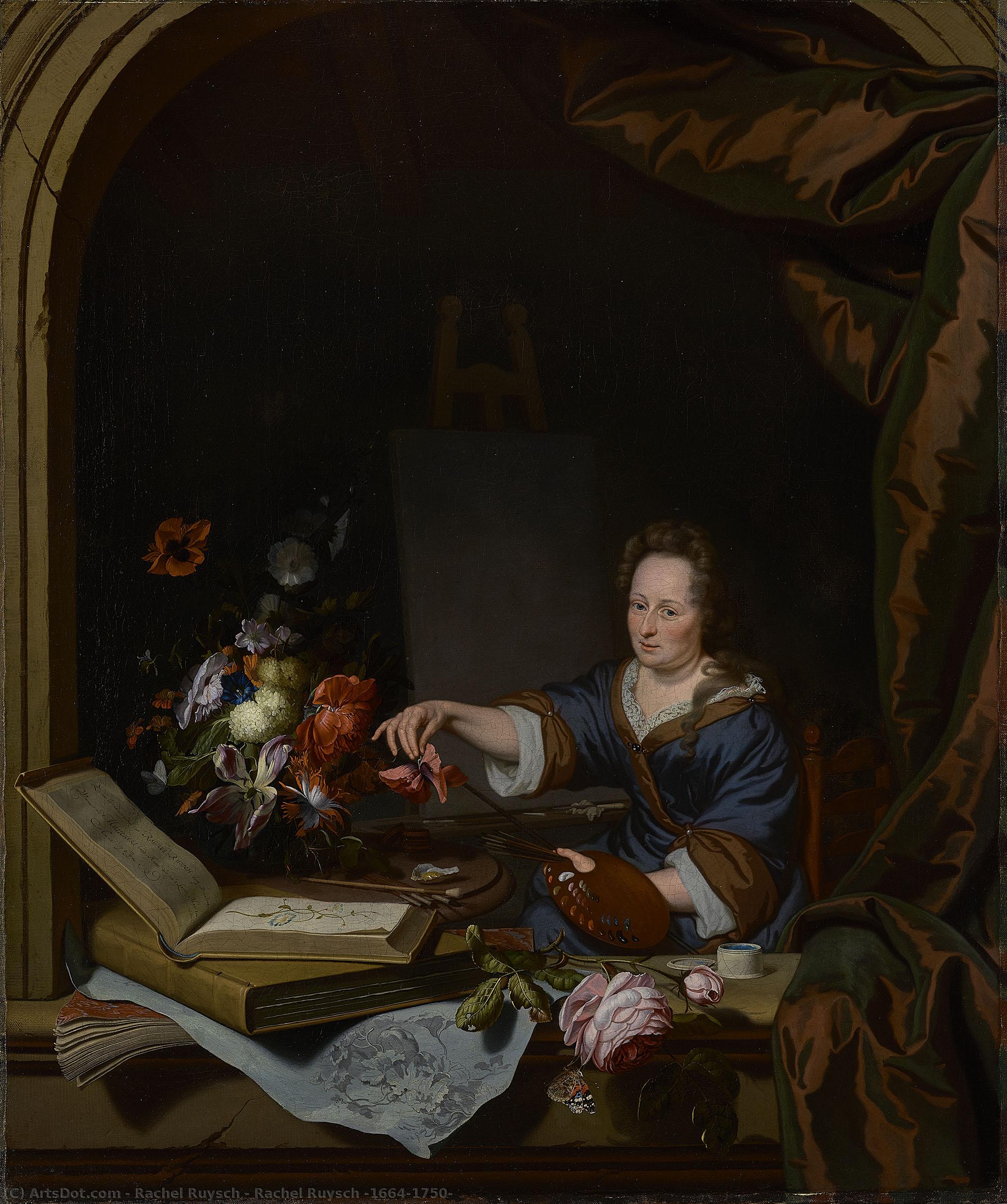
Delve into the captivating world of Rachel Ruysch (1664–1750), Dutch Golden Age’s foremost female flower painter! Explore her meticulous realism & scientific precision in ‘The Floral Album,’ a masterpiece celebrating nature's beauty.
The Botanical Symphony of Rachel Ruysch
To step into the world of Rachel Ruysch is to enter a realm where the boundaries between scientific precision and poetic beauty dissolve entirely. A true pioneer of the Dutch Golden Age, Ruysch did not merely paint flowers; she orchestrated them. Born into a household defined by the wonders of the natural sciences—the daughter of the renowned anatomist Frederik Ruysch—her early life was an immersion in a living cabinet of curiosities. This unique upbringing gifted her with an unparalleled eye for the minute details of the botanical world, allowing her to capture the delicate veins of a petal and the translucent wings of an insect with a realism that feels almost tactile. Her work serves as a breathtaking bridge between the empirical observations of the Enlightenment and the profound emotional resonance of fine art.
In her most captivating compositions, such as her celebrated floral still lifes, Ruysch employs a masterful use of chiaroscuro to breathe life into her subjects. Against deep, velvety shadows that seem to recede into infinite darkness, her blossoms emerge with a luminous, almost supernatural vitality. This dramatic interplay of light and shadow does more than create depth; it directs the viewer's gaze through a carefully choreographed dance of color and form. Each tulip, rose, and peony is rendered with painstaking precision using oil on canvas, showcasing a technique that celebrates both the structural integrity of the plant and the ephemeral fragility of its bloom. For the discerning collector or interior designer, these works offer a sense of dramatic elegance, providing a sophisticated focal point that commands attention through its quiet, intense energy.
Symbolism and the Fleeting Moment
Beyond the sheer technical brilliance lies a profound layer of symbolism that invites deep contemplation. Ruys ch’s paintings are masterclasses in the vanitas tradition—a genre designed to remind the viewer of the transience of life and the inevitability of time. While her arrangements appear lush and abundant, a closer inspection often reveals the subtle markers of decay: a drooping stem, a bruised petal, or a tiny insect beginning its feast. These elements serve as poignant metaphors for the fleeting nature of beauty and the cyclical rhythm of existence. There is a hauntingly beautiful tension in her work; it captures a moment of peak perfection even as it acknowledges the approaching wilt.
This duality makes her art particularly resonant for modern spaces, where such pieces can evoke a sense of timelessness and mindfulness. To hang a reproduction of a Ruysch masterpiece is to invite a conversation about presence and appreciation. The emotional impact is one of profound intimacy, as if the viewer has been granted a private audience with nature’s most exquisite secrets. Whether placed in a sunlit gallery or a moody, contemporary study, her work brings an atmosphere of scholarly sophistication and organic grace, making it an incomparable choice for those looking to infuse their surroundings with history, intellect, and soul.