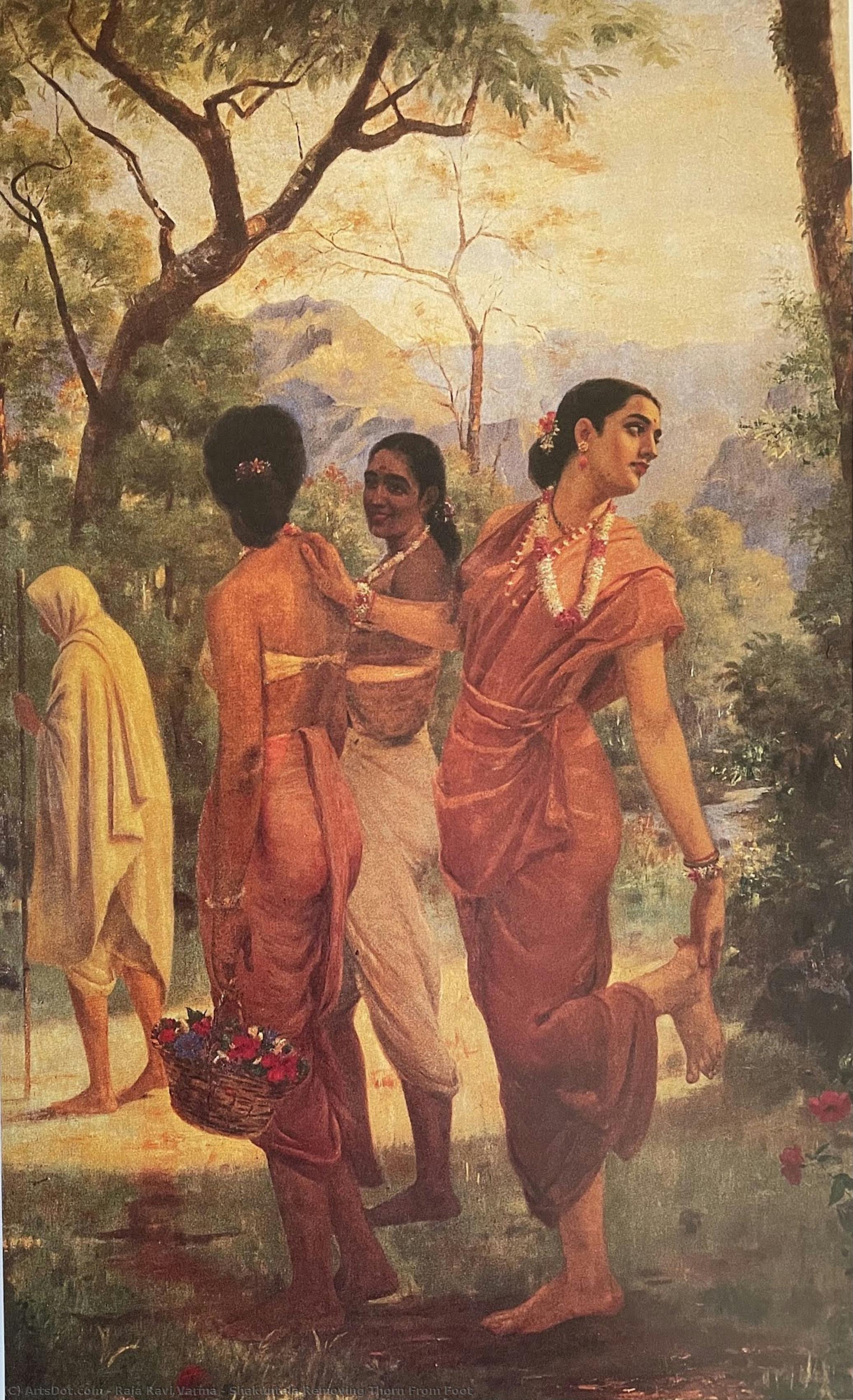
A Moment of Grace: Raja Ravi Varma’s *Shakuntala Removing Thorn From Foot*
Raja Ravi Varma's 1898 painting, *Shakuntala Removing Thorn From Foot*, is more than just a depiction of a classical Indian myth; it’s a profound meditation on beauty, vulnerability, and the delicate balance between human emotion and the natural world. Executed during a pivotal moment in Indian art history – a time when European academic techniques were being cautiously embraced alongside deeply rooted traditional aesthetics – this large-scale work exemplifies Ravi Varma's extraordinary ability to synthesize these influences into something uniquely his own.
- Subject and Narrative: The painting centers on Shakuntala, the heroine of Kalidasa’s renowned play, a moment of poignant vulnerability as she removes a thorn from her foot. This seemingly simple act – imbued with symbolic weight – speaks to themes of suffering, resilience, and the potential for beauty even amidst hardship.
- Style and Influence: Ravi Varma's style is firmly rooted in the classical tradition of Indian painting, particularly drawing inspiration from the Tanjore School’s meticulous detail and vibrant color palettes. However, he skillfully incorporates elements of European academic realism, evident in his careful rendering of anatomy, perspective, and the overall composition – a deliberate choice reflecting the artistic currents of the late 19th century.
Technique and Materials: A Masterclass in Oil Painting
The artwork’s power resides not only in its subject matter but also in Ravi Varma's masterful technique. Executed primarily in oil paints on canvas, the piece demonstrates a sophisticated understanding of layering and glazing – essential techniques for achieving depth, luminosity, and textural richness. Notice the deliberate brushstrokes that build up form, particularly in the flowing drapery and the intricate details of the foliage. The muted color palette—dominated by warm earth tones of reds, browns, and ochres—is expertly balanced with cooler greens and blues, creating a harmonious and evocative atmosphere. The diffused lighting contributes significantly to the painting’s serene mood, minimizing harsh shadows and highlighting the figures' delicate features.
Symbolism and Context: Echoes of Mythology and Courtly Life
Beyond the narrative of Shakuntala, the painting is rich in symbolic meaning. The women depicted – three in total – represent different aspects of feminine grace and serenity. Their adornments—jewelry, flowers—are not merely decorative; they are potent symbols of status, beauty, and spiritual devotion. The lush greenery, winding river, and distant mountains create a backdrop that elevates the scene to a realm of mythic grandeur. Ravi Varma’s connection to the Travancore royal family – his family's long-standing ties to the palace – undoubtedly informed his artistic vision, imbuing the work with a sense of courtly elegance and reverence for tradition.
Emotional Impact and Legacy
*Shakuntala Removing Thorn From Foot* possesses a remarkable emotional resonance. The subdued lighting, contemplative expressions of the figures, and the overall atmosphere of tranquility evoke a sense of melancholy and spiritual yearning. Ravi Varma’s work represents a crucial bridge between tradition and modernity in Indian art, solidifying his place as one of the most important artists of the late 19th century. This painting continues to captivate viewers with its beauty, its profound symbolism, and its testament to the enduring power of classical storytelling.