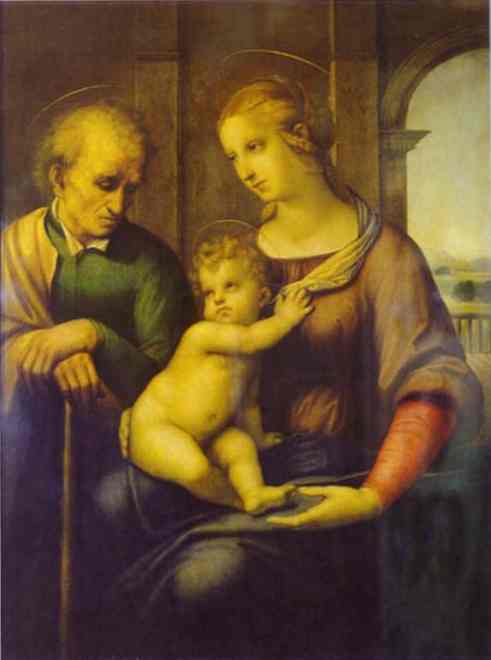
The Holy Family (Madonna with Beardless Joseph) – A Renaissance Icon
Raphael’s “Holy Family” stands as one of the most celebrated paintings of the Italian Renaissance, embodying ideals of grace, harmony, and divine beauty. Created in 1506 during his Florentine period—a time marked by artistic innovation and patronage—the artwork resides prominently within the Hermitage Museum’s collection, offering visitors a glimpse into the profound aesthetic sensibilities of its era.
Early Influences and Artistic Development
Raphael’s formative years were deeply shaped by the legacy of Leonardo da Vinci and Michelangelo. These titans of Renaissance art instilled in him a meticulous attention to detail, masterful use of perspective, and an unwavering commitment to capturing human emotion with remarkable accuracy. The Holy Family exemplifies Raphael's ability to synthesize these influences into a singularly elegant visual language.
Composition and Technique – Mastering Light and Shadow
The painting’s composition is deceptively simple yet remarkably effective. Raphael skillfully arranges the figures—Mary, Joseph, and the infant Jesus—within a shallow space dominated by a luminous window on the right side. This architectural element serves as a focal point, casting soft light upon the central trio and creating a palpable sense of depth. Raphael employed tempera on canvas – a technique favored for its vibrancy and durability – meticulously layering pigments to achieve subtle gradations of color and texture.
Symbolism and Spiritual Significance
Beyond its visual beauty, “The Holy Family” is laden with symbolic meaning. The Virgin Mary’s serene gaze conveys compassion and piety, reflecting the Christian belief in maternal devotion. Joseph stands steadfastly beside her, symbolizing humility and protection—qualities revered throughout Christendom. The infant Jesus, cradled in Mary's arms, represents divine innocence and redemption. Raphael’s masterful depiction underscores the central narrative of Christianity: God’s love for humanity manifested in the incarnation.
A Legacy Enduring Through Time
“The Holy Family” continues to inspire artists and captivate audiences centuries after its creation. Its enduring appeal stems from its timeless portrayal of familial tenderness and spiritual contemplation—themes that resonate across cultures and generations. The painting’s presence in the Hermitage Museum ensures that Raphael's artistic genius remains accessible to scholars and enthusiasts alike, cementing its place as a cornerstone of Western art history.
- Artist: Raphael (Raffaello Sanzio Da Urbino)
- Date: 1506
- Medium: Tempera on Canvas
- Location: Hermitage Museum, Saint Petersburg
- Style: High Renaissance
To explore more paintings by Raphael and discover exceptional reproductions of “The Holy Family,” visit ArtsDot's collection of Raphael's paintings.