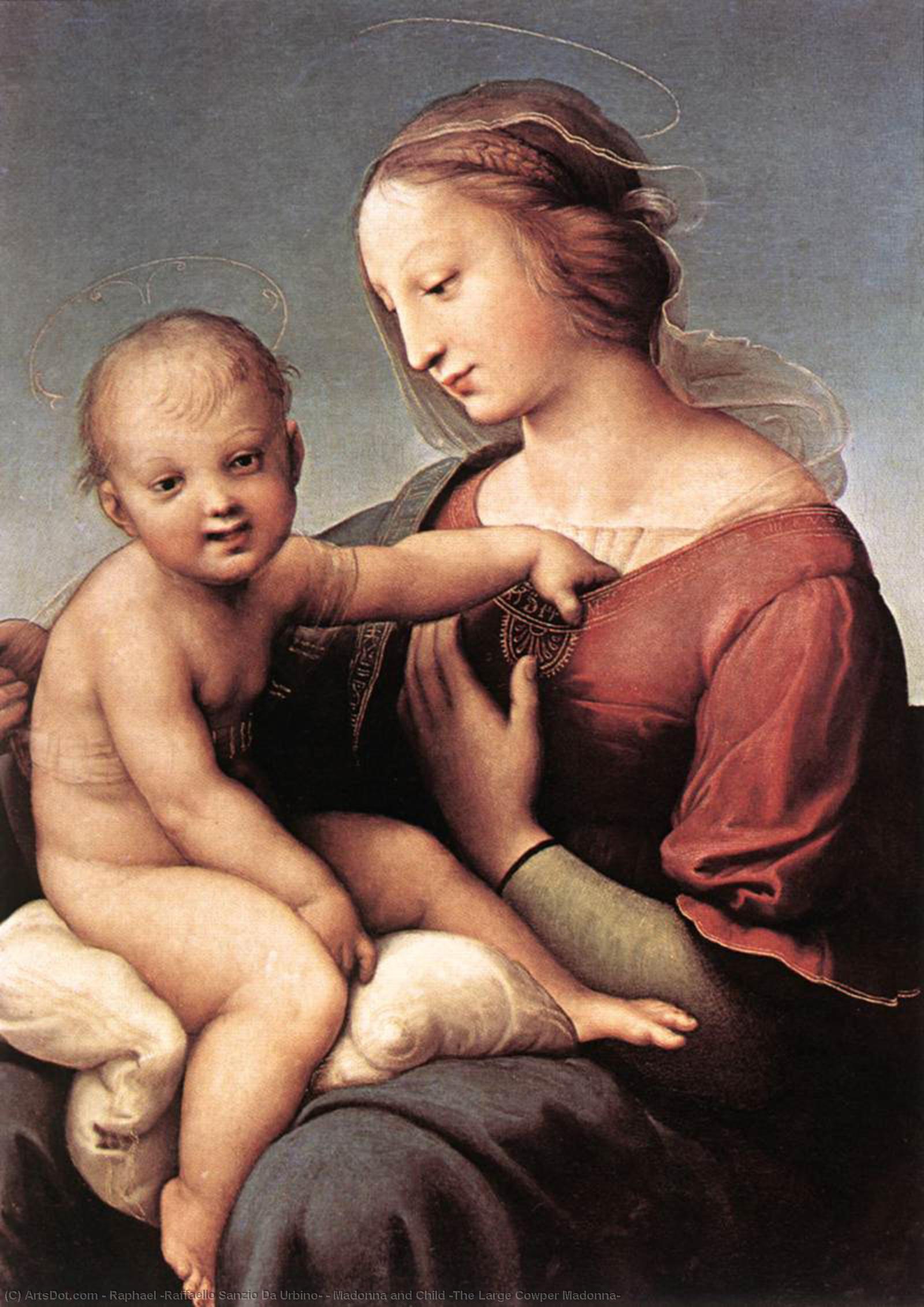
Raphael’s Madonna and Child (The Large Cowper Madonna): A Renaissance Icon
Raphael’s *Madonna and Child* (also known as The Large Cowper Madonna), created in 1508, stands as a pinnacle of High Renaissance art—a testament to Raphael’s unparalleled skill in composition, color palette, and conveying profound emotion. Currently housed at the National Gallery of Art in Washington, D.C., this painting transcends mere representation; it embodies humanist ideals and captures the spiritual essence of its time.
Composition and Technique: Harmony Embodied
Measuring 81 x 57 cm on a panel treated with oil paint, the Madonna and Child exemplifies Raphael’s meticulous approach to artistic execution. The central figures—Mary and Jesus Christ—are positioned within a carefully balanced pyramidal structure, reflecting the Renaissance fascination with geometric harmony. Surrounding them are additional figures – including Saint John the Baptist – adding depth and narrative complexity. Raphael skillfully employs chiaroscuro (the interplay of light and shadow) to sculpt the forms of Mary and Child, creating an illusionistic effect that draws viewers into the scene.
Historical Context: Florence at Its Zenith
Raphael’s masterpiece emerged during a period of artistic flourishing in Florence—a city ruled by Lorenzo de Medici (“The Magnificent”), whose patronage fostered innovation and celebrated classical ideals. Raphael was deeply influenced by Leonardo da Vinci and Michelangelo, absorbing their groundbreaking techniques and stylistic sensibilities. He joined the workshop of Perugino shortly after arriving in Florence, honing his craft amidst a vibrant intellectual environment.
Symbolism: Divine Grace and Maternal Love
The Madonna and Child is laden with symbolic significance. Mary’s serene gaze embodies spiritual contemplation, while her outstretched hand symbolizes compassion and nurturing—reflecting the Christian belief in divine grace and maternal love. The halo above Mary's head signifies her holiness, mirroring the halos adorning Jesus Christ, emphasizing their celestial status. The inclusion of Saint John the Baptist reinforces the narrative framework of salvation history.
Emotional Impact: A Moment Frozen in Time
More than just a depiction of religious figures, Raphael’s Madonna and Child evokes a powerful emotional response. Its tranquil atmosphere invites contemplation, capturing the tenderness of Mary's embrace of her son—a scene that resonates across centuries as an enduring symbol of maternal devotion and spiritual purity. The painting continues to inspire artists and viewers alike, cementing its place as one of the most beloved images in Western art history.
Explore masterpieces at Washington D.C.’s National Gallery of Art! Featuring da Vinci’s only US painting & world-class collections from Renaissance to modern art, admission is free.