A Vision of Divine Wrath and Human Sorrow
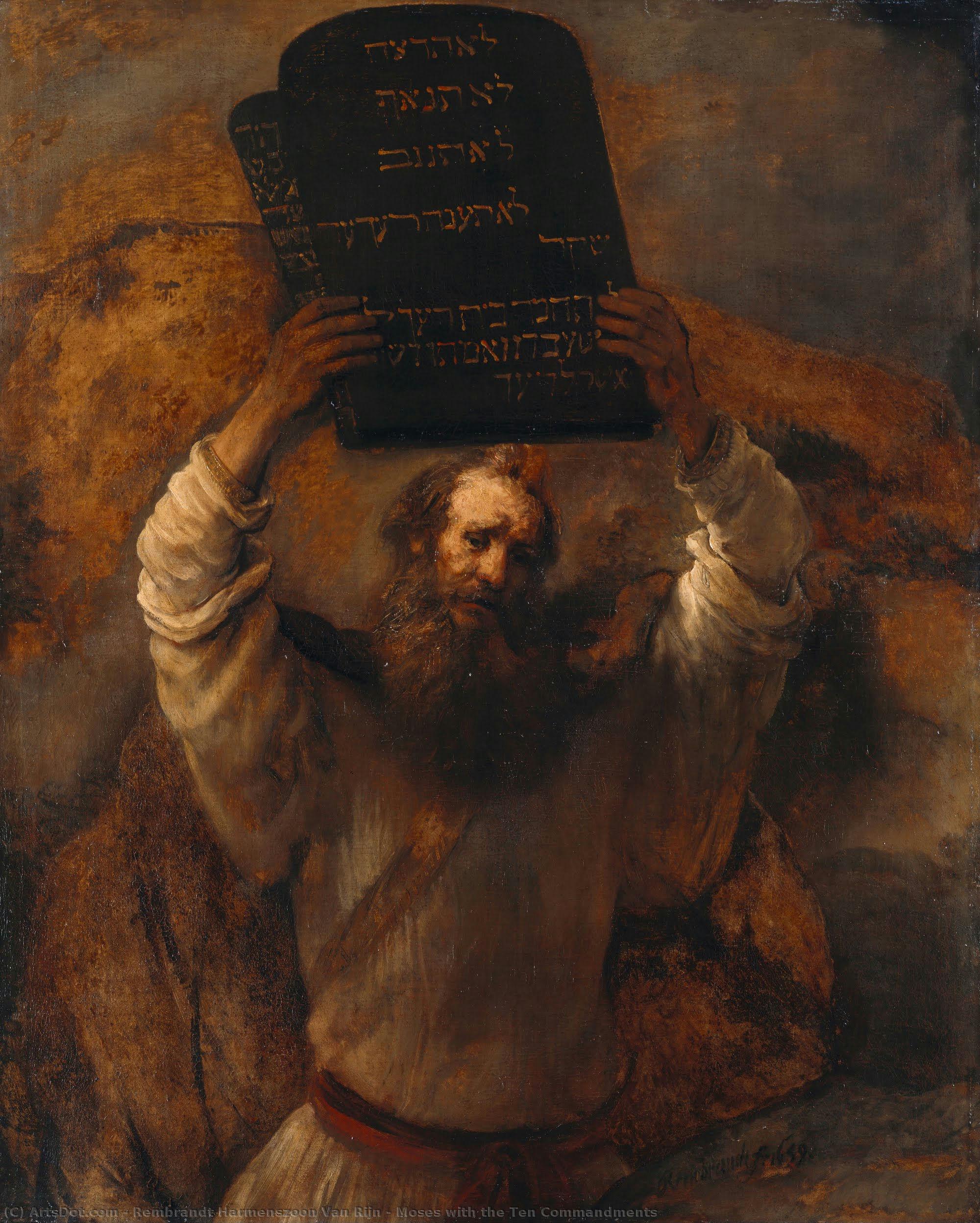
In the profound depths of Rembrandt van Rijn’s Moses with the Ten Commandments, we are not merely observers of a biblical event, but witnesses to a psychological storm. Painted in 1659, this monumental work captures the exact moment where divine law meets human frailty. The prophet Moses stands as a titan of both spiritual authority and earthly anguish, his face illuminated by a light that seems to emanate from within—a subtle nod to the biblical accounts of his skin shining after receiving the tablets. Yet, this radiance is tempered by the heavy shadows of chiaroscuro, Rembrandt’s signature technique, which wraps the scene in a sense of cosmic weight and intimacy.
The composition is anchored by the raw tension held within Moses' hands. As he clutches the stone tablets, there is an palpable sense of impending motion; he appears poised on the precipice of shattering the very laws he has been entrusted to uphold. This impulse is driven by the heartbreak of discovering the golden calf, a symbol of his people's betrayal. Through the masterful use of light and shadow, Rembrandt translates this inner torment into an outward physical presence, making the prophet’s spiritual struggle feel intensely personal and immediate to the modern viewer.
The Mastery of Light and Texture
To behold this masterpiece is to experience the pinnacle of the Dutch Golden Age. Rembrandt’s technique goes far beyond simple representation; he uses paint to sculpt emotion. The texture of the white robe, the ruggedness of the surrounding rocks, and the weathered skin of the prophet are all rendered with a tactile richness that invites the eye to linger. The way the light catches the Hebrew inscriptions on the tablets serves as a focal point, drawing the viewer into the sacred covenant at the heart of the narrative.
For the discerning collector or interior designer, this piece offers more than just aesthetic beauty; it provides a profound atmospheric anchor. The dramatic interplay of dark and light creates a sense of "quiet drama" that can transform a room, lending an air of intellectual depth and historical gravity to any space. Whether placed in a study filled with books or as a centerpiece in a grand gallery, the painting’s ability to command attention through subtle gradations of tone makes it a timeless choice for those who appreciate art that speaks to the soul.
A Timeless Legacy for the Modern Collector
Investing in a high-quality reproduction of this work allows one to bring the transformative power of Rembrandt into the contemporary home. This painting is not merely a relic of 1659; it is a living study of human vulnerability and resilience. The emotional impact of Moses’ sorrow—a universal experience of loss and disappointment—ensures that the artwork remains relevant across centuries.
For those seeking to curate an environment of inspiration, this piece serves as a powerful conversation starter. It embodies the intersection of religious history, technical brilliance, and psychological depth. Owning a reproduction of such a significant moment in art history is an opportunity to surround oneself with the enduring spirit of the Dutch masters, celebrating a legacy where light does not just illuminate a subject, but breathes life into its very essence.