A Glimpse into Domestic Drama: The Unruly Child
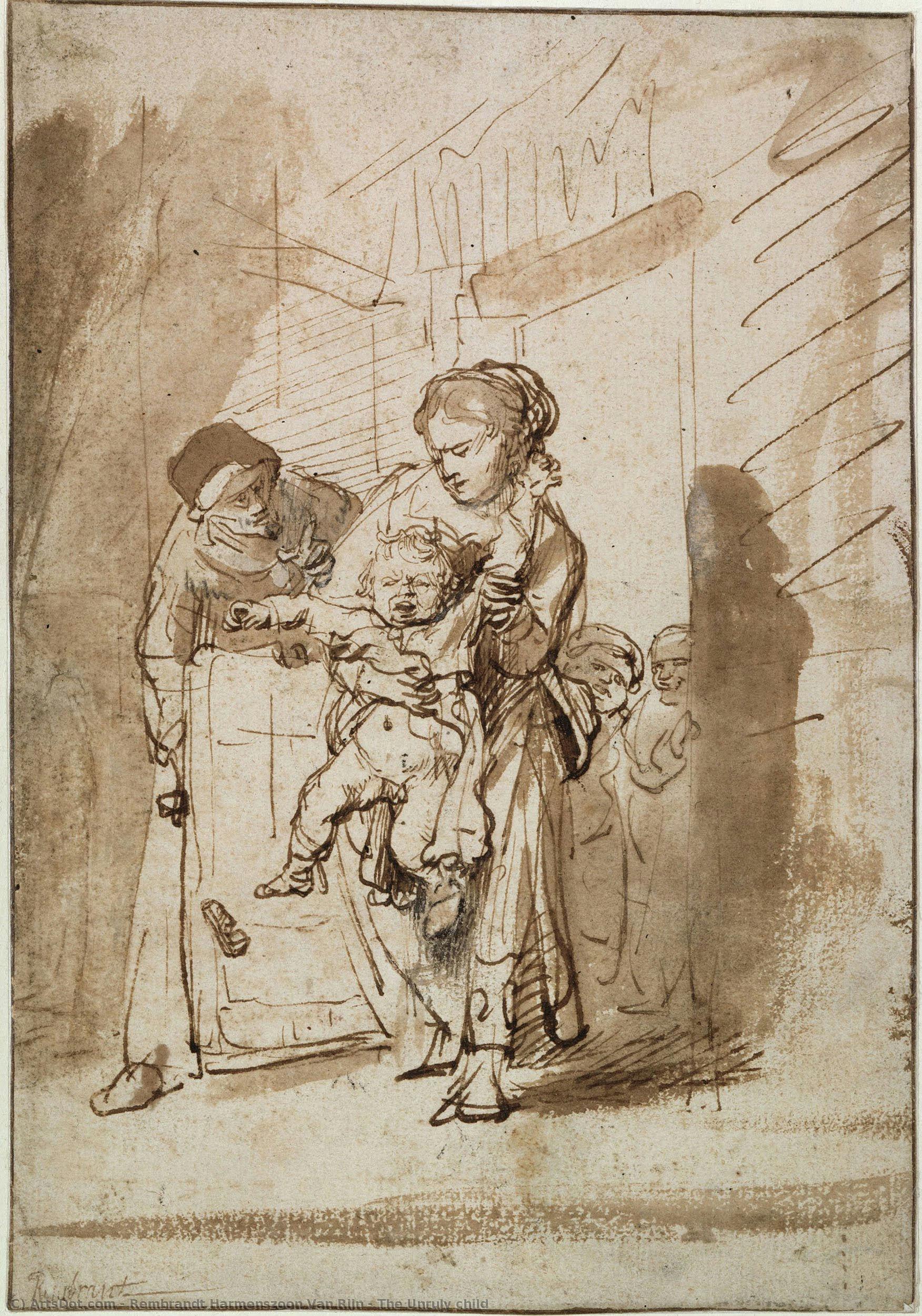
To stand before Rembrandt’s depiction of The Unruly Child is to be drawn immediately into the intimate, charged atmosphere of a bygone domestic moment. This drawing transcends mere portraiture; it captures a fleeting tableau brimming with unspoken narratives and palpable emotion. The composition centers on a family unit—a man in his robes, a woman cradling an infant, and another child standing nearby—yet the energy within the frame feels anything but tranquil. There is a discernible sense of urgency, perhaps even melancholy, woven into the very posture of each figure. Rembrandt, ever the master observer of the human condition, has gifted us not just an image, but a profound meditation on family life under duress or simply observed in its rawest state.
Mastery in Monochrome: Technique and Texture
Technically, this piece is a breathtaking study executed in brown ink upon laid paper. The artist’s hand is evident in every deliberate stroke. Rembrandt employs meticulous hatching and cross-hatching—a hallmark of his drawing prowess—to build up tonal values with astonishing depth. This technique allows the monochromatic medium to achieve an almost sculptural sense of volume, giving weight and presence to the figures despite the flatness inherent in the drawing style. The texture itself is palpable; one can almost feel the scratchy resistance of the ink against the aged paper. Furthermore, while the perspective remains somewhat flattened, typical of the period’s draughtsmanship, Rembrandt masterfully suggests depth through overlapping forms and dramatic tonal shifts, echoing his famous use of chiaroscuro in his paintings.
The Emotional Resonance of the Baroque Spirit
Stylistically, the work anchors itself firmly within the spirit of the Baroque era. It possesses that characteristic drama—the heightened emotionality, the intense focus on human interaction, and the dramatic interplay between light and shadow. The lighting, seemingly originating from an unseen source above and to the left, carves out the forms, highlighting certain gestures while allowing others to recede into suggestive shadow. This contrast is not merely decorative; it serves a narrative purpose, guiding the viewer’s eye through the emotional currents connecting the figures. It speaks to a time when life, even within the confines of one's home, was portrayed with epic weight and profound psychological depth.
A Timeless Echo for Modern Spaces
For those who collect art or seek decorative pieces that carry intellectual weight, this reproduction offers an unparalleled connection to the Dutch Golden Age genius. The subject matter—the complexity of family bonds—is eternally relevant, allowing it to integrate seamlessly into interiors ranging from scholarly studies to richly appointed drawing rooms. Owning a piece echoing Rembrandt’s dramatic draughtsmanship brings not just decoration, but conversation; it invites contemplation on humanity, hardship, and the enduring power of connection. It is an artifact that whispers stories of light, shadow, and the beautiful, messy reality of being alive.