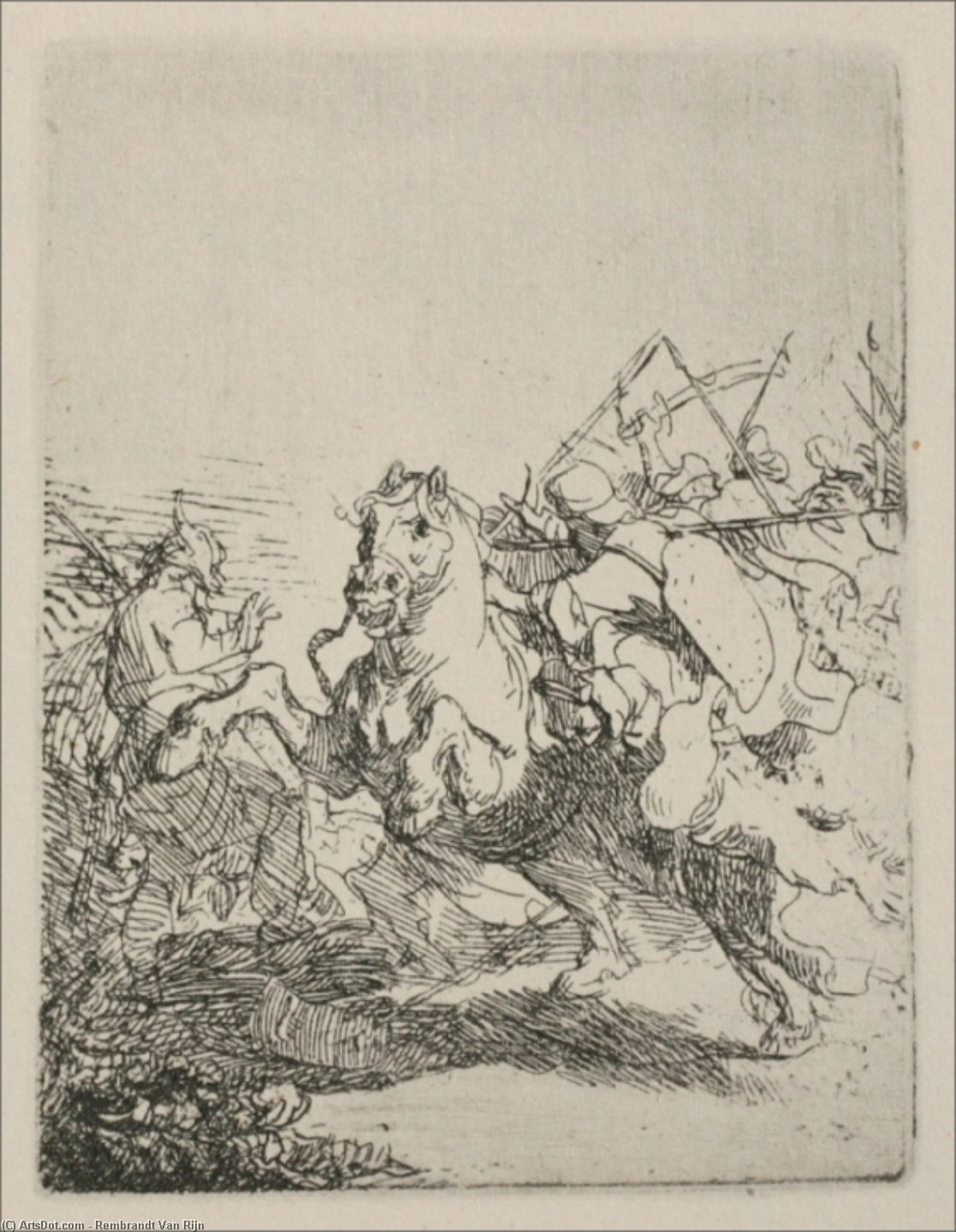
A Cavalry Fight – Rembrandt’s Dramatic Exploration of Conflict and Light
Rembrandt van Rijn's “A Cavalry Fight,” completed in 1629, stands as a cornerstone of Dutch Baroque art—a testament to his unparalleled ability to convey emotion through masterful composition and luminous chiaroscuro. This etching, part of Rembrandt’s prolific output during his Amsterdam period, captures a pivotal moment of military action with breathtaking immediacy, inviting viewers into the heart of the scene.
- Subject Matter: The painting depicts a chaotic battlefield, brimming with soldiers and horses engaged in fierce combat. A central knight astride a horse dominates the composition, embodying courage and leadership amidst the tumult.
- Style & Technique: Rembrandt’s etching technique—a process of transferring ink from a copper plate onto paper—allowed for exceptional detail and tonal variation. He skillfully employed hatching and cross-hatching to build up shadows, creating an illusionistic depth that transcends the limitations of printmaking. This meticulous attention to texture contributes significantly to the painting's dramatic impact.
- Historical Context: Created during a period of political instability in the Netherlands—marked by conflict with Spain—the etching reflects the anxieties and aspirations of its time. Rembrandt’s artistic endeavors were often driven by commissions related to historical narratives, aiming to commemorate significant events and figures.
Beyond its depiction of warfare, “A Cavalry Fight” resonates deeply with symbolic meaning. The knight's posture—determined yet vulnerable—represents the human condition facing adversity. Furthermore, Rembrandt’s masterful use of light – a hallmark of his artistic style – serves to illuminate key figures and heighten emotional intensity. Notice how the light casts dramatic shadows across the battlefield, emphasizing the urgency and drama of the confrontation.
- Symbolism: The horse itself symbolizes power and nobility, mirroring the knight’s role as protector and warrior. The scattered soldiers represent the collective effort to defend their nation, highlighting themes of bravery and resilience.
- Emotional Impact: Rembrandt's etching succeeds in transporting viewers to the battlefield, eliciting feelings of tension, excitement, and perhaps even apprehension. It is a visceral portrayal of conflict that captures not only the visual spectacle but also the psychological experience of witnessing such an event.
A hand-painted reproduction of “A Cavalry Fight” offers an opportunity to appreciate Rembrandt’s genius in a tangible form—to bring his dramatic vision into your home and immerse yourself in the captivating beauty of Baroque art. Explore ArtsDot for exquisite reproductions that faithfully capture the essence of this iconic masterpiece.