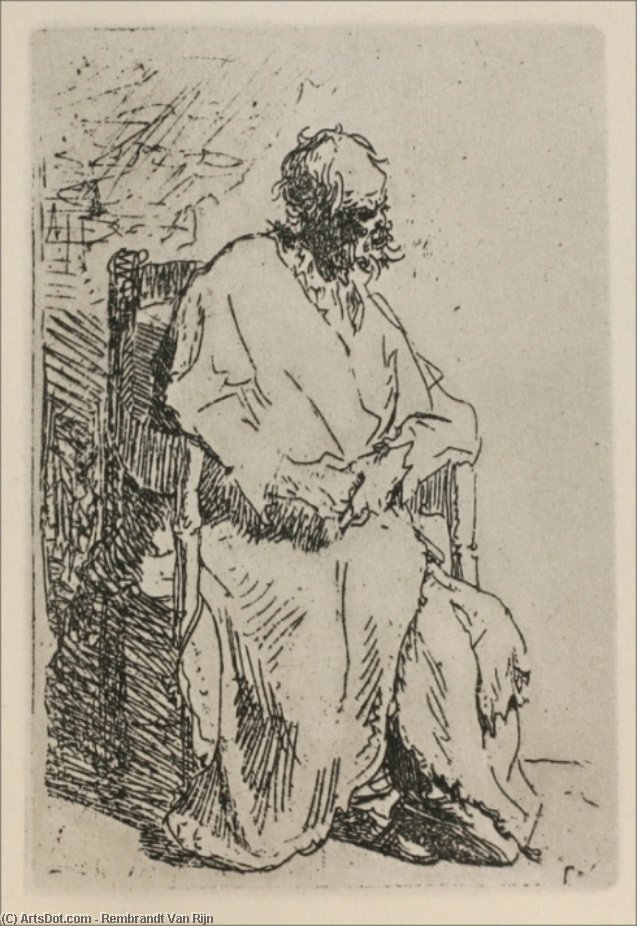
A Portrait of Dignity Amidst Darkness: Rembrandt’s “A Beggar Sitting in an Elbow Chair”
Rembrandt van Rijn's etching, "A Beggar Sitting in an Elbow Chair," transcends mere depiction; it embodies the very essence of Baroque artistry—a masterful manipulation of light and shadow to convey profound psychological depth. Executed around 1642, this piece stands as a testament to Rembrandt’s unparalleled ability to capture not just outward appearance but also inner turmoil and quiet contemplation.
- Subject Matter: The etching portrays an elderly beggar seated in a simple elbow chair, positioned against a muted grey background. This deliberate choice of subject matter wasn't simply observational; Rembrandt aimed to confront viewers with the realities of poverty and human vulnerability—themes prevalent during his time but rendered with extraordinary sensitivity.
- Style & Technique: Rembrandt’s signature style is instantly recognizable through his masterful use of chiaroscuro – dramatic contrasts between light and dark – a technique perfected during his prolific career. The etching utilizes dense hatching and cross-hatching to build up texture, meticulously defining the beggar's wrinkled skin, weathered clothing, and the contours of the chair itself. This painstaking process reflects the Baroque preoccupation with realism and emotional intensity.
- Historical Context: Created amidst the turbulent political landscape of seventeenth-century Holland—a nation grappling with religious reformation and economic expansion—the etching speaks to broader societal anxieties about morality and compassion. Rembrandt’s work aligns perfectly with the artistic movement's desire to portray human experience in its rawest form, capturing both beauty and sorrow.
- Symbolism & Emotional Impact: The beggar’s gaze directs upwards, suggesting a yearning for spiritual solace despite his material hardship. His posture exudes quiet dignity—a subtle defiance against despair—reflecting Rembrandt's belief that even the most impoverished individuals possess inherent worth and inner resilience. The etching compels viewers to confront uncomfortable truths about human suffering while simultaneously celebrating the enduring power of compassion.
- Material & Process: As a print produced from a copper plate etched with needles and burnished to achieve maximum smoothness, “A Beggar Sitting in an Elbow Chair” exemplifies Rembrandt’s dedication to craftmanship. The resulting image possesses remarkable detail and tonal range—a captivating reminder of the artist's genius and the enduring legacy of Baroque art.