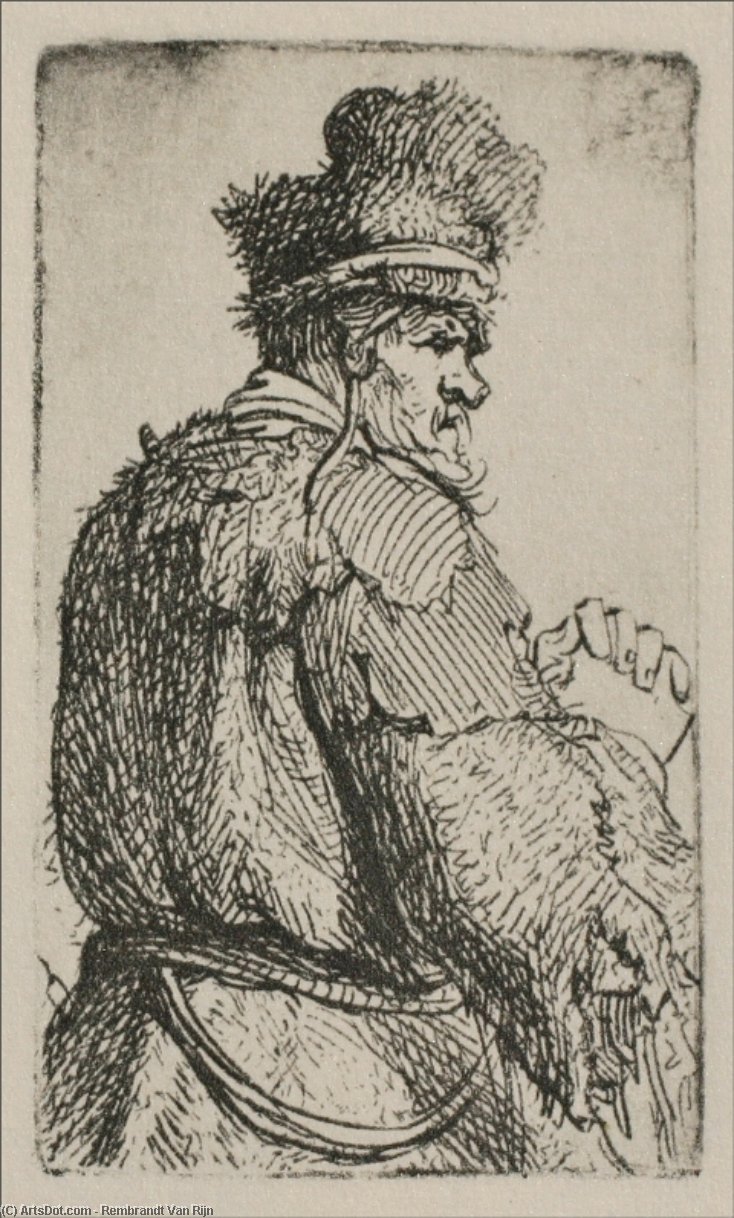
A profound meditation on solitude and age unfolds through Rembrandt van Rijn's masterful chiaroscuro in this evocative Dutch Golden Age portrait, inviting you to experience the quiet dignity of his timeless artistry.
光と影の魔術師、レンブラント・ファン・レイン!「夜警」や自画像など、バロック美術の傑作を堪能。オランダ黄金時代の精神を体現する芸術家です。
A Window into Rembrandt’s Soul: Examining “An Old Man Seen From Behind”
Rembrandt Harmenszoon van Rijn, a titan of the Dutch Golden Age, wasn't merely a painter; he was an architect of emotion. His ability to distill profound human experience onto canvas—particularly his masterful exploration of light and shadow—continues to captivate audiences centuries later. “An Old Man Seen From Behind,” arguably one of his most iconic portraits, exemplifies this genius, offering a glimpse into the artist’s deeply considered approach to depicting character and conveying psychological depth. Captured in stark monochrome, the painting transcends its simple subject matter to become a meditation on age, contemplation, and the quiet dignity of solitude.
The Anatomy of Light: Rembrandt's Signature Technique
Rembrandt’s technique—known as chiaroscuro—was revolutionary for its time. He didn’t strive for photographic realism; instead, he sought to illuminate the inner landscape of his subjects. Observe how a single shaft of light pierces through the gloom, highlighting the wrinkled skin and furrowed brow of the elderly man. This dramatic interplay between light and dark isn't accidental; it’s meticulously crafted to sculpt form and imbue the image with palpable emotion. Rembrandt achieved this effect by layering thin glazes of paint—often applied in multiple sessions—allowing him to build up tonal variations gradually, creating an illusion of depth and texture that defies conventional representation. This painstaking process demanded immense patience and skill, cementing Rembrandt’s reputation as a master craftsman.
Historical Context: Facing Mortality
Painted around 1648, “An Old Man Seen From Behind” emerged during a period marked by significant intellectual ferment—the burgeoning Renaissance humanist movement questioned traditional religious dogma and championed the study of human anatomy and psychology. Rembrandt himself was grappling with personal hardships; his family faced financial difficulties, and he endured periods of illness and despair. These experiences undoubtedly informed his artistic vision, prompting him to confront themes of mortality and vulnerability head-on. The man’s gaze—directed downwards, seemingly absorbed in thought—suggests a profound awareness of the passage of time and the inevitability of decay. Yet, there's also an undeniable serenity, hinting at acceptance and inner peace.
Symbolism Beyond Appearance: Layers of Meaning
Beyond its technical brilliance and historical resonance, “An Old Man Seen From Behind” is laden with symbolic significance. The hat—a symbol of authority and status—contrasts sharply with the man’s humble posture, emphasizing his vulnerability. Similarly, the fur coat represents wealth and protection but also serves as a visual barrier, separating him from the viewer and reinforcing the sense of isolation. Most powerfully, however, is the hand resting on what appears to be a book or manuscript. This gesture speaks volumes about intellectual curiosity and spiritual contemplation—values central to Rembrandt’s worldview and reflecting the broader humanist ideals of his era.
Emotional Resonance: A Portrait of Quiet Reflection
Ultimately, “An Old Man Seen From Behind” succeeds in capturing something far more elusive than mere likeness: it conveys a profound emotional state. The painting doesn't shout; it whispers—inviting viewers to contemplate the complexities of human experience and to appreciate the beauty found in quiet introspection. Rembrandt’s masterful manipulation of light and shadow creates an atmosphere of melancholy yet dignity, prompting us to consider what it means to confront our own mortality with grace and wisdom. It remains a testament to Rembrandt's enduring ability to transform observation into art—a timeless masterpiece that continues to inspire awe and contemplation.