A Sacred Encounter in Shadow and Light
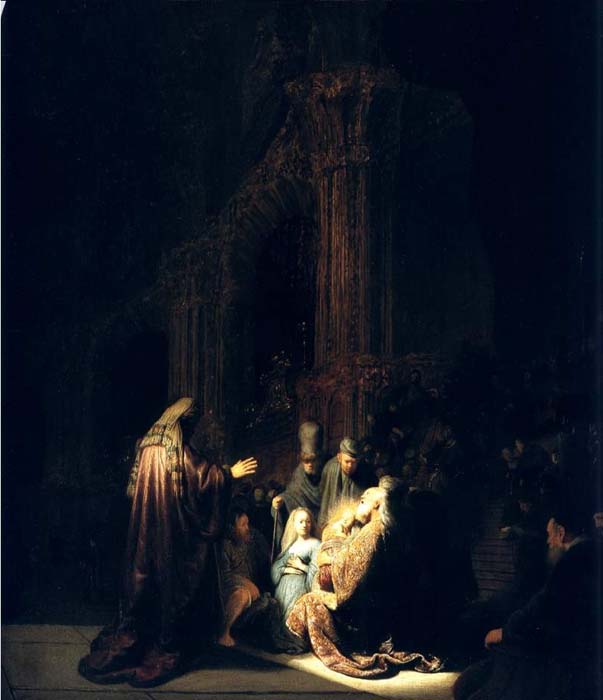
In the year 1631, a young Rembrandt van Rijn captured more than just a biblical event; he bottled a moment of profound spiritual transcendence. "Presentation Au Temple" invites the viewer into the husaged, hallowed atmosphere of the Temple, where the arrival of the infant Jesus is met with a reverence that transcends time. The painting is not merely a depiction of a religious rite but a meditation on the intersection of the human and the divine. As one gazes upon the central figures of Mary and her child, there is an immediate sense of intimacy and solemnity, a quietude that commands attention and pulls the soul into the heart of the narrative. The composition draws us into a world where every gesture and every shadow tells a story of faith and humility.
The Alchemy of Chiaroscuro
What truly distinguishes this masterpiece is Rembrandt’s revolutionary use of
chiaroscuro, the dramatic interplay between brilliant light and impenetrable shadow. He does not simply illuminate a scene; he sculpts it with light. A single, dominant source pierces through the gloom, casting a celestial glow upon Mary’s serene face and the soft skin of the infant Jesus. This technique creates a powerful emotional conduit, directing our eyes toward the core of the sacred moment while leaving the surrounding architectural details to emerge mysteriously from the darkness. The heavy, velvety shadows provide a sense of depth and mystery, making the illuminated figures appear almost as if they are emerging from a dream into reality. For the discerning collector, this mastery of contrast offers a visual drama that can anchor any room with its profound intensity and movement.
Symbolism and Design Inspiration
The structural brilliance of the work lies in its pyramidal composition, a classic technique that provides stability and directs the viewer's gaze upward toward the apex of devotion. Subtle symbolic layers are woven into the very fabric of the scene; notice the presence of birds perched within the architectural elements, representing spiritual aspiration and divine providence. For those seeking to integrate such a powerful piece into a curated interior, the painting offers a rich palette of deep browns, blacks, and warm ochres that harmonize beautifully with both classical and contemporary decor.
When selecting a high-quality reproduction for your collection, consider how these elements can transform a space:
- Atmospheric Depth: The dramatic shadows create a sense of architectural grandeur and mystery within a room.
- Color Versatility: The muted earth tones and warm highlights provide a sophisticated foundation for various design palettes.
- Emotional Resonance: The piece serves as a profound focal point that invites both conversation and quiet reflection.
Ultimately, "Presentation Au Temple" is more than an artwork; it is a symphony of light and shadow that continues to inspire awe, offering a timeless window into the beauty of human emotion and the enduring power of the Dutch Golden Age.