光と影の魔術師、レンブラント・ファン・レイン!「夜警」や自画像など、バロック美術の傑作を堪能。オランダ黄金時代の精神を体現する芸術家です。
A Window into Faith and Intimacy: Rembrandt’s ‘The Circumcision’
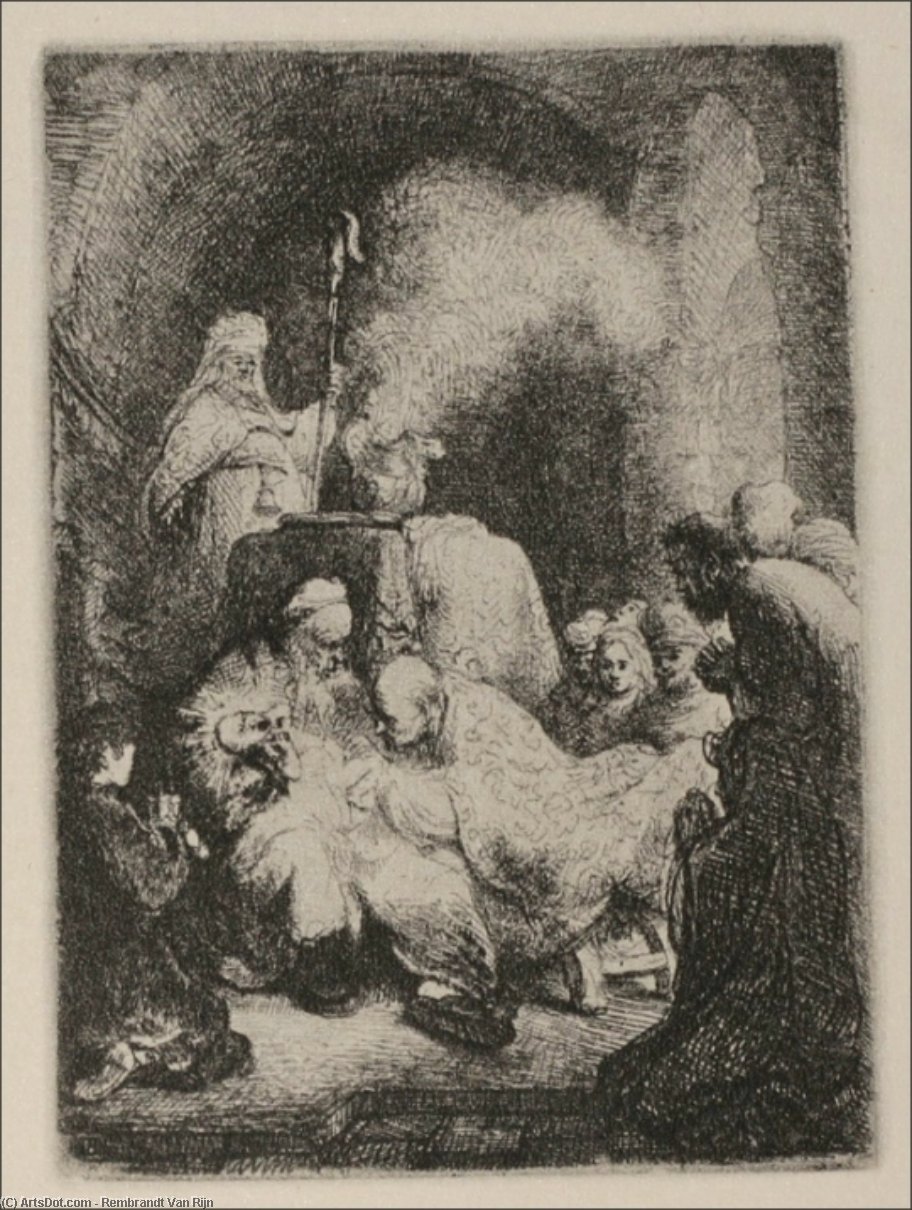
Rembrandt Harmenszoon van Rijn's “The Circumcision,” painted circa 1642, stands as a testament to the artist’s unparalleled ability to convey profound emotion through masterful chiaroscuro—the dramatic interplay of light and shadow—a technique that defines his oeuvre and cemented his legacy as one of the greatest painters of all time. This monumental portrait captures a pivotal moment in Jewish tradition: the ritual circumcision ceremony, depicted with meticulous detail within Rembrandt's Leiden studio. The scene unfolds with an understated grandeur, focusing on the central figure – a man receiving the rite – surrounded by a group of observers whose expressions reveal a spectrum of emotions ranging from solemn contemplation to quiet reverence.
The Artist’s Vision: Technique and Style
Rembrandt’s artistic approach was revolutionary for his era. He eschewed idealized representations favored by many contemporaries, opting instead for realism that prioritized psychological depth over mere visual accuracy. The painting exemplifies his signature style—characterized by loose brushstrokes layered upon one another to create a textured surface and an illusion of palpable atmosphere. Notice how Rembrandt skillfully utilizes light to sculpt the forms of the figures, highlighting their faces and hands while plunging much of the background into darkness. This technique isn’t merely decorative; it serves as a conduit for conveying inner feelings—the vulnerability of the initiate, the solemnity of the occasion, and the quiet dignity of those witnessing the ceremony. The muted palette contributes to this mood, reinforcing the contemplative atmosphere.
Historical Context: Rembrandt's Leiden Workshop
Painted during Rembrandt’s formative years in Leiden, “The Circumcision” reflects the intellectual ferment of the Dutch Golden Age—a period marked by burgeoning humanist thought and a renewed interest in biblical narratives. Rembrandt’s studio was a hub of artistic experimentation and debate, where he engaged with fellow artists and scholars to push the boundaries of artistic convention. The commission itself speaks volumes about the artist's engagement with religious piety and his desire to portray human experience with unflinching honesty. Leiden at the time was experiencing significant growth as a center for trade and learning, fostering an environment conducive to artistic innovation. Rembrandt’s depiction aligns perfectly with this cultural landscape.
Symbolism: Light, Shadow, and Spiritual Reflection
Beyond its visual splendor, “The Circumcision” is laden with symbolic significance. The pervasive darkness symbolizes the unknown realm of faith—the challenges faced by those seeking spiritual enlightenment. Conversely, the carefully positioned light illuminates the central figure’s face, emphasizing his gaze and conveying a sense of inner contemplation. This deliberate use of illumination underscores Rembrandt's belief that art could serve as a vehicle for exploring profound philosophical questions. The inclusion of a cask or vase in the background adds to this visual richness, subtly hinting at earthly concerns juxtaposed against the spiritual drama unfolding before us—a masterful compositional choice that reinforces the painting’s overarching theme: the intersection between human experience and divine grace.
Emotional Resonance: A Portrait of Quiet Reverence
Ultimately, “The Circumcision” succeeds in capturing a moment of profound emotional resonance. Rembrandt doesn't offer grand pronouncements or dramatic gestures; instead, he presents us with an intimate portrayal of human vulnerability and spiritual contemplation. The faces of the observers are etched with expressions of solemnity and reverence—a testament to the enduring power of ritual and tradition. Viewing this reproduction allows one to appreciate not only Rembrandt’s technical brilliance but also his profound understanding of the human condition—a legacy that continues to inspire artists and collectors alike.