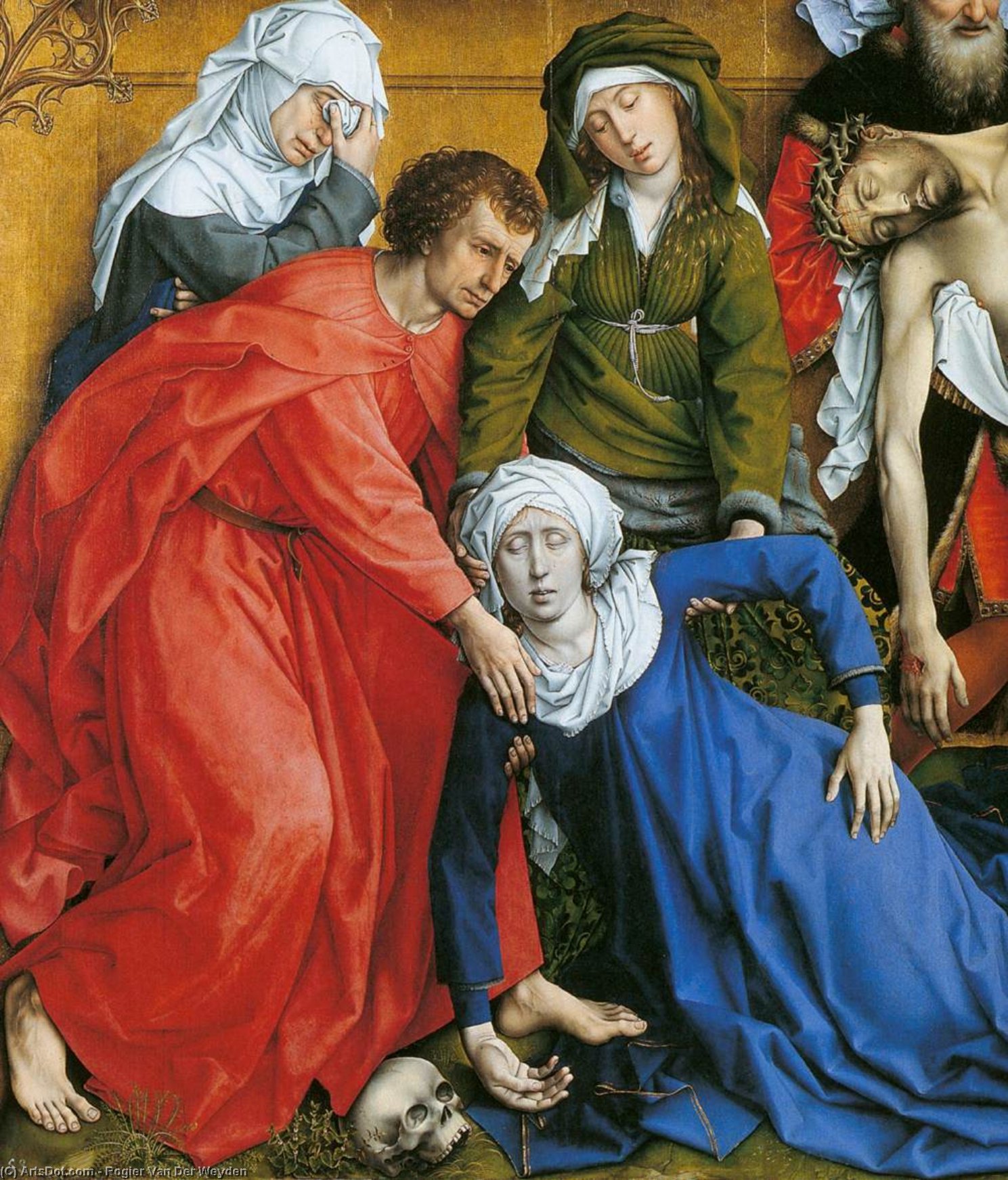
A Testament to Grief and Artistic Brilliance
Rogier van der Weyden’s *The Descent from the Cross*, completed around 1435, stands as arguably the most influential Netherlandish painting depicting Christ's crucifixion—a monumental achievement that continues to captivate viewers centuries later. Commissioned by the Leuven Schutterij guild, this panel painting transcends mere representation; it embodies a profound emotional response to religious faith and exemplifies the zenith of Early Flemish artistic innovation.
- Artist: Rogier van der Weyden (c. 1400-1464)
- Year: c. 1435
- Location: Museo del Prado, Madrid
- Medium: Oil on panel
Style and Technique: Sculpted Surfaces and Vivid Color
Van der Weyden’s style is characterized by an unparalleled dedication to realism—a hallmark of the Northern Renaissance. He achieved this remarkable feat through meticulous attention to detail, employing a technique that prioritizes sculpted surfaces and dramatic chiaroscuro (light and shadow). Unlike many contemporaries who favored flattened perspectives, van der Weyden meticulously modeled the figures' musculature and drapery, creating an illusion of palpable physicality.
The artist’s masterful use of color—primarily reds, whites, and blues—further enhances the painting’s emotional impact. These vibrant hues are applied with remarkable precision, capturing the luminosity of flesh tones and conveying a sense of solemn grandeur. The palette is deliberately restrained yet powerfully expressive, reflecting the spiritual seriousness of the subject matter.
Historical Context: Leuven Schutterij Patronage and Medieval Piety
The painting’s genesis lies in the patronage of the Leuven Schutterij guild—a civic militia organization dedicated to defending the city. This commission underscores the importance of religious symbolism within medieval society, where depictions of Christ's suffering served as potent reminders of divine compassion and redemption. The Schutterij’s desire for a masterpiece that would inspire devotion is palpable in every brushstroke.
Contemporary art historians like Erwin Panofsky recognized *The Descent from the Cross*'s significance, noting its unparalleled pictorial brilliance and emotional depth. Panofsky famously declared that “It may be said that the painted tear, a shining pearl born of the strongest emotion,” epitomized what Italians most admired in Early Flemish painting—a testament to van der Weyden’s artistic genius.
Symbolism: Anatomy, Gesture, and Spiritual Resonance
Beyond its technical virtuosity, *The Descent from the Cross* is laden with symbolic meaning. The depiction of Christ's body in the T-shape—a deliberate reference to the crucifixion itself—emphasizes his sacrificial role. Furthermore, the anguished expressions of Joseph of Arimathea and Nicodemus convey profound sorrow and humility—mirroring the universal human experience of grief.
The meticulous rendering of drapery—particularly Mary’s robe—demonstrates van der Weyden's mastery of textile representation. Each fold and wrinkle is rendered with painstaking accuracy, conveying a sense of texture and movement that contributes to the painting’s overall dramatic effect. Ultimately, *The Descent from the Cross* transcends mere visual spectacle; it communicates an enduring message of faith and compassion—a timeless masterpiece that continues to inspire awe and contemplation.