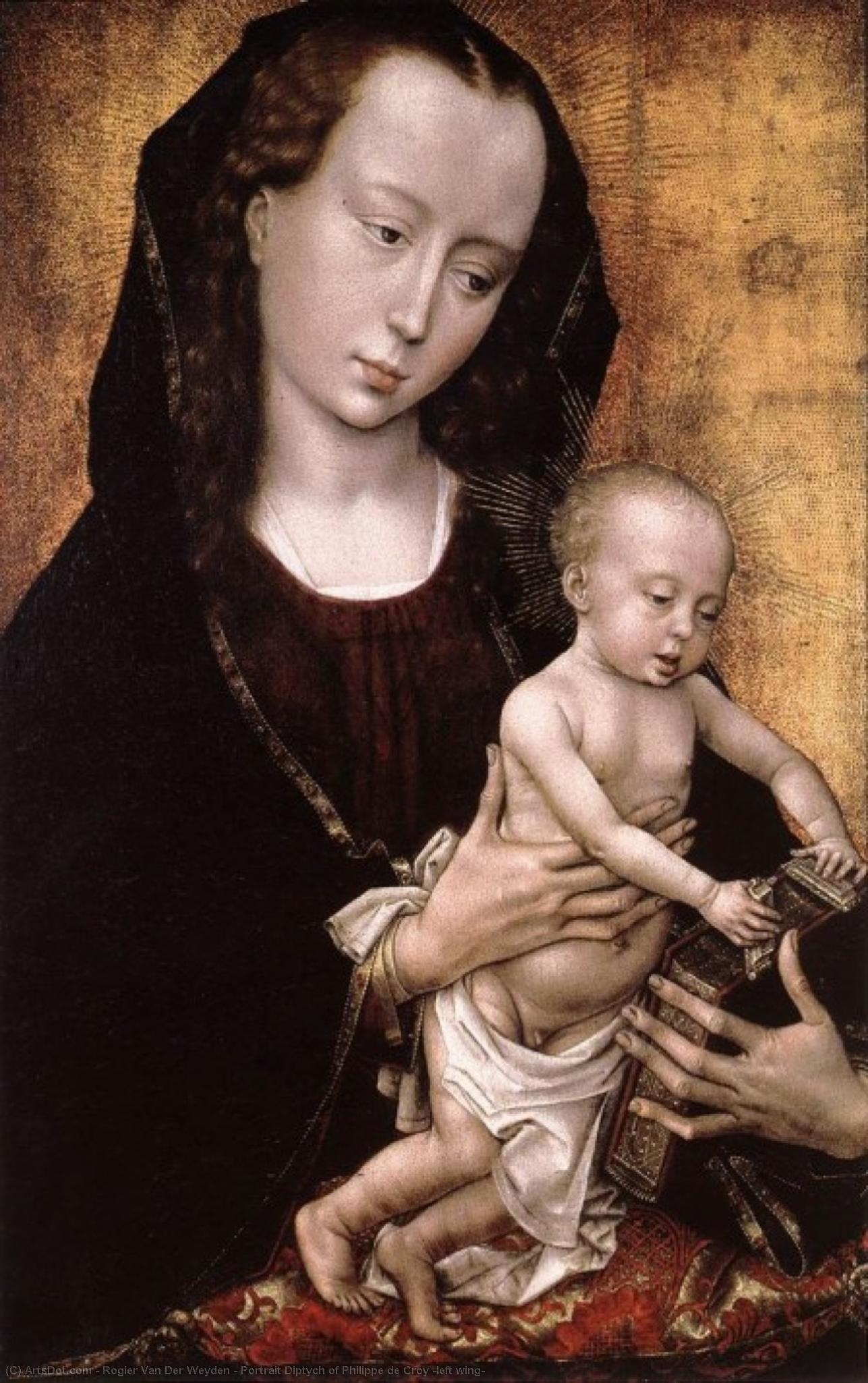
Portrait Diptych of Philippe de Croy (left wing): A Testament to Flemish Renaissance Emotion
Rogier van der Weyden’s *Portrait Diptych of Philippe de Croy*, completed around 1460, stands as a cornerstone of Early Netherlandish painting—a masterpiece that transcends mere representation and delves into the profound depths of human emotion. Currently residing in the Henry E. Huntington Library in San Marino, California, this diminutive oil on oak panel offers an unparalleled glimpse into the artistic sensibilities of its era and continues to captivate viewers with its exquisite detail and palpable sincerity.
- Artist: Rogier van der Weyden (1400 – 1464)
- Date: Circa 1460
- Medium: Oil on Oak Panel
- Dimensions: 49 x 31 cm
- Location: Henry E. Huntington Library, San Marino, California
Van der Weyden’s reputation rested upon his unwavering commitment to realism—a pursuit that extended far beyond mere visual accuracy. He meticulously studied anatomy and drapery, striving to capture the subtle nuances of human form with breathtaking precision. This dedication is vividly apparent in the portrayal of Philippe de Croy’s left wing, where every fold of fabric and contour of muscle speaks volumes about the artist's mastery.
Symbolism Woven into Visual Narrative
More than just a likeness, *Portrait Diptych* operates on multiple symbolic levels. The central figure—believed to be Mary—holds the infant Jesus in an embrace that embodies tenderness and divine protection. This iconography aligns perfectly with the prevailing religious fervor of the period, reflecting the profound influence of Christianity on artistic expression.
- Virgin Mary: Represents purity, compassion, and maternal devotion – central to Christian theology.
- Infant Jesus: Symbolizes divine grace and redemption, embodying Christ’s sacrifice for humanity.
- Background Figures: Suggest a contemplative atmosphere, reinforcing the spiritual significance of the scene.
The inclusion of a book at the bottom-right corner is particularly noteworthy. Often interpreted as representing knowledge and divine guidance—a cornerstone of humanist thought alongside religious belief—it underscores the painting’s intellectual dimension.
Technique: The Alchemy of Light and Texture
Van der Weyden's masterful technique exemplifies the advancements of oil painting during the Renaissance. He skillfully employed glazing – applying thin layers of translucent pigment over previous coats – to achieve luminous effects that imbue the panel with an ethereal glow. This painstaking process allowed for unparalleled control over color and texture, creating a surface that feels remarkably tactile.
The artist’s meticulous attention to detail is evident in every brushstroke—from the subtle shading of Philippe de Croy's face to the delicate rendering of Mary’s drapery. These techniques contribute significantly to the painting’s emotional impact, drawing viewers into a scene brimming with warmth and serenity.
A Legacy Enduring Through Reproduction
ArtsDot.com recognizes the enduring allure of this iconic artwork and offers exceptional reproductions crafted by skilled artisans. Each reproduction faithfully captures the original's luminosity and textural richness—preserving its artistic essence for discerning collectors and interior designers alike.