A Vision of Divine Grace: The Luminous World of Rogier van der Weyden
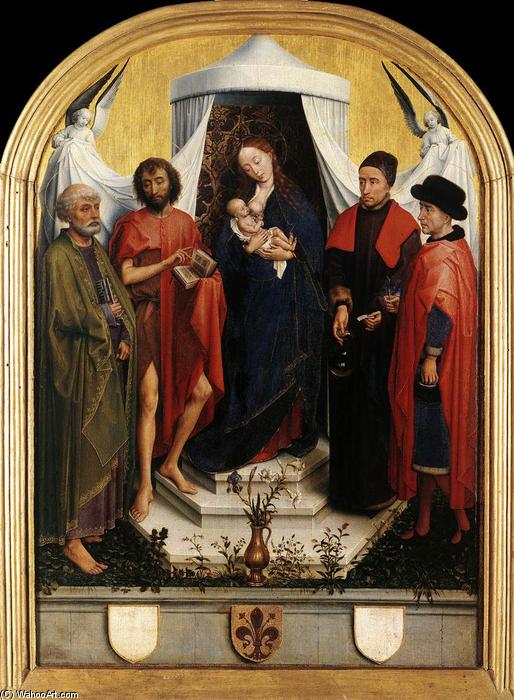
In the quiet, contemplative atmosphere of the mid-15th century, a masterpiece emerged that would forever alter the landscape of Northern Renaissance art. "Virgin with the Child and Four Saints," attributed to the incomparable Rogier van der Weyden, is far more than a mere religious panel; it is a profound window into the spiritual psyche of the Early Netherlandish period. Executed around 1450 in Tournai, this work captures a moment of eternal stillness, where the boundaries between the earthly and the divine seem to dissolve. For the modern collector or lover of classical beauty, the painting offers an unparalleled sense of peace, inviting the viewer into a sacred space defined by meticulous detail and an almost palpable emotional depth.
The composition is a masterclass in Sacra Conversazione, a holy conversation where the Virgin Mary sits in serene repose, cradling the Christ Child with a tenderness that resonates across centuries. Surrounding this central maternal bond are four venerable saints—John the Baptist, Peter, Paul, and Augustine—each positioned to guide the viewer's eye through a complex hierarchy of devotion. The artist’s background as a goldsmith is evident in every inch of the panel; there is a precision here that transcends mere painting, bordering on the sculptural. Through the masterful layering of thin, translucent glazes over a luminous gesso ground, Van der Weyden achieved a brilliance of light that makes the fabrics shimmer and the skin tones glow with an inner vitality.
Symbolism and the Art of Devotion
Every element within this monumental work serves a higher theological purpose, woven into the very fabric of the narrative. The painting is a tapestry of symbols designed to provoke meditation. The presence of Saint John the Baptist, often associated with preparation and prophecy, alongside the authoritative figures of Peter and Paul, creates a foundation of apostolic strength around the tender Virgin. Notice the subtle details that ground the divine in the material world: a man holding a book, the glint of a wine glass, and the careful rendering of textures that suggest the tactile reality of 15th-century life. These elements serve to bridge the gap between the viewer's reality and the celestial realm depicted on the wood.
For those looking to integrate such profound artistry into a contemporary interior, this piece offers a unique opportunity to introduce a sense of historical weight and spiritual tranquility. The interplay of light and shadow—the chiaroscuro of the North—creates a dramatic yet harmonious atmosphere that complements both classical and modern decor. A high-quality reproduction of this masterpiece does not merely decorate a wall; it anchors a room, providing a focal point of intellectual curiosity and aesthetic splendor. To possess such a work is to hold a piece of the Renaissance spirit, a testament to an era where art was the ultimate vessel for human emotion and divine aspiration.