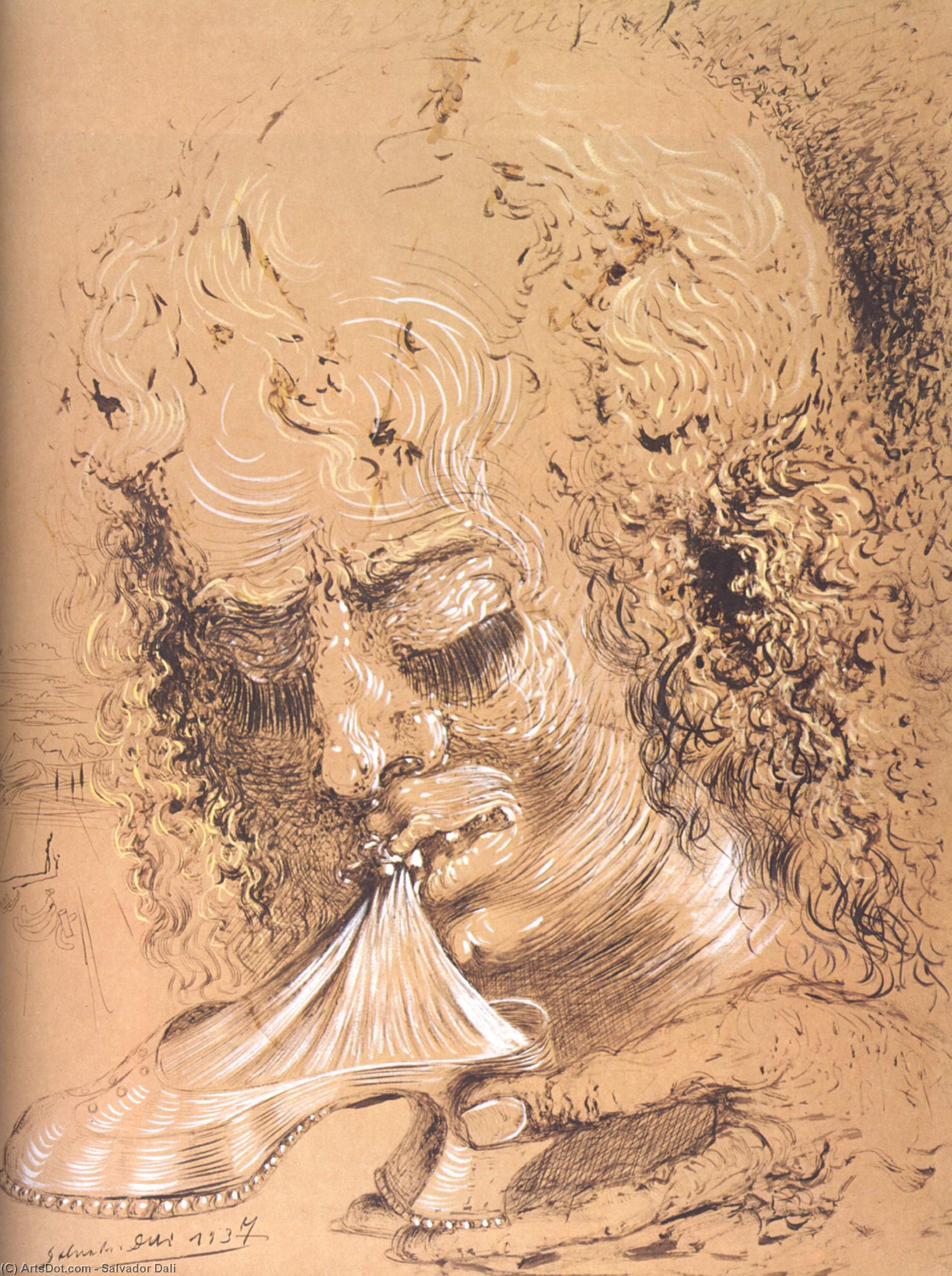
Cannibalism of the Objects
Salvador Dalí's
Cannibalism of the Objects is a thought-provoking painting that showcases the artist’s unique blend of surrealism and symbolism. Created in 1937, this artwork is a prime example of
Surrealist art, which aimed to resolve the contradictory conditions of dream and reality into an absolute reality or super-reality.
Understanding the Painting
The painting depicts a woman with long hair, possibly
Salvador Dalí's wife and muse, Gala, in a state of distress. She is shown holding her head up while lying down, with a handkerchief in her mouth, as if trying to spit it out. The background features a clock on the wall, adding an interesting detail to the scene. A book is also visible near the bottom left corner of the painting, which may provide context or inspiration for the artist's work.
Symbolism and Interpretation
- Salvador Dalí’s use of surrealist techniques, such as unexpected juxtapositions and dream-like imagery, adds to the painting’s mystique.
- The artwork is a testament to Dali’s innovative approach to art, which continues to inspire artists and art lovers to this day.
- For those interested in learning more about surrealist art, Top 5 Famous Surrealism Paintings of All Time is a great resource.
Handmade oil painting reproductions of
Cannibalism of the Objects are available on
ArtsDot.com, allowing art enthusiasts to own a piece of surrealist history. Other notable works by
Salvador Dalí include
Queen Salome and
Knights of Death, which can also be found on ArtsDot.com.
For more information on
Salvador Dalí and his artwork, visit
ArtsDot.com or Wikipedia's page on Dali.