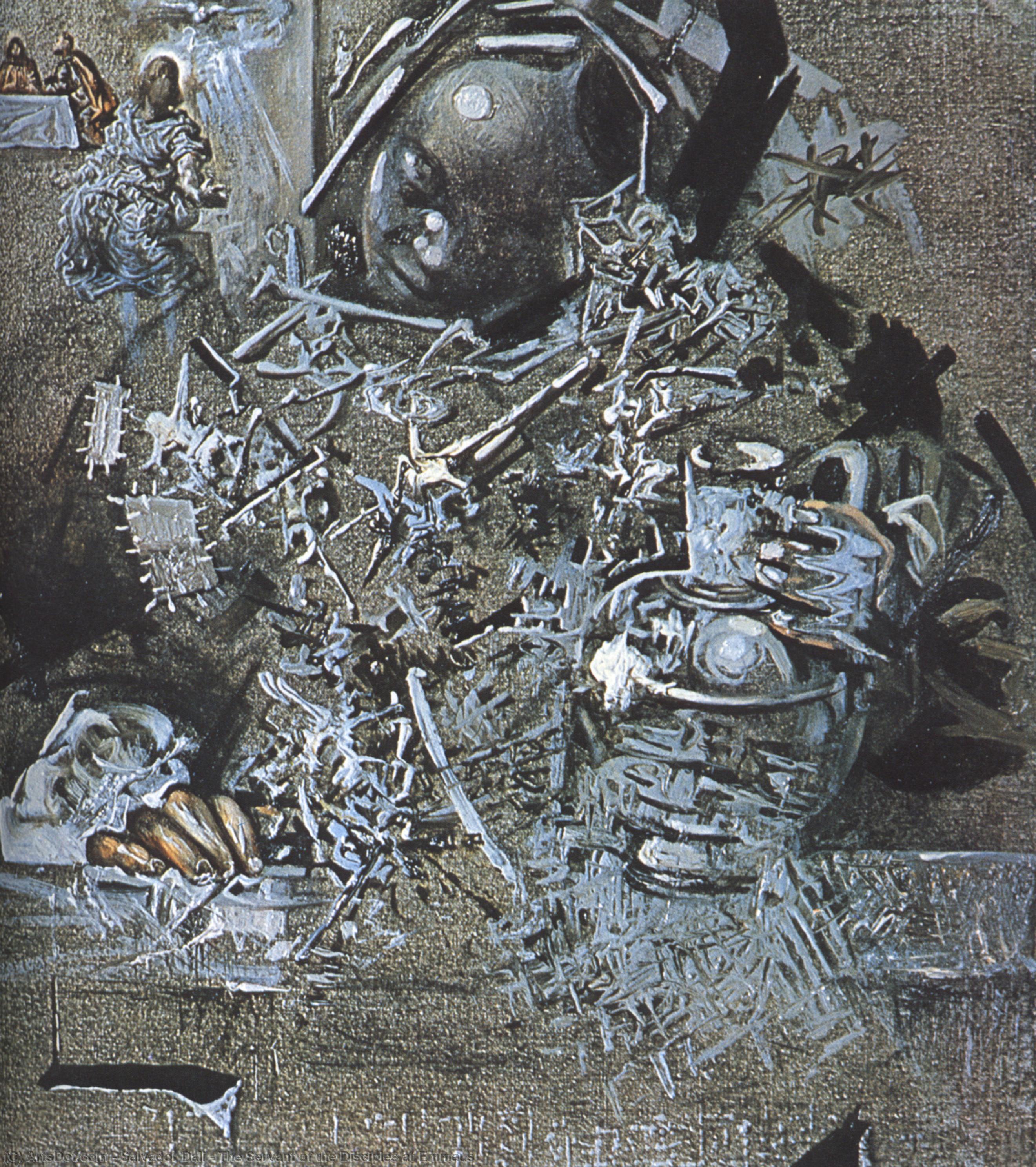
The Servant of the Disciples at Emmaus
Salvador Dalí’s
The Servant of the Disciples at Emmaus stands as a cornerstone of Surrealist art—a visual meditation on faith, doubt, and the transformative power of encountering the divine. Painted in 1960, this oil on canvas masterpiece exemplifies Dalí’s unparalleled ability to fuse rational observation with dreamlike imagination, cementing his place among the most influential artists of the 20th century. As showcased prominently on
ArtsDot.com, the artwork depicts a solitary figure lying horizontally, enveloped in an atmosphere of profound stillness and mystery—a deliberate departure from conventional artistic representations.
Symbolism and Composition
Dalí’s compositional choices are laden with symbolic significance, reflecting his preoccupation with religious themes and psychological exploration. The central figure dominates the canvas, positioned amidst a carefully arranged tableau of objects that defy immediate comprehension. Among these are several cups—some perched precariously near the head of the reclining man, others scattered further afield—a bowl situated in the lower left corner, and most notably, a clock. This recurring motif within Dalí’s oeuvre serves as a potent emblem of *relativity of time*, mirroring the biblical narrative itself – questioning how one perceives the passage of time when confronted with spiritual revelation. As documented on
Wikipedia, light plays an indispensable role in painting—Dalí skillfully employs chiaroscuro to heighten dramatic tension and create a palpable sense of unease. The subdued illumination casts elongated shadows, emphasizing the figure’s vulnerability and fostering contemplation about existential questions.
Artistic Influences
Dalí's artistic vision was profoundly shaped by Nouveau Réalisme—a movement that championed innovative materials and techniques in art, rejecting academic conventions. As articulated on
ArtsDot.com, this stylistic rebellion sought to capture the immediacy of reality—often juxtaposing recognizable elements with unexpected distortions. Dalí’s distinctive blend of Surrealist and realist aesthetics is brilliantly realized in
The Servant of the Disciples at Emmaus—a testament to his mastery of visual language and his unwavering commitment to pushing artistic boundaries. The painting’s meticulous detail—particularly in rendering the textures of the objects—contrasts sharply with the dreamlike distortions of perspective and spatial arrangement.
- Salvador Dalí was a titan of Surrealist art, and this painting embodies his unparalleled skill and creativity.
- The incorporation of surrealist elements contributes to an aura of enigma and invites viewers to contemplate profound spiritual truths.
- Dalí’s masterful use of lighting amplifies dramatic tension and underscores the psychological depth of the artwork.
Hand-painted reproductions of The Servant of the Disciples at Emmaus are available on ArtsDot.com—allowing discerning art enthusiasts to acquire a tangible connection to Dalí’s visionary legacy.
For deeper insights into Dalí's artistic trajectory and the broader context of Surrealist art, consult Wikipedia.