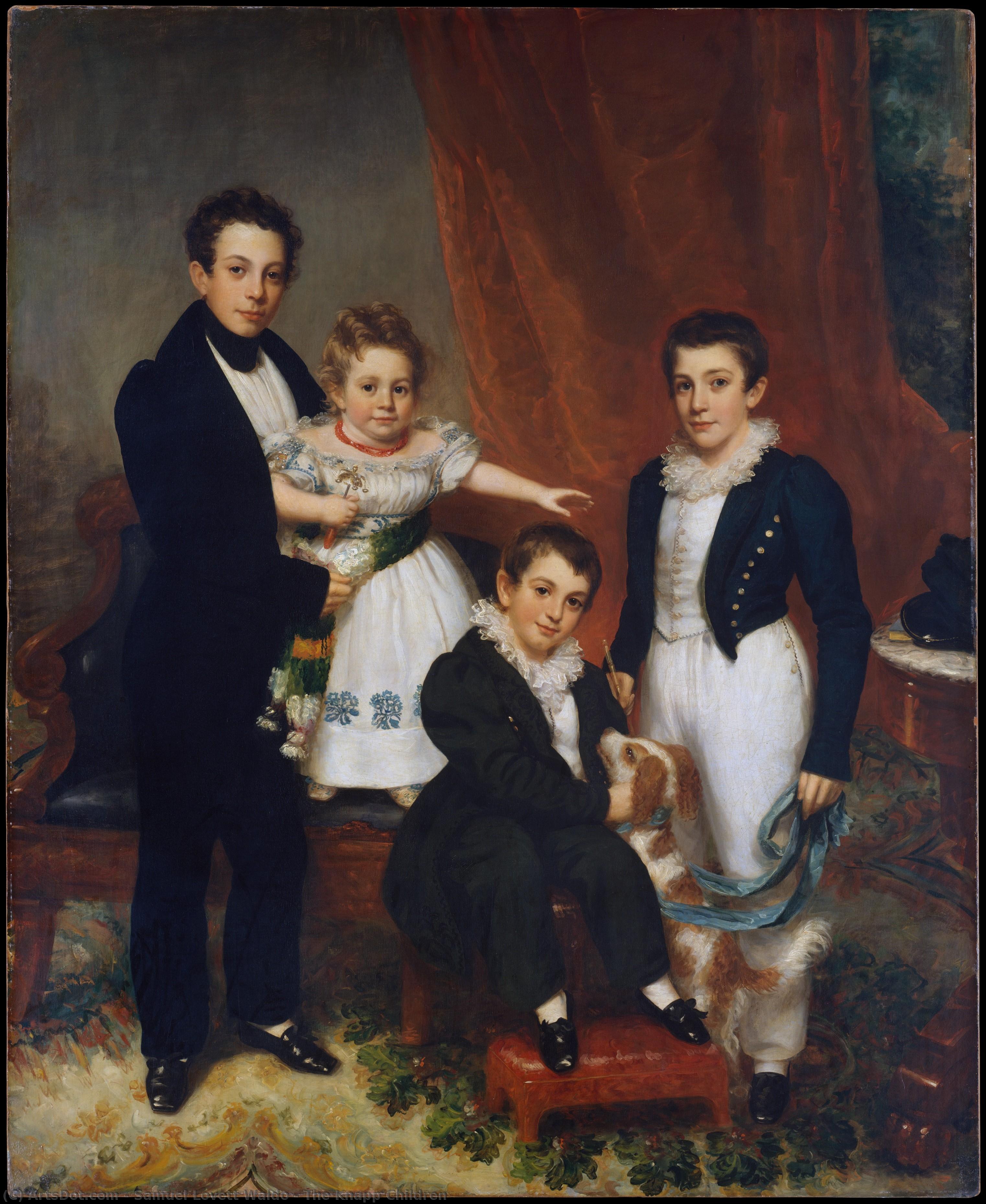
A Glimpse into Victorian Lineage: The Knapp Children
To stand before this portrait is to step directly into the polished drawing rooms of mid-nineteenth-century America. The Knapp Children is far more than a mere record of faces; it is a carefully constructed tableau vivant, an opulent testament to burgeoning American wealth and the enduring importance of lineage during the Victorian era. The sitters—the four sons of Shepherd Knapp and Catherine Louisa Kumbel—are presented not just as individuals, but as representatives of a successful mercantile family whose standing in society was meticulously curated for posterity. The very act of commissioning such a grand portrait speaks volumes about their aspirations: to freeze a moment of prosperity and secure their place within the annals of local history.
Mastery of Form and Atmosphere
Technically, the painting showcases the sophisticated hand of Samuel Lovett Waldo, whose training in London exposed him to the grandeur of eighteenth-century English portraiture. The execution is characterized by a remarkable blend of realism and idealized formality. Observe the handling of the textiles: the rich red velvet curtain serves as a dramatic backdrop, its deep folds catching the soft, diffused light, while the patterned carpet beneath suggests an almost palpable sense of luxury underfoot. Waldo employs a linear perspective that draws the eye across the composition, anchoring the viewer's gaze upon the central figures. The artist achieves this depth through subtle gradations of shadow and highlight, giving the illusion that the polished wood and heavy fabrics possess genuine weight.
Symbolism of Status and Succession
The symbolism woven into this piece is rich and deeply resonant for the collector. Every element—from the tailored jackets and vests to the formal arrangement of the figures—speaks to social stratification. The grouping itself suggests not just brotherhood, but a carefully managed succession of status. In an age where one's reputation was everything, this portrait functions as a visual guarantee of enduring family bonds and established social standing. Even the inclusion of younger children alongside the young men speaks to the continuity of the bloodline, a silent promise whispered across generations.
A Timeless Aesthetic for Modern Interiors
For those seeking art that anchors a grand space or adds an air of cultivated history to a modern dwelling, this reproduction offers unparalleled depth. The warm palette—dominated by deep browns, muted reds, and aged golds—allows the piece to harmonize beautifully with both traditional mahogany furnishings and more contemporary, richly textured décor. It brings an immediate sense of gravitas and narrative weight to any room. Owning such a work is not merely decorating; it is curating an atmosphere steeped in history, sophistication, and enduring familial pride.