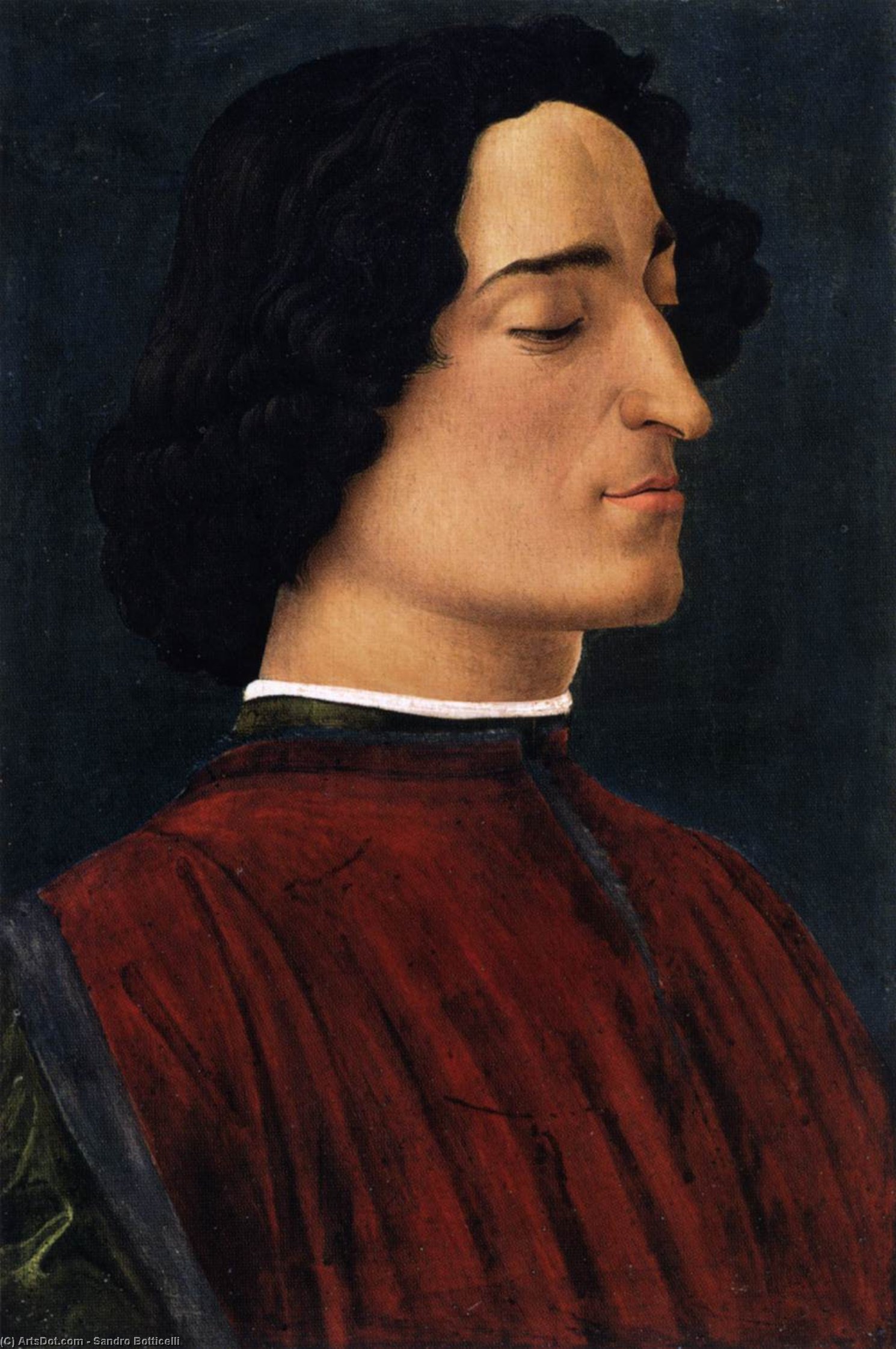
Giuliano de’ Medici: A Portrait of Power and Reflection
Sandro Botticelli's “Giuliano de’ Medici,” painted in 1480, stands as a testament to the humanist ideals flourishing during Florence’s Golden Age—a period defined by intellectual curiosity and artistic innovation. More than just a likeness of Giuliano II de’ Medici, son of Lorenzo il Magnifico, this portrait delves into profound psychological themes, reflecting Botticelli's masterful command of observation and expressive technique.
- Subject Matter: The painting depicts Giuliano de’ Medici in a contemplative pose. He sits upright, gazing downwards with closed eyes—a gesture that immediately conveys introspection and perhaps melancholy. His facial features are rendered with remarkable precision, capturing subtle nuances of expression that reveal his inner state.
- Style & Technique: Botticelli's signature style is evident in the delicate handling of paint and the graceful contours of the figure. Employing tempera on panel—a technique favored for its luminosity and durability—Botticelli achieved a remarkable level of detail, utilizing sfumato (smoky shading) to soften edges and create an ethereal atmosphere. The artist’s meticulous attention to anatomical accuracy aligns with the burgeoning scientific interest of the Renaissance.
- Historical Context: Painted shortly after Giuliano's assassination in 1478—a pivotal event that shook Florentine politics—the portrait carries a palpable sense of sorrow and loss. Lorenzo il Magnifico, his father, commissioned Botticelli to commemorate his son’s life, symbolizing not only familial devotion but also the enduring legacy of Medici patronage.
- Symbolism: Several elements within the painting contribute to its symbolic richness. The downward gaze suggests contemplation and perhaps disillusionment—a common motif in Renaissance portraits reflecting anxieties about mortality and human vulnerability. The turtledove perched on a dead branch is a traditional emblem of peace, juxtaposed against death—a poignant reminder of Giuliano’s fate and the fragility of earthly existence.
- Emotional Impact: Botticelli's masterful portrayal transcends mere representation; it evokes empathy for the subject and invites viewers to ponder upon themes of grief, remembrance, and the complexities of human emotion. The subdued palette—dominated by earthy tones—enhances the painting’s solemn mood, creating an unforgettable image that captures the essence of Renaissance artistry.
This exquisite reproduction allows you to appreciate Botticelli's genius in stunning detail, bringing a timeless masterpiece into your home or studio. Explore its captivating beauty and delve deeper into the artistic and intellectual currents of Florence during its most glorious era.