Madonna of the Pomegranate: A Renaissance Masterpiece
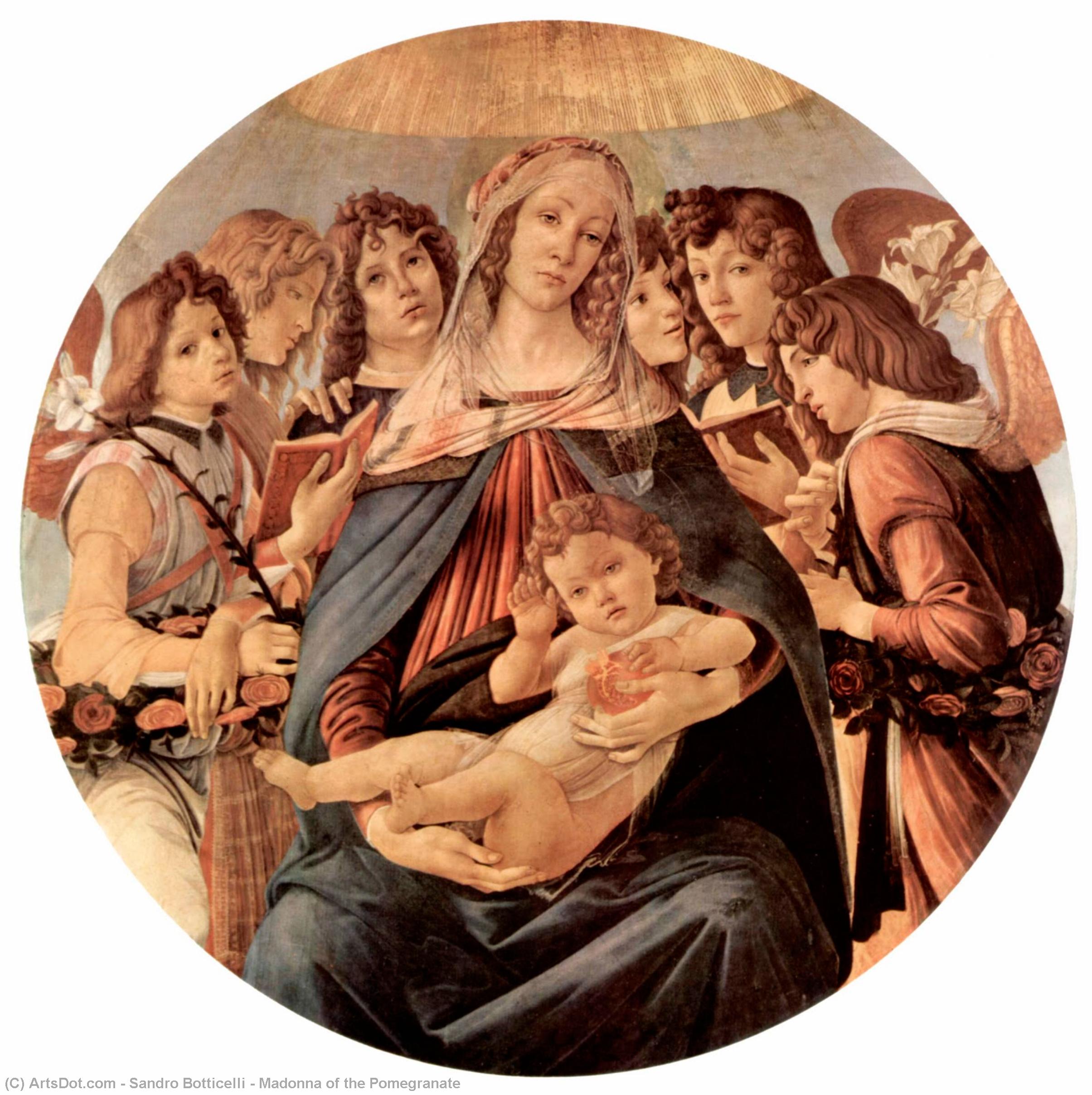
The Madonna of the Pomegranate, painted by Sandro Botticelli in 1487, is a captivating example of Early Renaissance art that embodies grace, devotion, and symbolic richness. Housed within the esteemed Uffizi Gallery in Florence, Italy, this tempera on panel painting offers a glimpse into the artistic and religious sensibilities of 15th-century Florence.
Composition and Symbolism
The artwork depicts the Virgin Mary tenderly cradling her infant son, Jesus. She is surrounded by a celestial gathering of angels, some appearing to sing or play musical instruments, creating an atmosphere of serene reverence. The scene unfolds before a large, circular window that floods the composition with light and adds depth. Nine figures are present – Mary, Jesus, and several angels – arranged in a balanced yet dynamic manner. A book is subtly included within the scene, potentially representing religious scripture or a symbolic object signifying knowledge and faith. The pomegranate held by the Virgin Mary is central to the painting's symbolism; it represents fertility, abundance, and, crucially, Christ’s Passion through its numerous seeds symbolizing drops of blood.
Artistic Style and Technique
Botticelli’s artistic style in Madonna of the Pomegranate showcases his signature blend of linear elegance with a sense of movement. The use of tempera on panel creates a vibrant color palette, enhancing the emotional impact of the scene. Botticelli's mastery lies in his ability to render delicate features and flowing drapery while maintaining a harmonious composition. The circular format (tondo) was frequently employed by Florentine artists during this period, concentrating attention on the central figures and lending an intimate quality to the work. The painting reflects the influence of earlier Renaissance masters but also demonstrates Botticelli’s unique artistic voice – one characterized by graceful forms and a refined aesthetic.
Historical Context and Legacy
Created during a period of significant cultural and religious flourishing in Florence, Madonna of the Pomegranate exemplifies the High Renaissance ideals of beauty, harmony, and spiritual contemplation. Botticelli’s work was deeply intertwined with the patronage of the Medici family, who commissioned many of his most celebrated pieces. This painting is one of numerous depictions of the Madonna and Child created by Botticelli throughout his career, each reflecting a nuanced understanding of religious themes and human emotion. His works have profoundly influenced generations of artists, solidifying his place as a pivotal figure in Western art history. The Madonna of the Pomegranate stands as a testament to this enduring legacy, continuing to inspire awe and reverence in viewers today.
Artist Information